Start with the way you want to paint
Your first painting medium does not have to be the one you use forever. Acrylic and oil paints can both make bold, subtle or detailed work. The more useful question is what you want a painting session to feel like. Do you want to finish a small picture in an afternoon and put it away? Or would you rather return to the same wet paint over several sessions, adjusting edges and mixing colors as you go?
Acrylic paint is a good match for quick experiments. It usually becomes touch-dry relatively fast, though thicker areas take longer. You can layer new colors without waiting days between ordinary thin coats. Oil paint stays workable much longer, giving you time to move colors around on the surface. Neither pace is inherently easier: fast drying can feel freeing or rushed, while slow drying can feel flexible or inconvenient.
Consider blending, layers and mistakes
If you like soft transitions, oil paint gives you a generous window to blend neighboring colors directly on the painting. You can also scrape back or adjust a wet passage. The trade-off is that an accidental touch may smear a section you thought was finished. A painting may need a protected place to sit while it dries, especially if you share your work area with pets or other people.
Acrylic rewards a slightly different approach. Blend while the paint is wet, work in small areas, or let a layer dry and build the transition with another layer. Because dry acrylic is not readily reactivated with water, you can usually paint over a passage you dislike rather than moving it back into place. Some beginners enjoy that sense of a fresh start; others miss the extra time oil paint provides.
Color can also look different after it dries, particularly with acrylics. Mix a small test patch and let it dry before committing to a large area when a precise match matters. With either medium, learning to mix a few colors is more valuable than buying a large set immediately.
Plan your space and basic supplies
For acrylics, a modest starter setup is a few colors, two or three brushes, a palette, a water container and a surface labeled for acrylic paint. Heavy paper made for acrylics or a small prepared canvas panel can keep the first project manageable. Water helps with brush cleanup while the paint is still wet; dried acrylic is harder to remove, so rinse brushes promptly and keep paint off clothing you care about.
For oils, choose a surface prepared for oil painting, such as a suitable primed panel or canvas. Avoid painting directly onto unprepared paper or fabric. Start with a small palette of colors and brushes you can reserve for oils. Some oil-painting methods use solvents or additional mediums, but they are not required for every beginner exercise. If you use any of them, read the product label and arrange your workspace and cleanup accordingly.
Oil paint generally asks for more attention at the end of a session. Keep wet paintings where they will not be touched, and follow product instructions for cleaning tools and handling paint-covered materials. Do not assume that a product described as low odor needs no precautions. For either medium, protect your table, keep supplies away from food and wash your hands after painting.
Try the same small subject before deciding
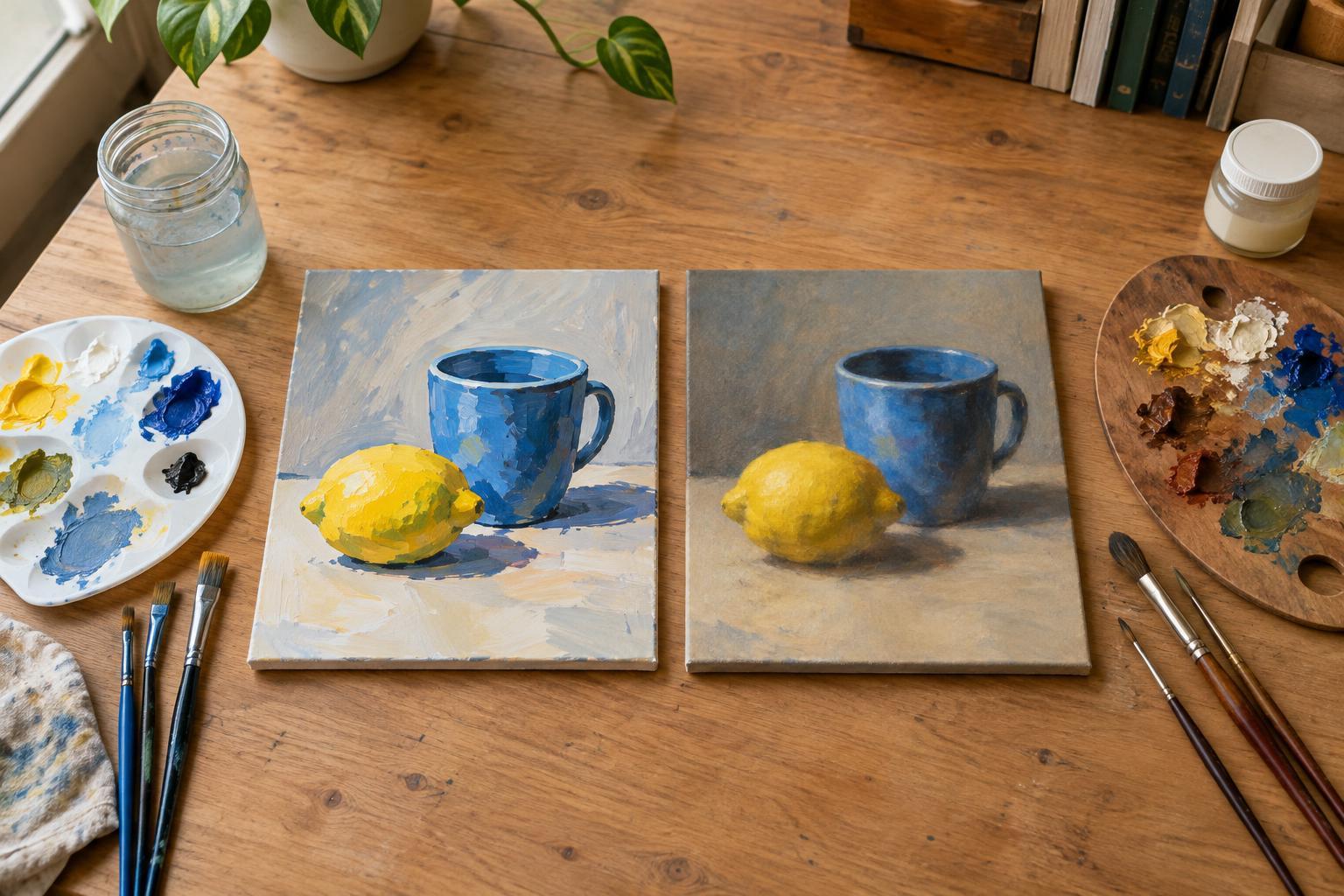
If you can, test both paints on separate small surfaces using a simple subject: a mug, a piece of fruit or three colored shapes. Limit yourself to about four colors. Spend the first few minutes mixing a light color, a dark color and one color in between. Then paint the same subject twice rather than judging either medium by a single unfamiliar result.
Notice what happens when you change your mind. With acrylic, see whether you prefer covering a dry shape with a new layer. With oil, see whether you enjoy pushing wet paint into a new position. Also pay attention to the unglamorous parts: setting up, finding a place for the work to dry and cleaning your brushes. A medium you are happy to take out again is a better first choice than one you admire but avoid using.
Make a choice that fits your routine
Choose acrylic if short sessions, quick layering and water-based brush cleanup fit your home and schedule. Choose oil if you have a suitable workspace, a safe place to leave wet work and a strong interest in slow blending and revision. Both offer room to grow, and both can produce satisfying first paintings.
You can start with one medium and try the other later. The first goal is not to select the perfect paint; it is to learn what happens when you put color on a surface, make a decision and try again. A small panel and a repeatable subject will teach you more about your preferences than an oversized kit.