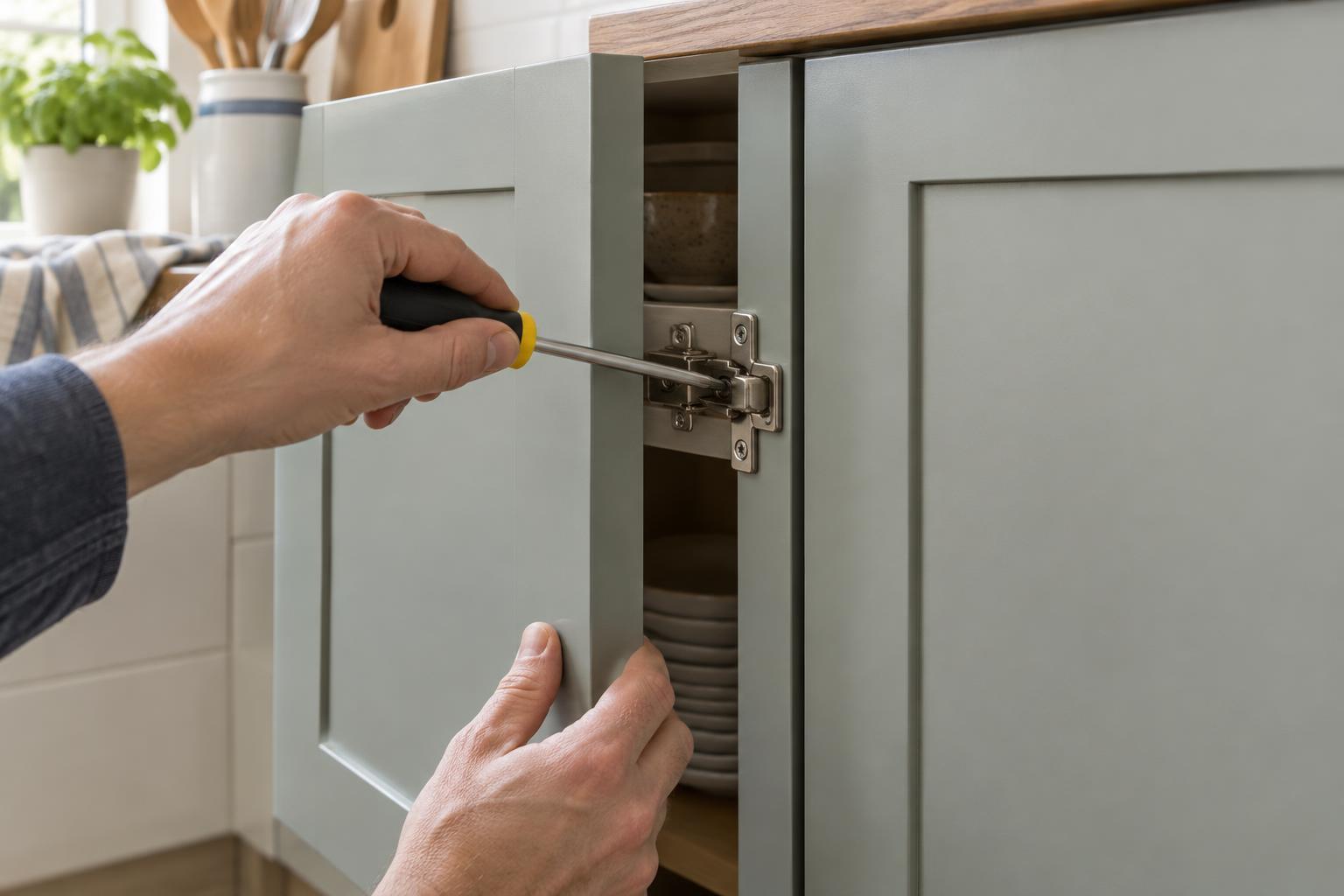
Find out what is actually out of line
Stand back and look at the closed cabinet before reaching for a screwdriver. Compare the gaps above, below and beside the door. Does it hang lower than its neighbor, sit too far toward the center, or stick out at one corner? Open and close it slowly to find where it rubs. A quick photo can help you compare the result after each adjustment.
Check whether the cabinet itself is steady. A door may look crooked because the cabinet box has shifted or the floor beneath it is uneven. If several doors changed position at once, or the cabinet moves when you press it, hinge adjustments alone may not solve the problem. For a single troublesome door on a stable cabinet, the hinges are a sensible place to start.
Identify the hinges and prepare the work area
Many modern cabinet doors use concealed hinges: a round cup sits in the back of the door, and an arm connects it to a mounting plate inside the cabinet. These often have separate screws for moving the door sideways, changing how far it sits from the cabinet, and raising or lowering it. Other cabinets have visible hinges with fewer adjustment options. Look closely at the hardware rather than assuming every screw does the same job.
Clear items away from the hinge area and place a cloth beneath the door to protect nearby surfaces if a tool slips. Use a screwdriver that fits the screw heads snugly. Support the door with one hand, especially if you plan to loosen the screws that hold a hinge to the cabinet or door. Do not remove both hinges at once while the door is unsupported.
Make one small adjustment at a time
Start by checking for loose mounting screws. Tighten them gently, then close the door to see whether that alone improves the fit. If the screws turn without gripping, stop: repeated tightening can enlarge the holes. A hinge that pulls away from damaged cabinet material needs a secure repair before fine adjustments will hold.
On an adjustable concealed hinge, turn one adjustment screw a small amount and note which way the door moves. Close the door after each change. To correct an uneven side gap, you may need to adjust both hinges, sometimes in different directions, so the door remains straight. For a door that sits too high or low, some mounting plates can be loosened slightly and shifted vertically before their screws are retightened. If you cannot tell what a screw controls, return it to its starting position rather than making several guesses.
Check the fit in normal use
When the gaps look even, open and close the door several times. It should move freely without rubbing another door, catching the frame or springing back open. Check it both fully closed and partly open; a door can appear aligned while closed yet still bind during its swing. Retighten any screws you loosened, taking care not to overtighten them.
If the door remains crooked despite small adjustments, inspect the hinges for bent parts, a cracked mounting plate or a loose hinge cup in the door. Hardware that no longer holds firmly may need replacement rather than further adjustment. Bringing the old hinge to a hardware shop can make it easier to compare its size and mounting pattern with a replacement.
Keep future adjustments simple
Once the door works well, make a note or photo of which screws control each direction on your particular hinges. That small reference can save time if another door needs attention. If you enjoy thinking about how everyday objects are designed to be adjustable, browse Product Development · Industry and Craft for more ideas about product development. For a broader look at ways objects are made and assembled, explore Production Methods · Industry and Craft.
A cabinet door does not need a perfectly identical gap on every side to work well. Aim for smooth movement, secure hardware and a tidy appearance. Small, reversible changes are more useful than trying to force a damaged hinge or cabinet into alignment.