Start with what is left in the pan
After cooking mushrooms, onions, chicken or another ingredient in a skillet, you may see small brown patches stuck to the bottom. Those browned bits can add savory flavor to a sauce. A pan sauce works by loosening them with liquid, then simmering that liquid until it tastes good alongside the food you cooked. It is a flexible technique rather than a recipe that demands exact measurements.
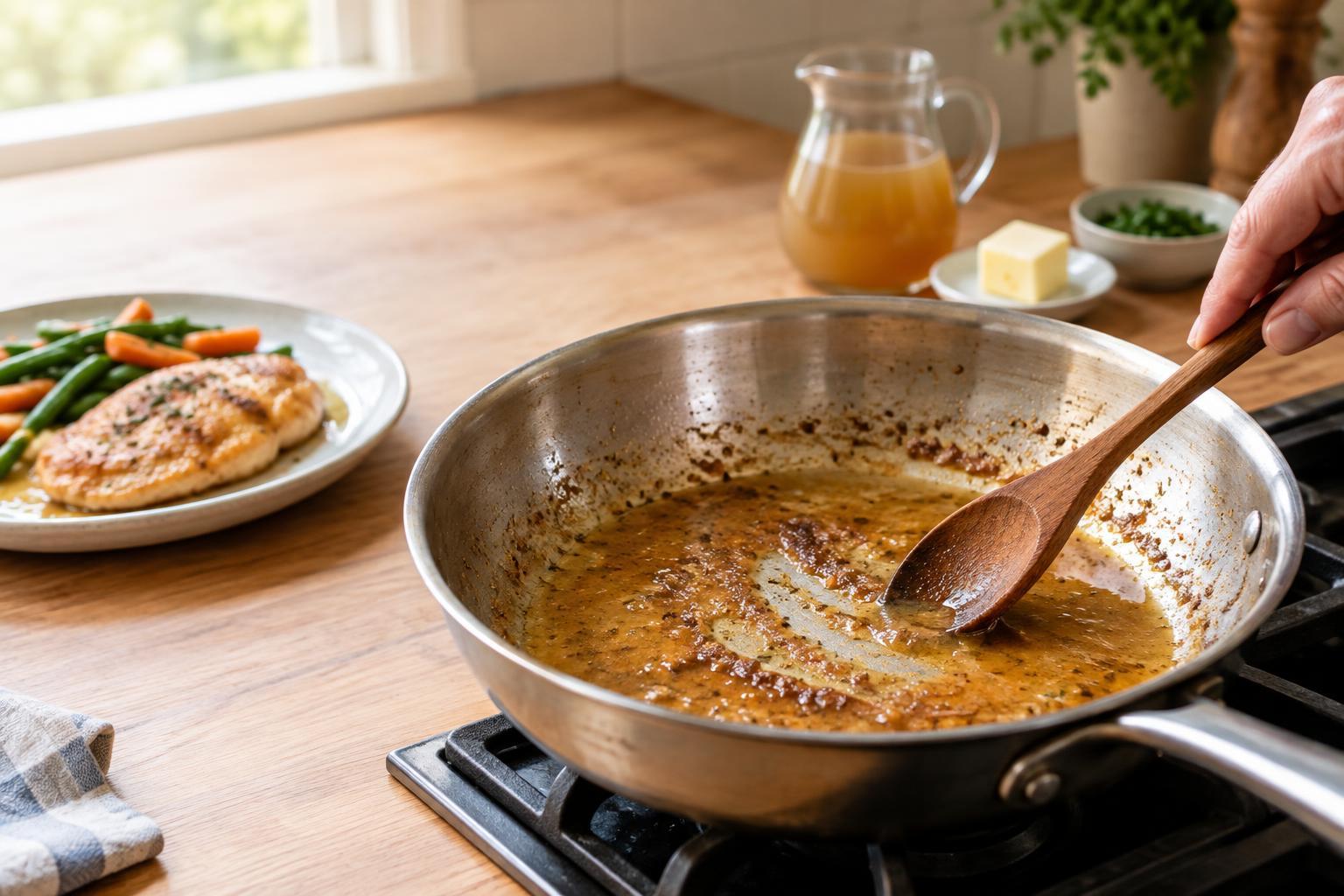
First, move the cooked food to a plate. Look closely at the skillet: brown bits are useful, but blackened bits that smell sharply burnt will make the sauce bitter. If the pan is badly scorched, wash it and make a fresh sauce instead. Pour off excess fat, leaving just enough to lightly coat the bottom. Keep the browned bits in place.
Choose a liquid and loosen the browned bits
For a typical home skillet, start with a modest splash of water, broth or stock. Add it over medium heat and use a wooden spoon or heat-safe spatula to scrape the bottom as the liquid begins to bubble. The browned bits should lift and mix into the liquid. Add a little more if the pan dries out before you have loosened them. Avoid pouring cold liquid into a very hot, delicate pan if its maker warns against sudden temperature changes.
Choose the liquid to suit the meal. Broth gives a savory base, while water lets the flavor already in the pan stand out. A small squeeze of lemon can brighten a sauce, but it is usually easier to add it near the end, when you can taste the result. If you use a strongly flavored liquid, begin with less; you can add more, but you cannot easily take it back.
Simmer for the texture you want
Let the liquid bubble gently, stirring now and then. As some water evaporates, the sauce becomes more concentrated. For a light sauce that runs across a plate, stop while it still moves freely when you tilt the skillet. For something that coats a spoon more noticeably, simmer a little longer. Watch closely near the end: a small amount of liquid can disappear quickly in a wide, hot pan.
If the sauce gets too thick or tastes too strong, stir in a splash of water. If it seems thin or bland, give it a little more time before adding salt. The browned bits and any broth may already be salty, and reducing the sauce concentrates that salt. Taste a cooled spoonful rather than judging it by appearance alone.
Finish with one or two small additions
Once the sauce tastes balanced, lower the heat. Stirring in a small piece of butter can give it a softer texture and a glossy look. For a different finish, try a little olive oil instead. Chopped herbs, a dab of mustard or a few drops of lemon juice can also work. Add just one at a time and taste before adding another; the goal is to complement the food, not cover it.
A pan sauce does not have to be perfectly smooth. You can leave softened onion or mushroom pieces in it, or pour it through a strainer if you prefer a clearer result. Spoon it over the cooked food while it is warm. If the food has been resting on a plate, any juices it releases can be stirred into the sauce before serving, provided they are safe to use with that dish.
Practice with a forgiving first meal
Sautéed mushrooms are a good way to try the technique. Cook them until they have browned, set them aside and add a splash of water or broth to the skillet. Scrape, simmer and taste. Return the mushrooms to the pan or spoon the sauce over them on the plate. You can focus on how the liquid changes without trying to manage several parts of a meal at once.
On another day, try the same steps after cooking a different food and notice what changes. The amount of browned residue, the size of the skillet and the liquid you choose will all affect the result. If a sauce is not quite right, adjust it in small steps: more liquid for intensity, more simmering for body, or a little acidity for brightness. That habit of tasting and adjusting is the most useful part of learning to make pan sauces.