Choose a small area and a simple goal
A public art walk does not need a formal tour or a long list of landmarks. Start with an area you can comfortably cover in an hour or two, such as a town center, a few blocks near a transit stop, or a route between two places you already know. A compact area leaves time to pause without making the outing feel like a checklist.
Decide what you would like to notice. You might look for murals, sculptures, mosaics, painted utility boxes, or art incorporated into a building’s exterior. Keeping the goal broad makes room for surprises. If you are going with someone else, agree on a comfortable walking pace and whether you want to stop for a snack along the way.
Build a route that can change
Before you leave, pick two or three possible stops and connect them with streets you feel comfortable walking. A local map, a community arts listing, or signs you have noticed on previous visits can help you identify starting points. Treat these as possibilities rather than promises: outdoor works may be temporary, covered for maintenance, or difficult to see from the sidewalk.
Choose a clear starting point and an easy place to finish. If the route forms a loop, check that the return portion is as appealing and practical as the outward walk. An out-and-back route works just as well when there is only one street you want to explore. Leave space between planned stops so an unexpected piece can become part of the walk.
Check the basics that matter for your outing, such as daylight, weather, walking surfaces, and how you will get home. Carry water if you expect to be out for a while. If mobility or rest breaks are a concern, look for a shorter route with places to sit and an option to turn back early.
Look beyond the first impression
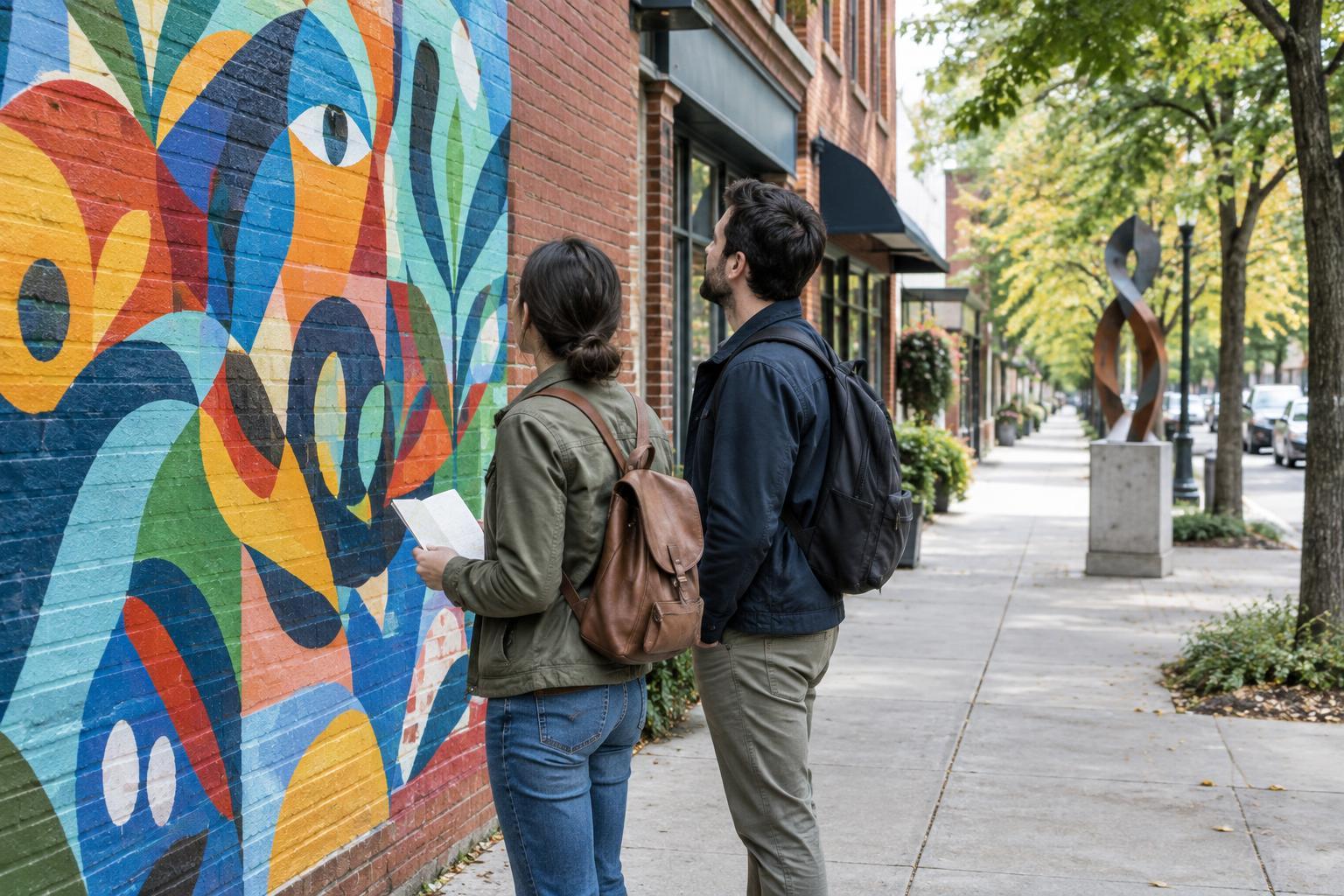
At each piece, begin with what you can actually see. Notice its size, materials, colors, and placement. Is it meant to be viewed from across the street, or does it reveal details up close? How does it relate to the surrounding storefronts, trees, or open space? These questions give you something to explore even when there is no plaque explaining the work.
If a sign identifies the artist or title, read it before deciding what the piece means to you. Without a sign, avoid guessing at the artist’s intention or the work’s history. You can still describe your response: perhaps a pattern draws your eye, or a sculpture looks different when you walk around it. Comparing impressions with a companion can make a familiar street feel new.
Take a few notes or photos if you enjoy remembering what you saw. A short description of where you stood and which detail caught your attention may be more useful later than many nearly identical pictures. Keep entrances and walkways clear while you stop, and follow any posted photography rules.
Stay curious while respecting the space
Public art can appear in plazas, along sidewalks, or on the outside of privately used buildings. Being able to see a piece does not necessarily mean every nearby space is open for exploration. Stay in permitted areas, avoid touching delicate surfaces, and give people using the space room to pass or work.
It is also fine to skip a stop that feels crowded, poorly lit, or awkward to reach. You do not have to complete the route for the walk to count. If a planned work is missing, look for another visual detail nearby: a decorative gate, an unusual paving pattern, or a view that frames the street differently. The best detours are the ones that still feel comfortable.
Make the next walk your own
At the end, think about which stop held your attention longest and why. Did you prefer large pieces visible from a distance, or small details that rewarded a slower pace? That answer can shape a future route without requiring you to repeat the same walk. You might explore another few blocks, return in different daylight, or invite a friend whose observations will differ from yours.
A self-guided public art walk is less about seeing every work in an area than about practicing attention. Start small, let the route bend when something catches your eye, and finish while you still have energy to enjoy the trip home.