Choose a place that sparks a question
Small museums often focus on a particular place, craft, collection, or chapter of local life. That narrow focus can be an advantage: you do not need to master an enormous subject to have a satisfying visit. Start by asking what you are curious about. How did people in this area work? Why was a certain object made? What used to stand on a familiar street? A question gives you something to look for without turning the outing into homework.
Before you leave, check the museum’s own information for opening hours, admission, accessibility, and any rules about bags or photography. Smaller places may have limited hours or spaces that are difficult to navigate, so checking ahead can prevent a frustrating trip. If you are going with someone else, agree on a loose amount of time rather than a strict route. Even an hour can be enough when you let yourselves stop where your interest leads.
Start with a quick survey, then slow down
When you arrive, take a few minutes to understand the layout. Look for an introductory panel, a map, or a short description of the collection. This first pass helps you decide where to spend your attention. You do not have to read every label in order or study every display equally. Pick a few things that genuinely draw you in, whether that is a handmade tool, a photograph, a model, or an unfamiliar material.
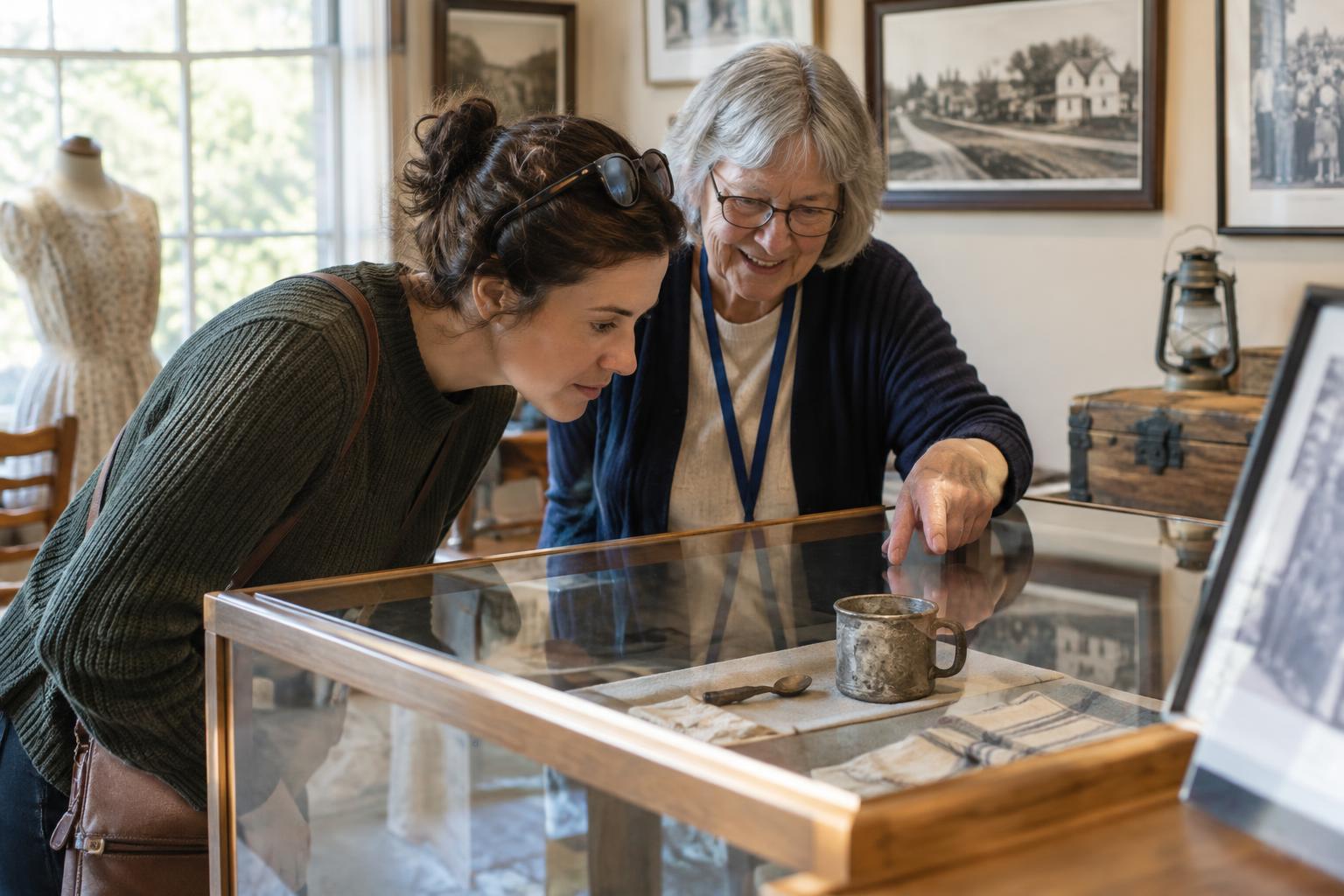
At each chosen display, look at the object before reading its label. Notice its size, wear, shape, and any details that suggest how it was used. Then read the explanation and see what changes in your understanding. A plain-looking item may become interesting when you connect it to the person who used it or the problem it helped solve. If the label leaves you with another question, that is part of the visit, not a failure to understand.
Use the human side of the museum
If a staff member or volunteer is available and appears free to talk, try one specific question. You might ask which object visitors tend to overlook, what detail they notice after spending time with the collection, or where to begin if you have only a short visit. A focused question is easier to answer than asking for a complete tour, and it may point you toward something you would not have found on your own.
Be considerate of the space as you explore. Follow posted guidance about touching objects, photography, and food or drink. Keep pathways clear, especially in compact rooms, and give other visitors room to read or look closely. If you are visiting with children or a group, invite everyone to choose one thing to investigate rather than rushing them past every case. Sharing different discoveries can make the collection feel larger than it is.
Connect the exhibits to the neighborhood
A local museum can change how you see the area outside its doors. A display about transportation might explain an unusual road layout; an exhibit about food or trade might make nearby buildings more interesting. As you look around, note any places, materials, or activities you could recognize later. You do not need to plan a long walking tour. A short stroll after your visit may be enough to give an exhibit a real-world setting.
Pay attention to what the collection does not fully answer, too. Museums have limited space, and a display may tell only part of a story. Rather than assuming an exhibit covers everyone’s experience, ask what perspectives appear and which ones you would like to know more about. If the museum offers related displays, a reading list, or suggestions for nearby sites, those can be starting points for another outing.
Leave with one discovery you can keep
Before you go, take a quiet minute to choose one thing you want to remember. It might be an object, a surprising use for a familiar material, or a question you now have about your town. If photography is allowed, a picture of an exhibit label can help jog your memory. Otherwise, jot down a few words on your phone or in a notebook. The goal is not to document the whole museum; it is to keep hold of what interested you.
On the way home, tell your companion what stood out, or describe it to someone later. Explaining a discovery in your own words often reveals what you found most compelling. You might return with a different question, try a related creative project, or simply notice a familiar place differently. That is plenty to take from a small museum: a little more attention to the world you already pass through.