Choose a small story with a clear shape
An audio story can be a memory, a description of a place, a conversation or an account of how you learned to do something. For a first project, choose a subject you can tell in a few minutes. “The day I tried making bread” is easier to shape than “everything I know about cooking.” A narrow subject gives listeners something to follow and gives you a manageable amount of material to edit.
Write down three beats before you record: where the story begins, what changes or catches your attention, and where it ends. You do not need a word-for-word script, but a short outline can keep you from wandering. If you are interviewing someone, prepare a few open questions and ask for their permission to record and share their voice. Decide who the intended listener is, too; telling a story to one imagined friend can make your delivery feel more natural.
Set up a comfortable recording space
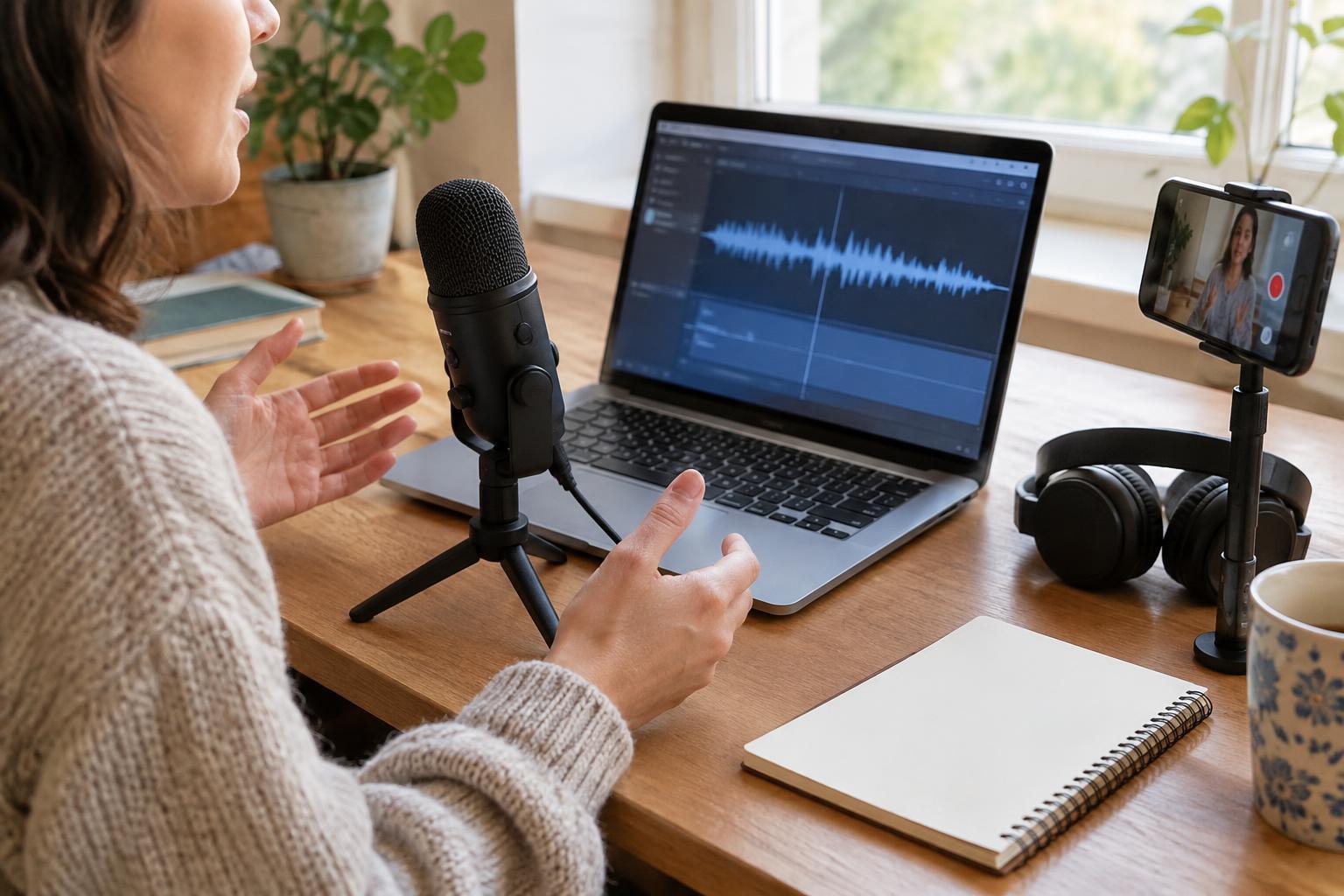
A phone or computer with a recording app is enough to begin. Find a quiet room and pause fans, notifications and other sounds you can control. Soft furnishings such as curtains, a rug or a sofa may help reduce the hollow sound of a bare room. You do not have to eliminate every background noise, but listen for anything that makes the words difficult to understand.
Place the microphone a comfortable distance from your mouth and speak slightly across it rather than directly into it if bursts of air make certain sounds harsh. Record a short test, then listen through headphones before starting the full take. Check that your voice is easy to hear without sounding distorted. Try to keep your position consistent while speaking. If you stumble, pause and repeat the sentence; that pause will make the unwanted version easier to find later.
Gather the pieces without chasing perfection
Record the main narration first, using your outline as a guide. Speak at a pace that feels comfortable and leave a little silence between ideas. You can make a second take of an opening or ending that feels awkward without starting the whole story again. Save the original recording before you edit, and give files descriptive names so you can tell your takes apart.
A few sounds from the setting can add texture: a door opening, pages turning or the gentle clatter of a kitchen. Record them separately if doing so is convenient and safe. Use these sounds to help listeners picture a moment, not to compete with the voice. Music is optional. If you plan to share the story, use music and recordings you created yourself or have permission to use; leaving music out is often the simplest choice.
Edit for meaning before polishing the sound
Open your recordings in an audio editor and make a copy of the project. Start with a rough cut: put the story beats in order, remove false starts and trim stretches that repeat the same point. Keep pauses that give a listener time to absorb an idea. A story can feel rushed when every breath and gap disappears, so aim for a natural conversation rather than a perfectly continuous stream of speech.
Next, listen for distracting changes in volume. Most editors let you adjust the level of a clip; make quiet lines easier to hear and lower any that jump out. If you add background sound, keep the words clearly in front. Avoid applying several effects just because they are available. A clean edit usually depends more on understandable speech and a sensible sequence than on elaborate processing.
Listen once as a new audience would
Play the story from beginning to end without watching the editing screen. Notice where you lose track of who or what a sentence refers to, where a sound arrives too abruptly, and whether the ending feels complete. If possible, listen once through ordinary phone speakers as well as headphones. That can reveal a quiet line you missed while editing. Make only the changes that help a listener follow the story.
Export a shareable audio file using your editor’s common playback format, and keep the editable project and original recordings in case you want to revise it. Give the file a clear name. Before sending it to anyone, check the exported version from start to finish: it should begin where you expect, end cleanly and contain the correct take. Then share it with a friend or keep it as a record of a small moment worth remembering.