The short answer: choose the motion you enjoy
Crochet may feel easier to start if you want to work with one tool and make a small piece without keeping many stitches on a needle. Knitting may feel more natural if you like a steady, repeated motion and want to make a fabric that drapes readily. Neither craft is universally easier: the best first choice is the one whose movements and projects make you want to pick it up again.
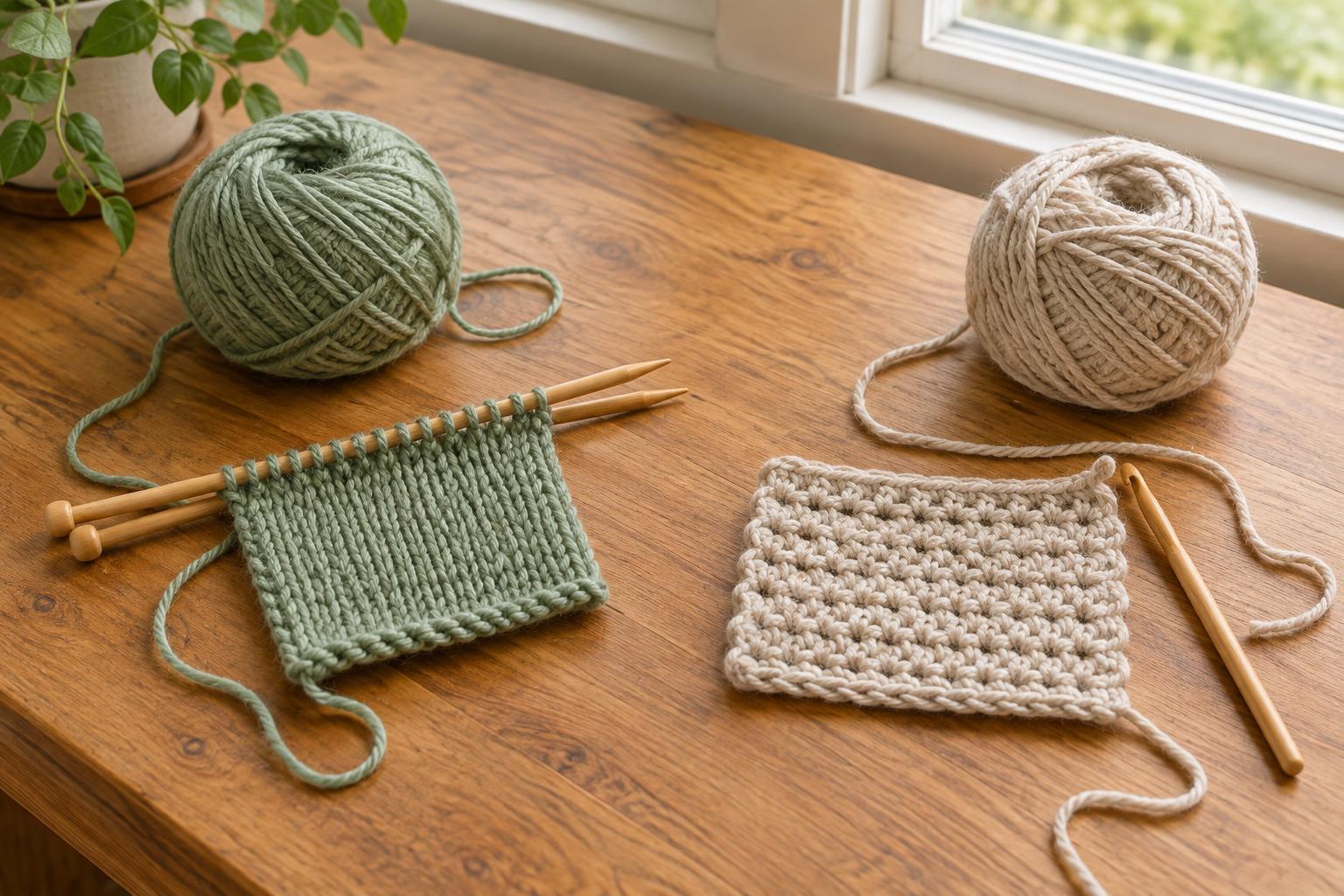
Both crafts use loops of yarn, but they organize those loops differently. In knitting, you hold a row of live stitches on needles and work them one by one onto another needle. In crochet, you use a hook to make stitches, usually working with just one live loop at a time. That difference shapes how each craft feels while you are learning.
What your first practice session feels like
For a first knitting session, you learn to put stitches on a needle, make a basic knit stitch, and eventually remove the stitches safely. The needles support your work, but you also need to keep the row from slipping off their ends. Your earliest practice square may have uneven edges or an extra stitch here and there. Those are ordinary signs that you are learning how to hold the yarn and move the needles.
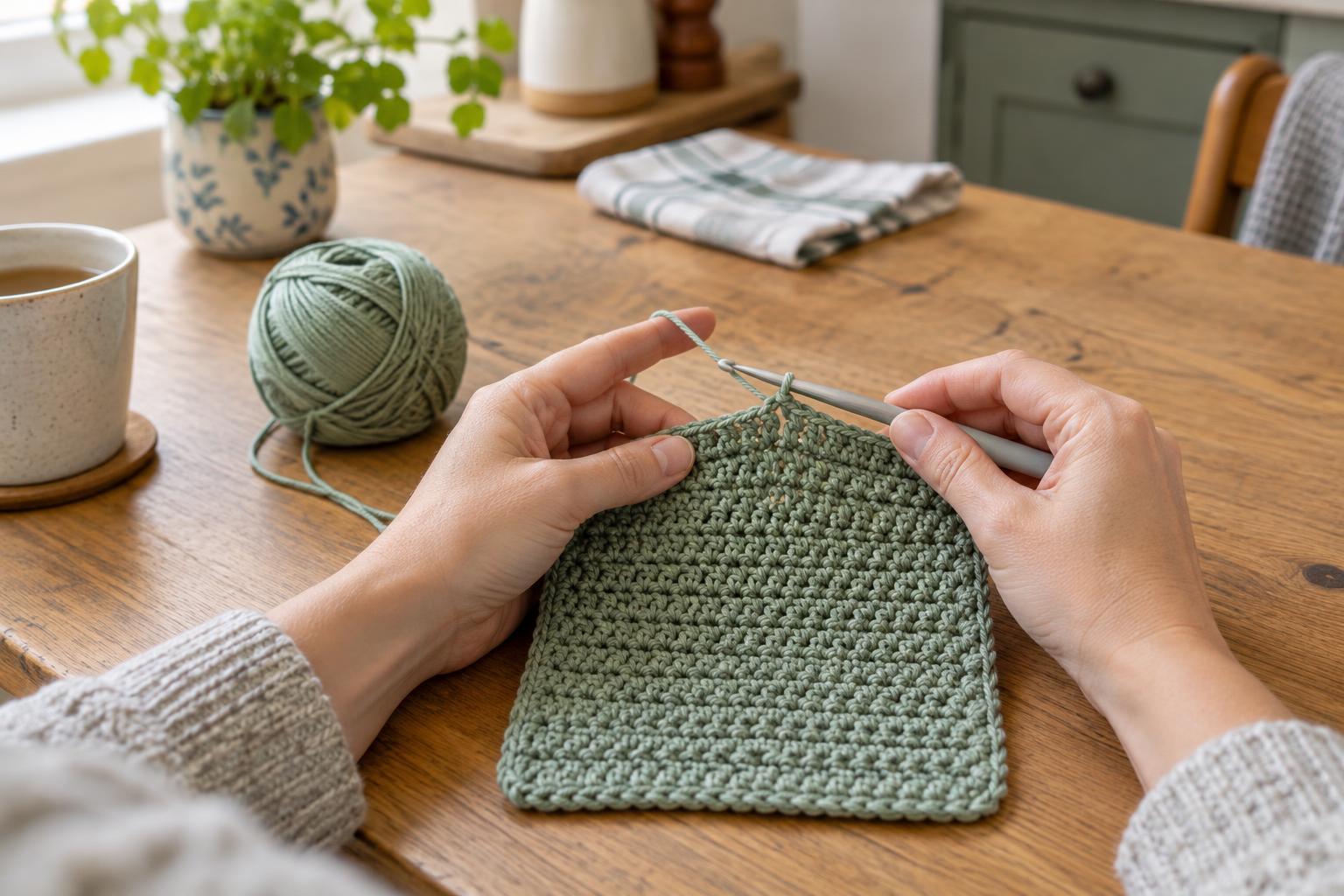
For a first crochet session, you make a starting chain and work stitches into it with a hook. Managing the hook can be simple to understand, yet finding the right place to insert it may take practice. Beginners sometimes miss the last stitch in a row, causing the edges to narrow, or add a stitch and make the piece wider. Counting stitches at the end of each row helps with either craft.
Try not to judge either one by its first ten minutes. Hand position, yarn tension, and reading the shape of a stitch all become clearer with repetition. A few short sessions are often more pleasant than one long attempt that leaves your hands tired.
Tools, fabric, and fixing mistakes
To test knitting, you need yarn and a pair of needles in a size suited to that yarn. To test crochet, you need yarn and a suitable hook. A smooth, light-colored, medium-weight yarn is helpful for both because you can see individual stitches. Very dark, fuzzy, or slippery yarn can make it harder to tell what your hands are doing. Check the yarn label for a suggested tool size, but treat it as a starting point rather than a strict rule.
The finished fabrics have different qualities. Basic knitting often produces a flexible fabric suited to scarves, sweaters, and other items that benefit from drape. Basic crochet tends to make a more structured fabric, which can be appealing for baskets, simple accessories, and textured pieces. Stitch choice, yarn, and tool size can change either result considerably, so these are tendencies rather than limits.
Crochet can be convenient when you need to undo a few stitches: you can usually pull back to the error and put the single live loop back on your hook. In knitting, correcting a mistake may involve managing several live stitches so they do not unravel farther than intended. That can seem intimidating at first, although learning to spot and repair mistakes becomes part of either hobby.
Pick a first project that keeps you interested
If you choose knitting, begin with a small, flat rectangle, such as a practice swatch or a simple coaster. Work in one basic stitch so you can concentrate on consistent movement rather than a complicated pattern. A scarf is familiar, but it can feel surprisingly long when you are new. Making a small finished piece first gives you a chance to practice starting, working rows, and finishing.
If you choose crochet, a small square or rectangle offers similar practice. It lets you repeat one stitch, count your rows, and notice whether your edges stay even. Save shaped projects or tiny stuffed figures for later if you want an easier first win; they can require close attention to where each stitch goes.
Still undecided? Borrow tools or buy only enough supplies for a small sample of each. Use yarn that is comfortable to handle and spend a couple of brief sessions making plain rows. Notice which motion feels less frustrating and which kind of finished object you would be excited to make. You do not have to commit to one forever: the skills are different, and many people enjoy having both in their creative toolkit.