Why start with a dishcloth?
A dishcloth is a good place to learn crochet because it can be simple without feeling like a practice swatch. You will repeat the same stitch across each row, gradually turning a length of yarn into a useful square. If your first few rows are uneven, the cloth can still do its job.
This project uses single crochet stitches and follows US crochet terms. Work at a comfortable pace rather than trying to make every stitch look identical. By the time you finish, you will have practiced starting a row, finding stitches, turning your work, and securing the ends.
Gather a few basic supplies
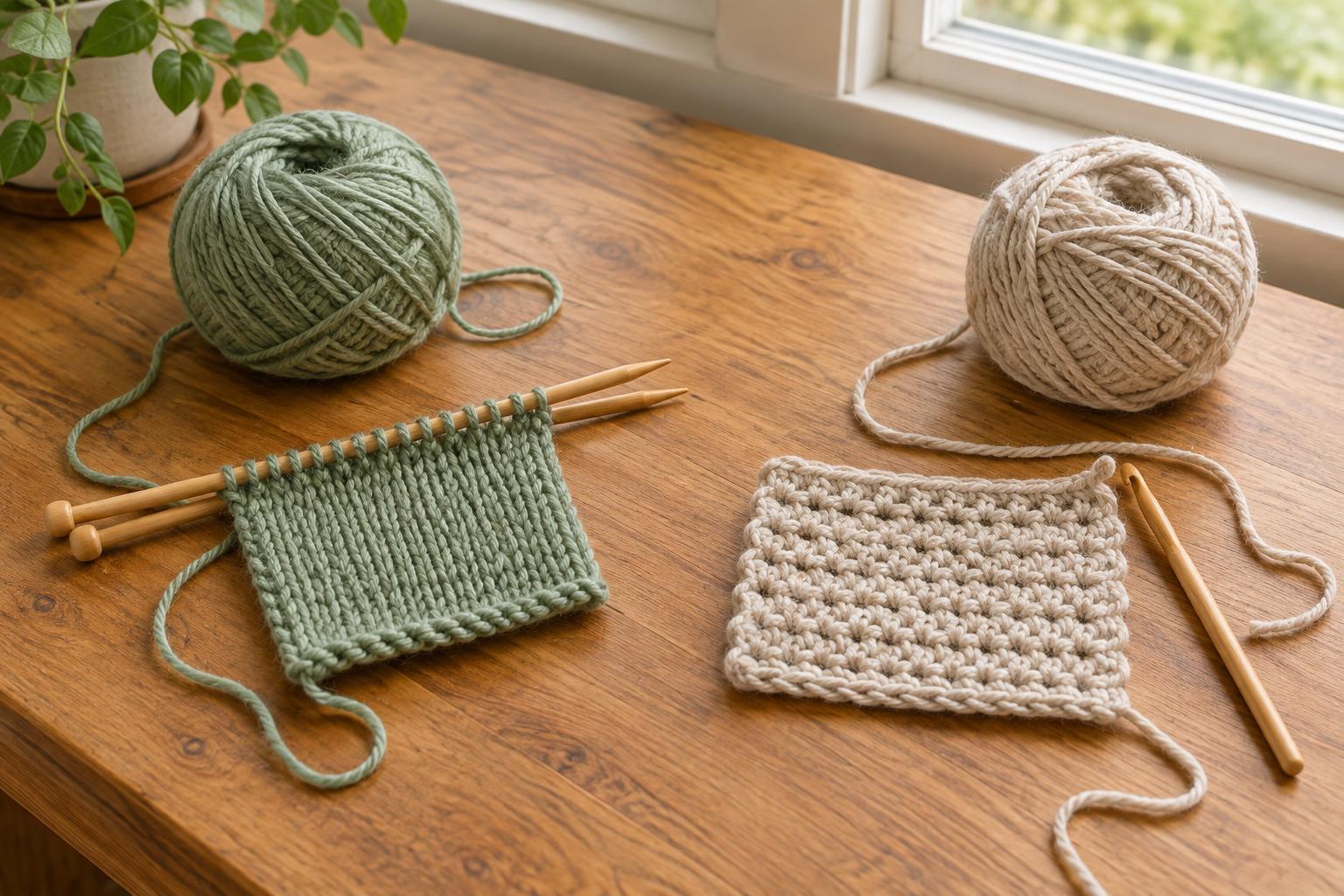
Choose a ball of washable cotton yarn in a medium weight, often labeled worsted weight. Cotton makes a practical dishcloth and lets you see your stitches clearly. A smooth, light-colored yarn may be easier to learn with than a fuzzy or very dark one. Check the yarn label for a suggested crochet hook size; a 5 mm hook is a common starting point for medium-weight cotton, but the label is a useful guide.
You will also need scissors and a blunt yarn needle for weaving in the ends. If you have a stitch marker, you can use it to mark the first stitch of each row, but it is optional. You do not need to buy a large kit or measure a precise gauge for a dishcloth.
Make the starting chain and first row
Begin with a slip knot on your hook. Hold the yarn so it can slide through your fingers, then wrap it over the hook and pull it through the loop already on the hook. That motion makes one chain stitch. Continue until you have 26 chains. Keep them loose enough that you can insert the hook into each one; if you tend to pull tightly, make the starting chain with a slightly larger hook, then switch back for the rest of the cloth.
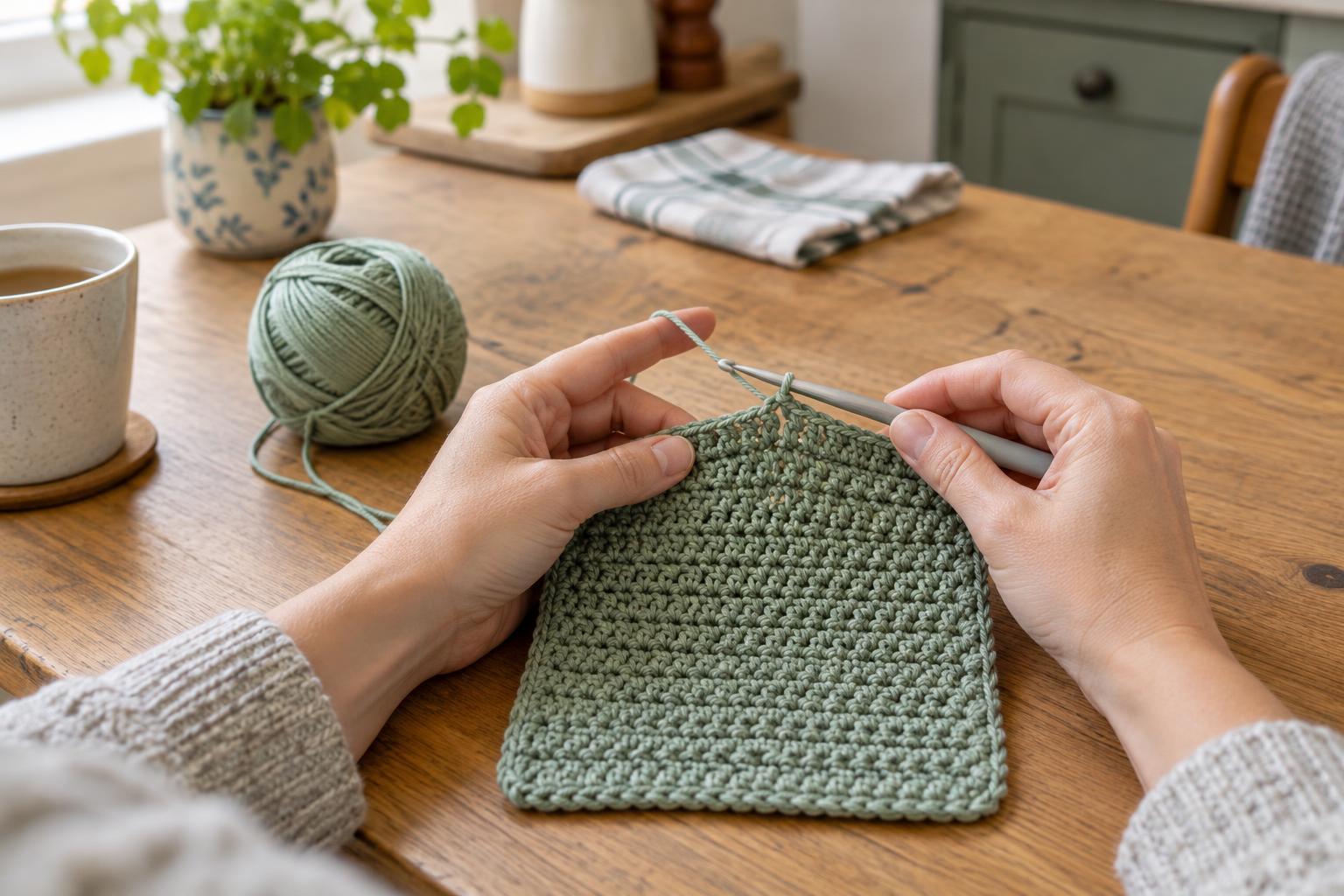
To make the first single crochet, skip the chain closest to the hook and insert your hook into the next chain. Wrap the yarn over the hook and pull up a loop. You should now have two loops on your hook. Wrap the yarn over again and pull it through both loops. Repeat in each remaining chain. When you reach the end, you should have 25 single crochet stitches. Count the small V-shaped tops of the stitches if you are unsure.
Work steady rows until the cloth is square
Make one chain stitch, then turn the work so you can crochet back across the row you just completed. For this pattern, the turning chain does not count as a stitch. Insert your hook under both strands of the first V-shaped stitch, make a single crochet, and continue across. Put one single crochet in each stitch, including the last one. You should still have 25 stitches at the end of the row.
Repeat that sequence—chain one, turn, and single crochet across—until the cloth looks roughly square. The number of rows may differ from the number of stitches because stitch height and tension vary. You can lay the cloth flat and compare its width with its height rather than aiming for an exact row count.
If an edge starts to slope, pause and count your stitches. A missing stitch at the end of a row can make the cloth narrower; an extra stitch can make it wider. You can undo a row by gently pulling the working yarn and then try again. If you decide to leave a small irregularity, that is fine too: this is a useful object, not a test.
Finish, wash, and use it
When the cloth is the size you want, cut the yarn, leaving a tail of about 15 cm (6 inches). Pull the cut end all the way through the loop on your hook and snug it gently. Thread the tail through a blunt yarn needle and weave it through several nearby stitches on the back of the cloth. Change direction once to help secure it, then trim the excess. Weave in the starting tail the same way.
Wash the dishcloth according to the yarn label before putting it to work. Cotton may settle or shrink a little after washing, so a perfectly measured square is unnecessary. Once you have made one cloth, you can try a wider starting chain, a different color, or a second cloth with more relaxed, even stitches. The basic method stays the same.