Start with the jobs you actually expect to do
A basic toolkit should help with ordinary tasks: tightening a loose cabinet handle, hanging a picture, assembling furniture, or adjusting a door latch. Thinking about those jobs first keeps you from buying specialized tools that may sit untouched. If you rent, check which repairs are yours to handle and which should go to your landlord or building manager.
Choose a sturdy box or bag with enough room to see and reach what you own. A tool is more useful when you can find it quickly. Leave a little space for supplies you discover you need later; you do not have to build a complete kit in one shopping trip.
Choose a small set of versatile hand tools
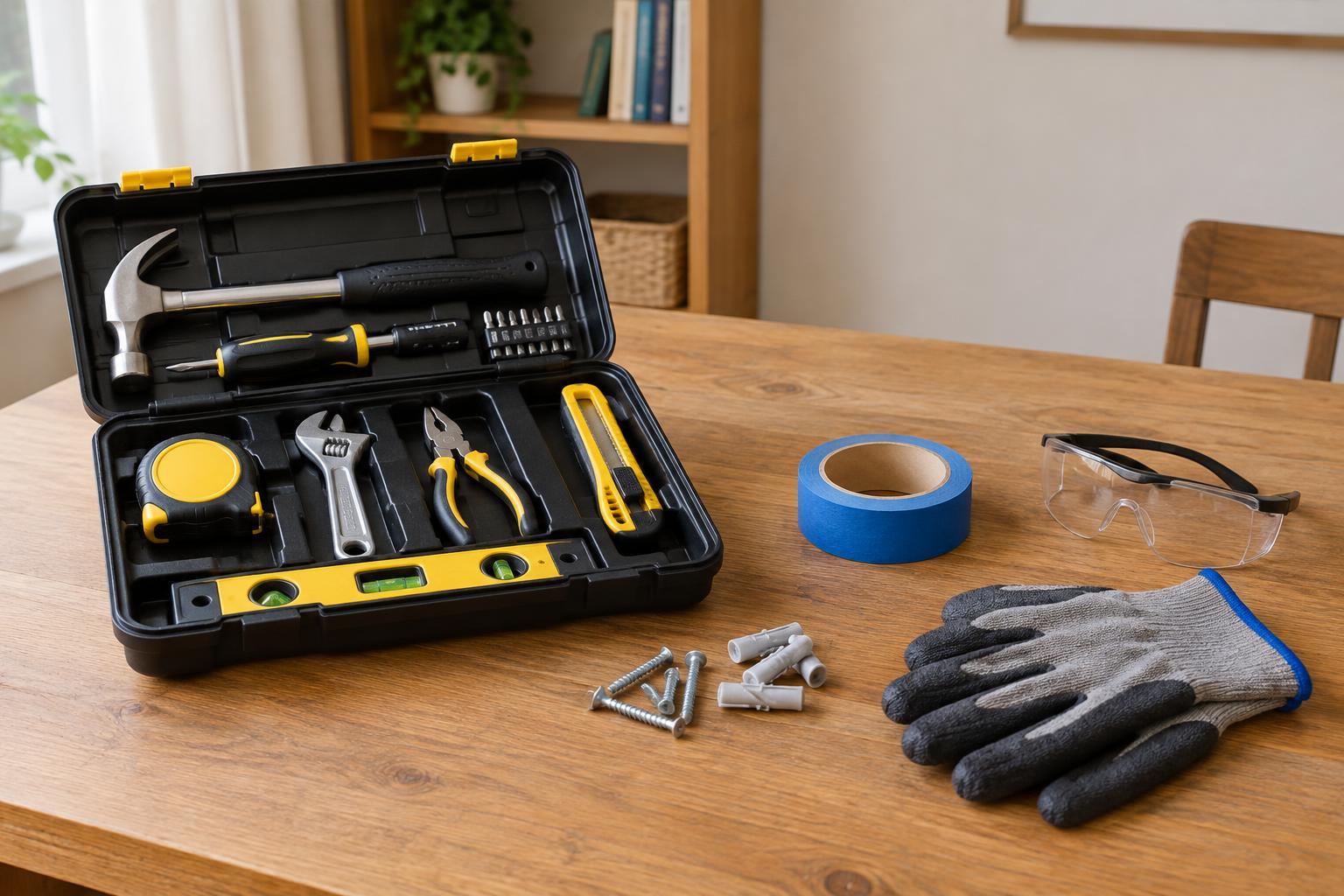
A tape measure, claw hammer, and a pair of screwdrivers cover many first projects. Pick a tape measure with markings you can read easily. A comfortable, moderate-weight hammer is easier to control than one that feels heavy in your hand. For screws, start with common flat-head and Phillips sizes, or use a screwdriver with interchangeable bits that fit securely.
Add a set of hex keys for furniture assembly, adjustable pliers for gripping and bending, and a small adjustable wrench for nuts and bolts. A utility knife can open packaging and trim light materials, but its blade needs a cover or a retracting mechanism. A small level helps you place shelves and pictures straight. If you regularly work in dim corners, a flashlight or rechargeable work light belongs in the kit too.
Fit matters more than a long list of features. Before buying, check that handles feel secure, moving parts operate smoothly, and replacement blades or bits are easy to obtain. For occasional work, a few reliable basics are usually more helpful than a large set full of pieces you cannot identify.
Keep the little supplies that finish the job
Tools alone will not fasten a loose hook or replace a missing furniture screw. Keep a modest assortment of screws, nails, picture hangers, and wall anchors in labeled compartments. Fasteners must suit the surface and the weight they will support; an anchor intended for drywall, for example, is not automatically suitable for masonry. Save spare hardware from furniture in a labeled bag so you know where it came from.
Painter’s tape, a pencil, and a small notepad are easy to overlook. Use them to mark positions, protect a nearby surface, or record a measurement before you cut or buy a replacement part. A few reusable cloths help with cleanup. Avoid collecting unidentified screws and parts in one loose pile: sorting them later can take longer than the repair.
Make safety part of the kit
Safety glasses are worth keeping beside the tools, not in a distant drawer. Wear them when hammering, drilling, cutting, or working overhead. Gloves can protect your hands when handling rough materials, although they should not be worn around equipment where fabric could catch. Work on a stable surface, keep your cutting hand out of a blade’s path, and put sharp tools away as soon as you finish using them.
A starter kit is not a reason to tackle every repair yourself. Stop if a task involves exposed wiring, a gas connection, a significant water leak, structural damage, or a ladder setup you cannot make stable. For those situations, contact the appropriate qualified professional or property manager. Even for a small job, take time to locate hidden pipes or wires before putting a fastener into a wall.
Build the kit through small projects
Begin with a low-stakes task, such as tightening a drawer pull or assembling a simple item. Lay out the tools, read any product instructions, and check that each bit or wrench fits the fastener before applying force. If a screw slips or a part resists, pause rather than pushing harder. The right size tool and a closer look often prevent damage.
After each project, wipe down the tools, return them to the same places, and note anything you borrowed or wished you had. That list gives you a sensible plan for your next purchase. Over time, your toolkit will reflect your home and the repairs you are comfortable making, rather than someone else’s idea of a complete collection.