The difference starts with acid
Baking soda and baking powder are leaveners: they help batters and doughs expand by producing carbon dioxide gas. Tiny gas bubbles get caught in the mixture, and the structure of the baked good firms up around them as it cooks. Both ingredients can make a cake or muffin lighter, but they are not interchangeable scoops of the same thing.
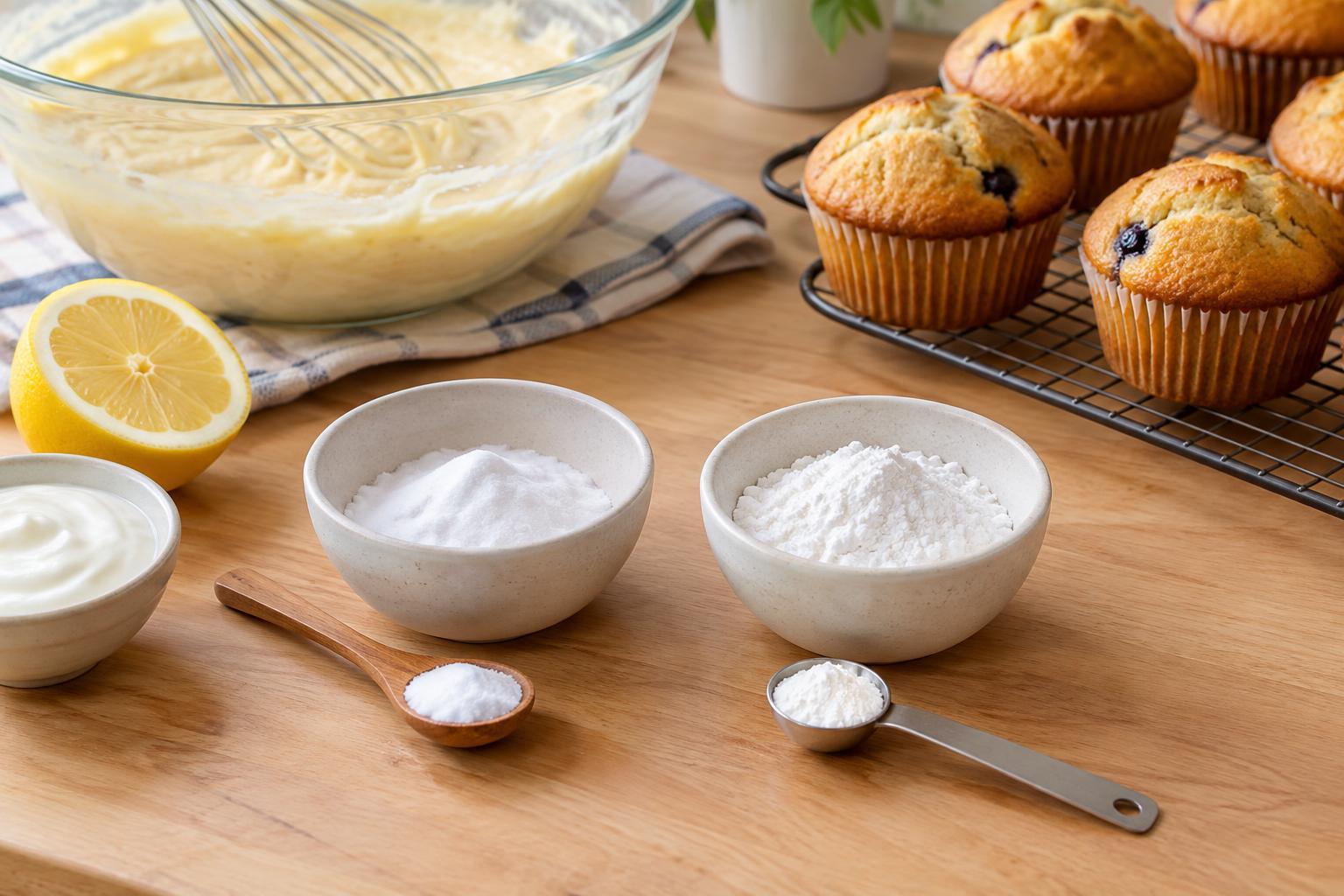
Baking soda is sodium bicarbonate. It needs an acid in the recipe to react effectively. Buttermilk, yogurt, lemon juice and vinegar are familiar examples; molasses and natural cocoa powder can also contribute acidity. Once soda meets acid and moisture, the reaction begins. That is one reason many soda-based batters are baked soon after mixing.
Baking powder contains baking soda along with one or more dry acids, so it brings much of what it needs to the recipe. Most baking powder sold for home baking is double-acting: it releases some gas when moistened and more as it heats. The two ingredients can look alike in the cupboard, but their different contents affect both rise and flavor.
Why a recipe might use one, the other, or both
A recipe with acidic ingredients may use baking soda to help the batter rise while reducing some of that acidity. Soda also raises the batter’s pH, which can encourage browning. That can be welcome in a cookie, for example, but too much soda may leave a soapy taste or make the result darker than intended.
Baking powder is useful when a recipe needs lift but does not contain enough acid to make baking soda the main leavener. Because the acid is already in the powder, it can provide a more predictable rise across a range of batters. It may also be used alongside soda when the recipe needs more lift than its acidic ingredients alone can provide.
When you see both listed, each may have a job. The soda reacts with ingredients such as buttermilk, while the powder supplies additional leavening. Removing either one could change the height, color or taste, even if the other ingredient remains.
Why a straight substitution often disappoints
If you run out of one ingredient, it is tempting to replace it with the same amount of the other. That rarely works well. Baking soda is more concentrated than baking powder, and adding soda to a batter without enough acid can leave an unpleasant taste. Swapping powder for soda may require more powder than the recipe’s dry ingredients can comfortably accommodate.
Some substitutions can work with changes to other ingredients, but the right adjustment depends on the full recipe. An acidic liquid may affect moisture as well as flavor, so adding a splash of lemon juice is not necessarily a complete fix. For a bake where texture matters, the most reliable choice is to use the leavener named in the recipe or find a recipe designed around what you have.
The same caution applies to cocoa. Natural cocoa powder is generally acidic, while Dutch-process cocoa has been treated to reduce its acidity. A recipe written for one may not behave exactly the same with the other, particularly when baking soda supplies the rise.
Small handling habits that make a difference
Measure both leaveners carefully with a measuring spoon, leveling off the top rather than taking a heaped scoop. A little extra can noticeably affect a small batch. If a powder is clumpy, break up the clumps before adding it so it distributes evenly. Whisking the leavener into the flour and other dry ingredients helps prevent pockets of concentrated flavor.
Have the pan and oven ready before mixing a quick bread, muffin or cake batter. You do not need to rush frantically, but leaving a wet batter on the counter for a long time can waste some of the gas produced early in the process. Follow the recipe’s mixing directions, too: vigorous stirring after the wet and dry ingredients meet can change the finished texture.
Keep baking soda and baking powder tightly closed in a dry place. Moisture can start reactions in the container, making a leavener less dependable later. Labeling the containers clearly is a simple way to avoid picking up the wrong white powder mid-recipe.
A quick way to remember which is which
Think of baking soda as needing an acid partner, and baking powder as bringing its own. That rule will not explain every detail of a recipe, but it makes ingredient lists easier to read. Buttermilk pancakes with soda, a plain cake with powder, or a recipe using both will seem less mysterious once you look for the source of acidity.
If an older container has been sitting in the cupboard, a simple fizz check can offer a clue: baking soda should bubble when mixed with vinegar, while baking powder should bubble when stirred into warm water. A weak reaction suggests it may be time to replace it. When in doubt, fresh ingredients and the recipe’s specified amounts give your baking the best chance of rising as intended.