Start the clock when the meal ends
Freezing is a useful way to save extra meals, but it cannot make food safe again after it has sat out too long. Refrigerate or freeze perishable leftovers within two hours of cooking or serving. If the food is outdoors or in a space above 90°F (32°C), shorten that window to one hour. If you cannot tell how long a perishable dish has been sitting out, the safer choice is to discard it rather than rely on its smell or appearance.
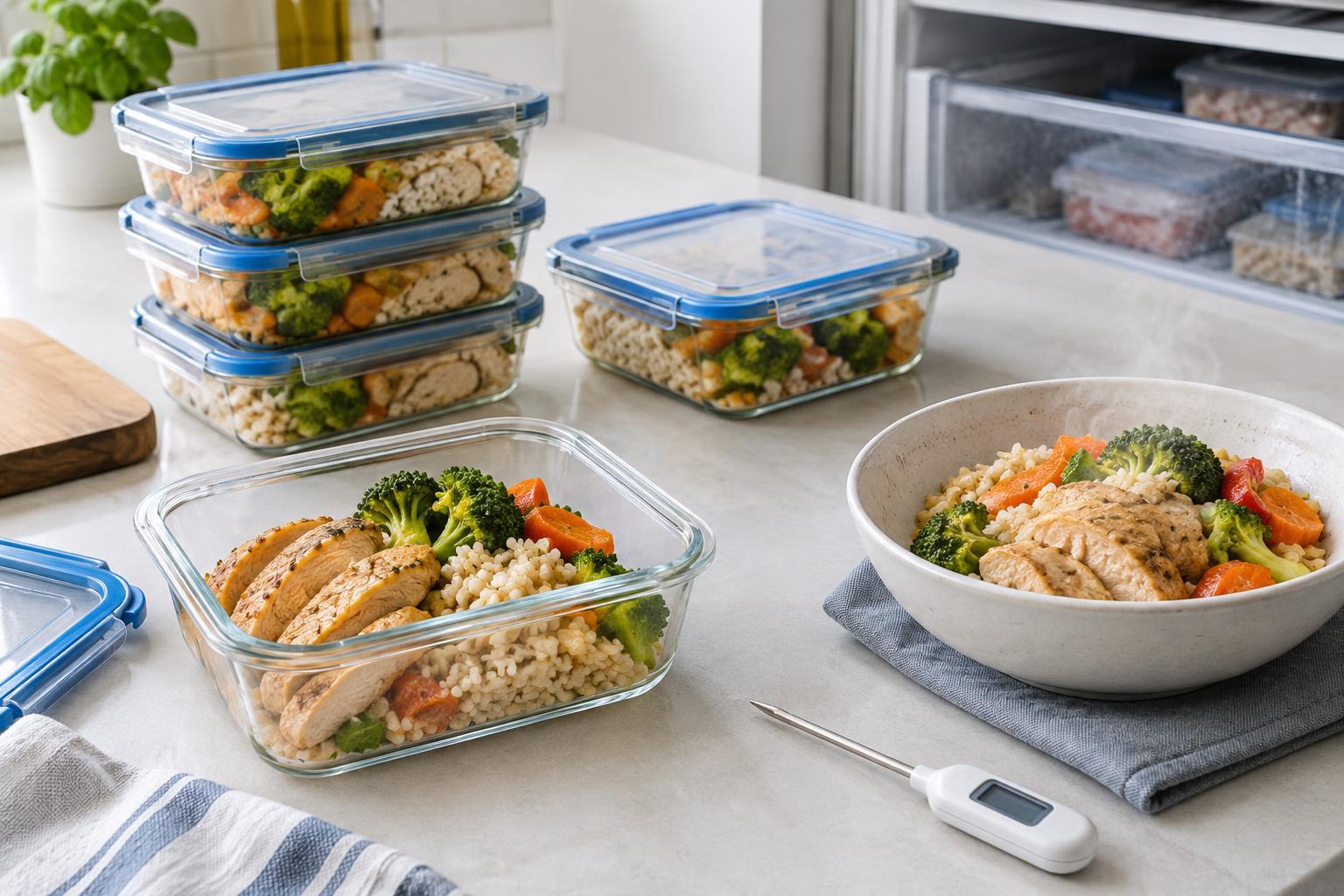
You do not need to wait for a large pot of food to reach room temperature. Instead, divide it into smaller portions and place them in shallow containers so they cool more quickly in the refrigerator. This matters especially for dense dishes such as stews, cooked grains and casseroles, which can stay warm in the center long after the surface feels cool. Keep the refrigerator at 40°F (4°C) or below and the freezer at 0°F (-18°C) or below.
Pack portions you will actually use
Freeze leftovers while they are still within their refrigerator storage window, generally three to four days after cooking. Freezing pauses the growth of most microbes; it does not reset the time the food already spent in the refrigerator. If you know you will not eat a dish soon, portioning and freezing it earlier is simpler than trying to remember its age later.
Use freezer-safe containers or bags that close tightly. Leave a little space for soups and sauces to expand, and press excess air from bags when practical. Divide a big batch into meal-sized portions so you can thaw only what you need. A flat bag of chili or sauce is easy to stack and often thaws more quickly than a deep container. Label each package with its contents and the date, including enough detail to distinguish similar-looking dishes.
Food kept continuously frozen at 0°F (-18°C) can remain safe for a long time, but flavor and texture may decline. For an easy household routine, aim to use most prepared leftovers within a few months and check older packages for freezer burn or changes in quality. Freezer burn is mainly a quality problem, not a sign that the food has become unsafe.
Choose a safe way to thaw
The refrigerator is the most flexible place to thaw leftovers. Put the package on a plate or in a container to catch leaks, and allow enough time for the center to thaw. Small portions may thaw overnight; larger, dense ones can take longer. Leftovers thawed in the refrigerator can generally be reheated within three to four days, provided they were handled safely before freezing.
For a quicker option, thaw a sealed, leakproof package in cold water, changing the water about every 30 minutes so it stays cold. You can also use a microwave’s defrost setting. Reheat food immediately after either cold-water or microwave thawing, because parts of it may have warmed into a range where microbes grow more readily. Many soups, stews and portioned meals can be reheated directly from frozen; just allow extra time and break up frozen sections as they soften.
Do not thaw leftovers on the counter. The outside can become too warm while the center is still frozen. If plans change, food thawed in the refrigerator can generally be refrozen, though its quality may suffer. Food thawed in cold water or the microwave should be cooked or reheated thoroughly before it is frozen again.
Reheat all the way through
Reheat leftovers to 165°F (74°C) throughout, checking the thickest or coolest part with a food thermometer. Bring soups, sauces and gravies to a rolling boil, stirring to distribute the heat. On the stovetop or in the oven, cover food when appropriate to help retain moisture and heat it evenly.
Microwaves can leave cold spots. Cover the dish with a microwave-safe lid or loose covering, rotate it if the appliance does not turn, and stir partway through heating. Let the food stand briefly after the microwave stops, then check its temperature in more than one place. If one area is still cool, continue heating and check again.
Reheat only the portion you plan to eat when possible. It saves time and avoids repeatedly warming and cooling the same container. When a leftover looks or smells questionable, do not taste it to decide whether it is safe; throw it out. A little attention at each step—prompt cooling, clear labels, safe thawing and thorough reheating—makes a freezer full of leftovers far more useful.