Start with three storage zones
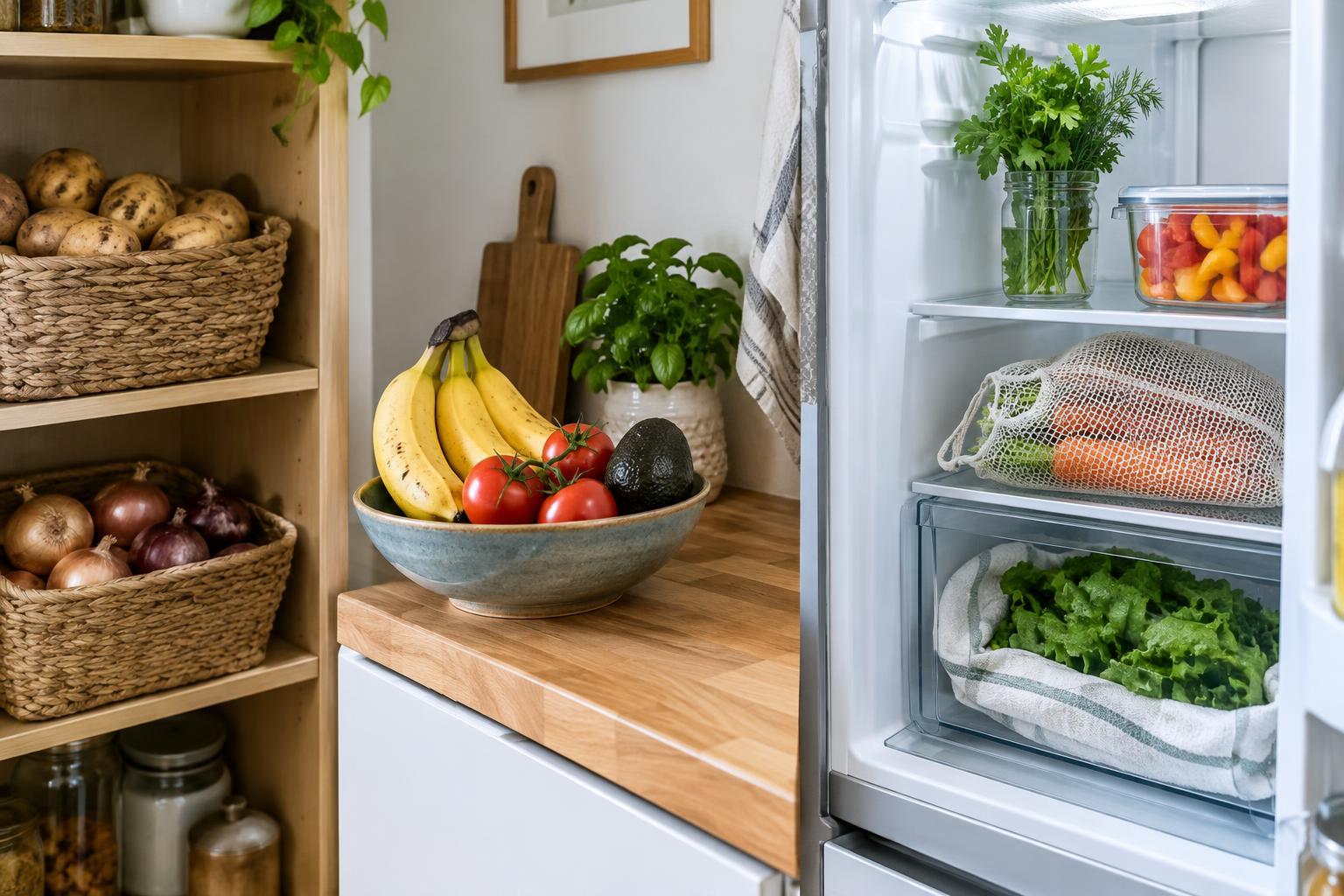
Putting every fruit and vegetable in the refrigerator is tempting, but it can leave some produce with disappointing texture or flavor. A simple system uses three zones: a cool, dry pantry for certain sturdy vegetables; a countertop for produce that needs to ripen or does better at room temperature; and the refrigerator for items that lose freshness quickly.
Wherever you store produce, give it a little attention when you get home. Remove any bruised or leaking pieces that could affect their neighbors, but avoid washing most produce until you are ready to use it. Extra surface moisture can encourage spoilage. If you do wash ahead, dry it thoroughly before putting it away.
Keep these in a cool, dry pantry
Whole potatoes, sweet potatoes, onions and garlic generally belong in a dark, well-ventilated place rather than a sealed bag in the fridge. A basket, open box or loosely woven bag works better than airtight plastic. Choose a spot away from heat and direct sunlight, and check it periodically for soft or sprouting pieces.
Keep potatoes and onions in separate containers. Both need airflow, and separating them makes it easier to notice when one needs attention. A pantry that gets warm may shorten their useful life, so buy smaller amounts if you cannot offer a cool spot. Once an onion is cut, cover it and refrigerate it instead of returning it to the pantry.
Use the counter for ripening
Bananas, avocados, peaches, pears and tomatoes can sit at room temperature while they ripen. Check them daily: a countertop is a temporary stop, not a place to forget a full fruit bowl. Once an avocado or ripe peach is ready but your plans change, moving it to the refrigerator can buy you some time. A ripe tomato can also be refrigerated if necessary, though its texture may change; let it come back toward room temperature before eating if you prefer its flavor that way.
Some fruits, including apples and bananas, release ethylene gas as they ripen. That gas can speed ripening in nearby produce. This is useful if you want a firm avocado to ripen, but less useful beside tender greens or vegetables you hope to keep crisp. Give quickly ripening fruit its own space rather than crowding everything into one bowl.
Give refrigerated produce the right amount of moisture
Berries, grapes, leafy greens, carrots, broccoli and many other tender items usually benefit from refrigeration. Berries do best when kept dry and handled gently; sort out damaged ones and wash the rest just before eating. Mushrooms also dislike trapped moisture, so a paper bag in the refrigerator is often more useful than a tightly sealed plastic container.
Leafy greens need protection from drying out without sitting in water. Store them in a container or bag with a dry paper towel to absorb condensation, replacing it if it becomes wet. If you prefer to wash greens in advance, dry them thoroughly first. Carrots and similar crisp vegetables can go in a bag or covered container so they do not become limp.
Crisper drawers can help you keep these items organized. If your drawer has a humidity setting, higher humidity generally suits leafy vegetables, while lower humidity suits many fruits. Do not worry about achieving a perfect setting: keeping produce visible, reasonably dry where needed and uncrowded enough to inspect matters more than a complicated system.
Store herbs and cut produce with a plan
For parsley and cilantro, trim the stems and stand the bunch in a small jar of water in the refrigerator, with a loose bag over the leaves if space allows. Change the water when it looks cloudy. Basil often fares better on the counter in a similar jar, away from harsh sunlight. If you would rather skip jars, wrap herbs loosely in a slightly damp towel and check them often.
Cut fruit and vegetables are different from whole produce: refrigerate them promptly in covered containers, rather than leaving them on the counter. Labeling a container with what is inside can help prevent forgotten leftovers from collecting at the back of the fridge. Use your senses and judgment when checking produce, and discard anything with mold, a slimy surface or an unpleasant smell.
The easiest way to waste less is to look before you shop and plan around what is already ripening. Move a ready-to-eat item to the front, add soft fruit to breakfast, or cook vegetables that are beginning to lose their crispness. Storage helps, but a quick check every day or two is what turns good intentions into meals.