The main difference is when the cooking happens
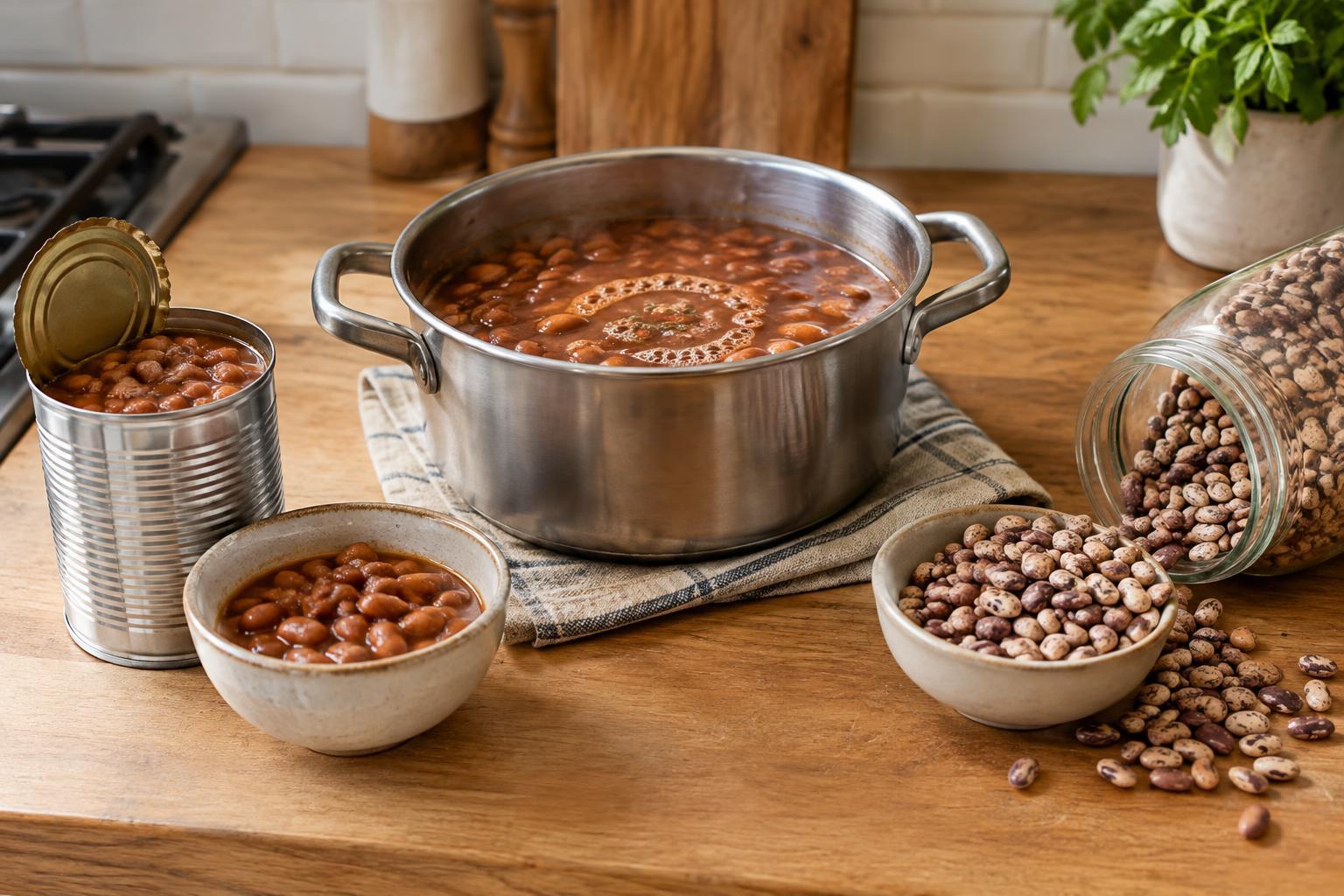
Canned beans are already cooked. Open the can, drain or rinse if you like, and they are ready for a salad, a quick mash or a short simmer in soup. Dried beans need sorting, rinsing and cooking until tender. Soaking can shorten that cooking time, but it also means planning ahead. Either choice can make a satisfying meal; the useful question is how much time and attention you have today.
For a weeknight dinner, canned beans usually win on convenience. They can go straight into a pan with vegetables and spices or be added near the end of a stew. Dried beans suit a day when you can cook a larger batch and use it across several meals. Their cooking time varies with the bean variety, its age and the method you use, so it is better to plan for flexibility than to rely on an exact minute count.
What changes in the bowl
Canned beans tend to be soft and consistent, though some brands hold their shape better than others. That softness is useful for dips, spreads, quick chili and soups you want to thicken slightly. If you want distinct beans in a salad, fold them in gently and avoid simmering them for too long.
Cooking from dried gives you more say over the final texture. You can stop when the beans are tender but still firm enough for a salad, or continue until they are creamy for a mash or brothy bowl. The cooking liquid can also become part of the dish: as beans simmer, it picks up flavor and a little body. This is especially handy when the beans will be served with rice, bread or vegetables rather than drained.
Flavor and seasoning
Dried beans start out relatively plain, which makes them a good canvas for onion, garlic, herbs or spices in the cooking pot. Canned beans arrive in liquid that may contain salt and other seasonings. Check the label if that matters to your dish, and taste before adding more salt. A rinse can remove some of the canning liquid and give you a cleaner starting point; leaving the liquid in can add body to a soup or sauce.
Neither type has to taste bland. For canned beans, a brief simmer with a little oil, aromatics and cooking liquid helps flavors come together. For dried beans, season the pot to suit the meal, then make final adjustments once the beans are tender. If a recipe includes acidic ingredients such as tomatoes or vinegar, adding them after the dried beans have softened can make it easier to judge doneness.
Choose by the job, not by a rule
Keep canned beans for meals you want to start and finish without much preparation: a chickpea salad, black bean tacos, a white bean toast topping or a soup made from pantry ingredients. They are also useful when a recipe calls for a small quantity and you do not want leftovers. Drain them when you want a less saucy result; keep some liquid when it helps bind or thicken the dish.
Choose dried beans when you want a large batch, a particular texture or flavorful cooking broth. A pot of cooked beans can become a side dish one day and the base for soup the next. Let cooked beans cool promptly, refrigerate them in a covered container and use them within a few days, or freeze portions for later. Freezing them with some cooking liquid helps keep them moist and makes them easy to add to a simmering dish.
A simple way to decide
Ask three questions before you begin: When do I want to eat? Do I need beans that hold their shape or turn creamy? Will the cooking liquid improve the dish? If dinner is soon, reach for a can. If you have time and want to shape the result, start with dried beans. Keeping both on hand lets you make that decision without changing the whole menu.
If you are new to dried beans, follow the package directions and check for tenderness as they cook. Kidney beans need particular care: they must be boiled properly rather than cooked only at a low slow-cooker temperature. Whichever type you use, taste and adjust the finished dish. Convenience and control are both useful kitchen tools, and beans offer room for either.