Start with water control, not perfect brushwork
Many watercolor surprises come down to how much water is on the brush, in the paint, and on the paper. If color races farther than you intended, the paper may be wetter than it looks. If a stroke skips or leaves scratchy marks, the brush may be too dry. Before touching your painting, test a stroke on a scrap of the same paper. Watch whether it spreads, sits in place, or drags, then adjust the water on your brush.
An unwanted bloom—a pale, branching shape within a wash—often appears when a wetter brush touches paint that has begun to dry. While the area is still wet, you can sometimes soften the mark by gently blending with a clean, damp brush. Once it has dried, avoid scrubbing at it immediately. A bloom can become texture in a cloud, leaf, or background. For a more even wash next time, keep a small bead of wet paint moving across the page and let the area dry completely before adding another layer.
Keep colors clear instead of muddy
Muddy color usually develops when too many pigments mix on the page or when a brush carries an unnoticed trace of another color. Start with a clean water jar and rinse your brush thoroughly between mixtures. Try combining two colors on a palette before bringing in a third. If you want a layered color, allow the first wash to dry before painting over it; blending every layer while wet can turn distinct colors into one dull patch.
If an area is already muddy, adding more paint rarely restores its brightness. Let it dry and decide whether it needs correcting at all. A darker, quiet area can help brighter parts stand out. If it truly distracts, a clean, slightly damp brush may lift some color, though the result depends on the paint and paper. Blot gently with a clean cloth or paper towel rather than rubbing. Save strong corrections for small areas so the paper surface stays intact.
Soften hard edges and streaky washes
A hard edge forms when wet paint stops and dries in place. That can be useful for a window frame or a crisp shadow, but less welcome in a soft sky. To soften an edge while it is damp, rinse your brush, remove excess water, and touch just beyond the painted line. Pull the color outward with a light stroke. Work promptly and leave it alone once it begins to dry; repeated passes can create a new edge or bloom.
Streaks often appear when you pause partway through a large wash or return to a section that is already drying. Mix more paint than you think you need before starting, tilt the paper slightly, and move steadily from one side to the other. For a first attempt, use a smaller area rather than trying to cover a whole page. If a wash dries unevenly, consider whether another transparent layer would unify it. Apply that layer only after the first is fully dry, using as few strokes as possible.
Protect the paper from buckling and overworking
Thin paper can ripple when it absorbs a lot of water, making washes harder to control. Heavier watercolor paper is more forgiving, but you can also reduce buckling by using less water and working in smaller sections. Taping the edges of the sheet to a firm board may help hold it steady as you paint. Let the sheet dry before removing the tape, pulling it back slowly so you do not tear the surface.
Overworking happens when you keep brushing, lifting, and repainting the same spot. The color may become dull, and the paper may start to pill. At the first sign of surface damage, stop and let it dry. You can decide later whether a small detail will draw attention away from the area. The most reliable fix is preventive: make a quick plan for your lightest areas, lay down one wash, and pause to assess it before adding another.
Practice fixes without trying to save every painting
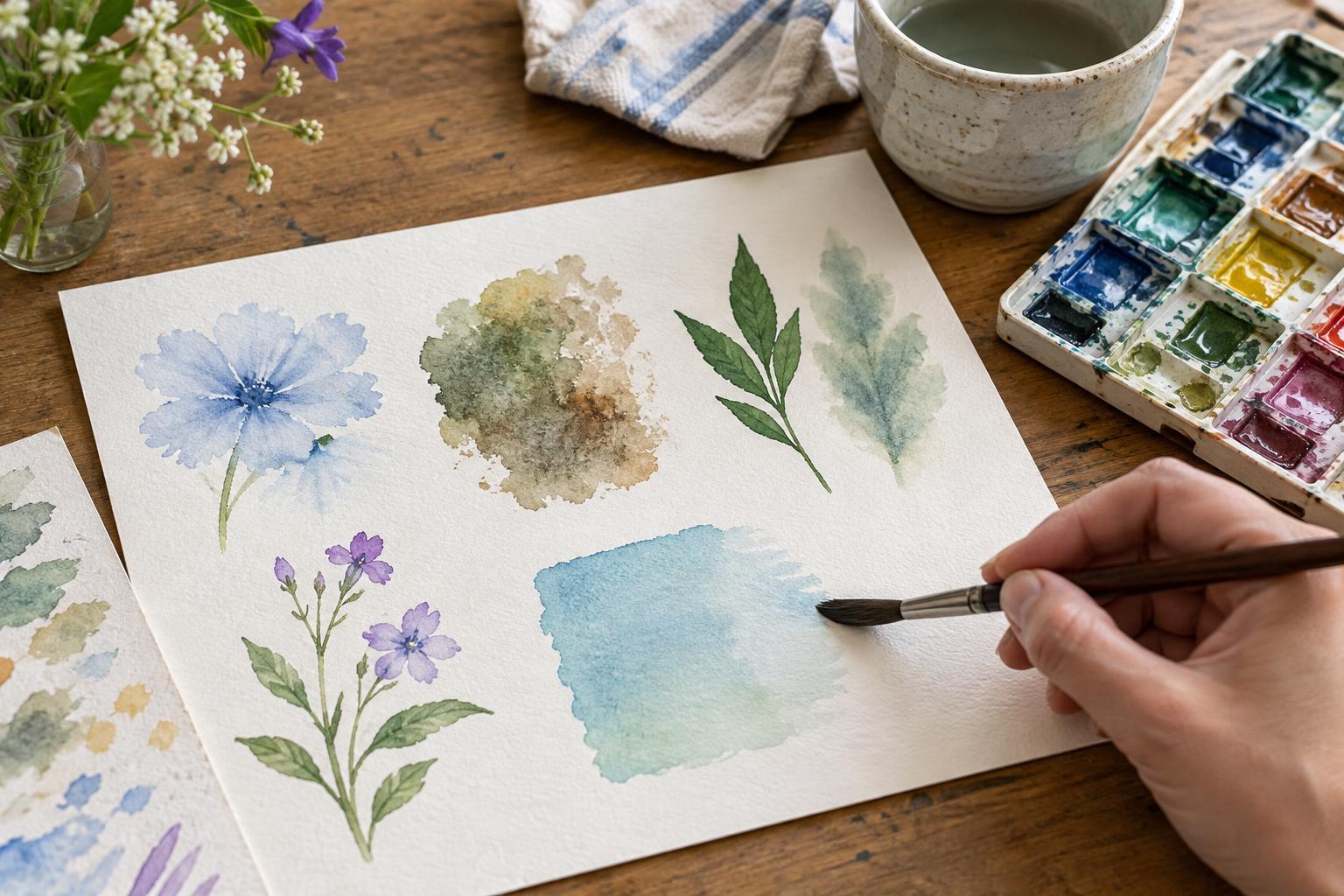
A practice page makes mistakes less frustrating. Divide a sheet into a few small shapes and try a flat wash, a soft edge, and two colors meeting while wet. Change only one thing at a time, such as brush wetness or the amount of time you wait before adding a second layer. Notice what the paint does as its surface changes from glossy to damp to dry. That observation will help more than trying to memorize a single rule for every paint and paper.
When a painting goes off course, step away until it dries. Then identify one specific problem: Is the edge too sharp? Is the value too dark? Has the paper been worked too much? Choose one modest adjustment instead of correcting everything at once. Some marks cannot be removed cleanly, and that is part of the medium. Keeping a few imperfect paintings gives you a useful record of what to try differently next time.