Start with a small kit and a simple goal
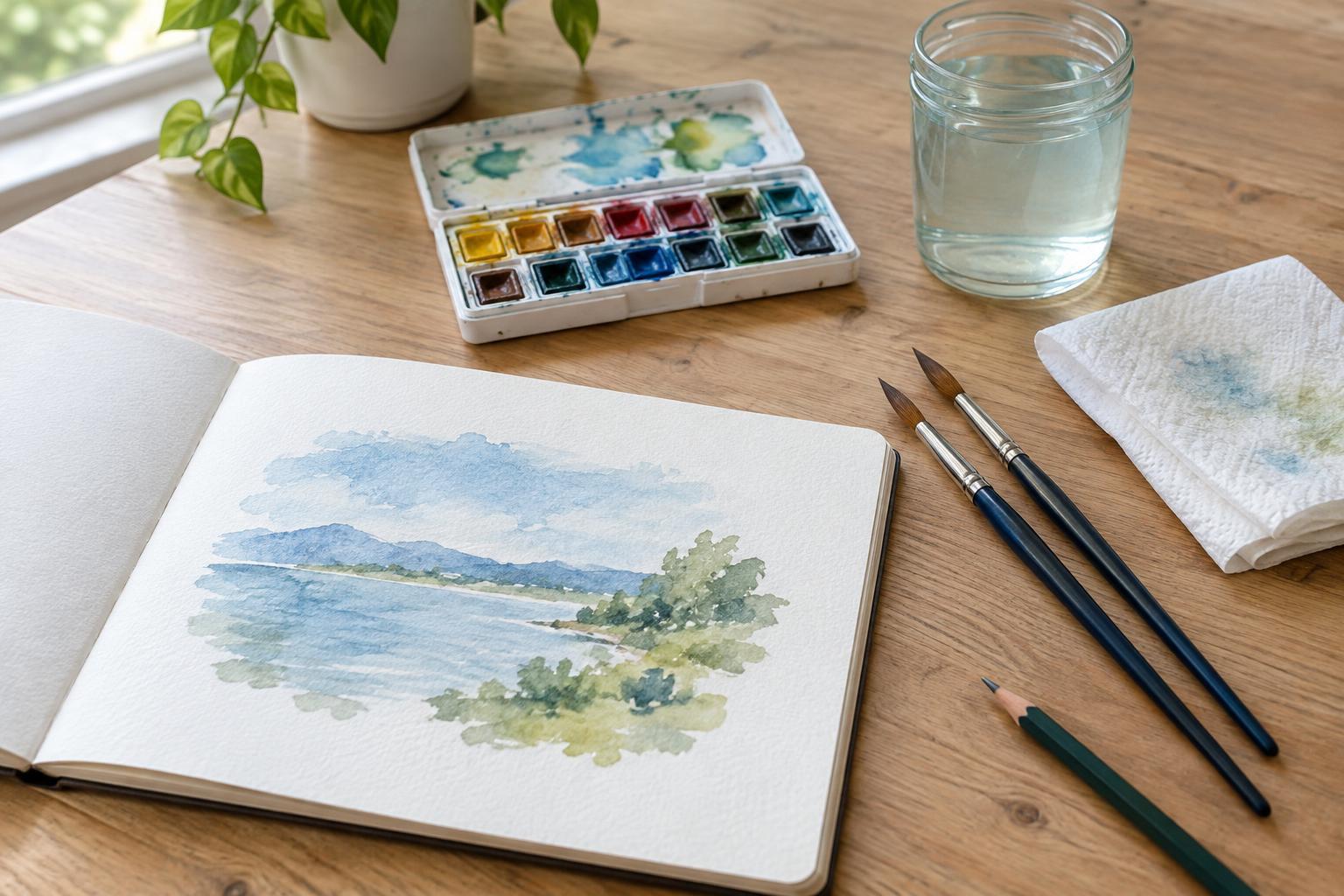
A beginner watercolor kit needs four essentials: watercolor paper, paint, a brush and water. A mixing surface and something to blot your brush make painting easier, but neither needs to be specialized. With those supplies, you can practice washes, mix colors and make small paintings before deciding whether you enjoy the medium enough to buy more.
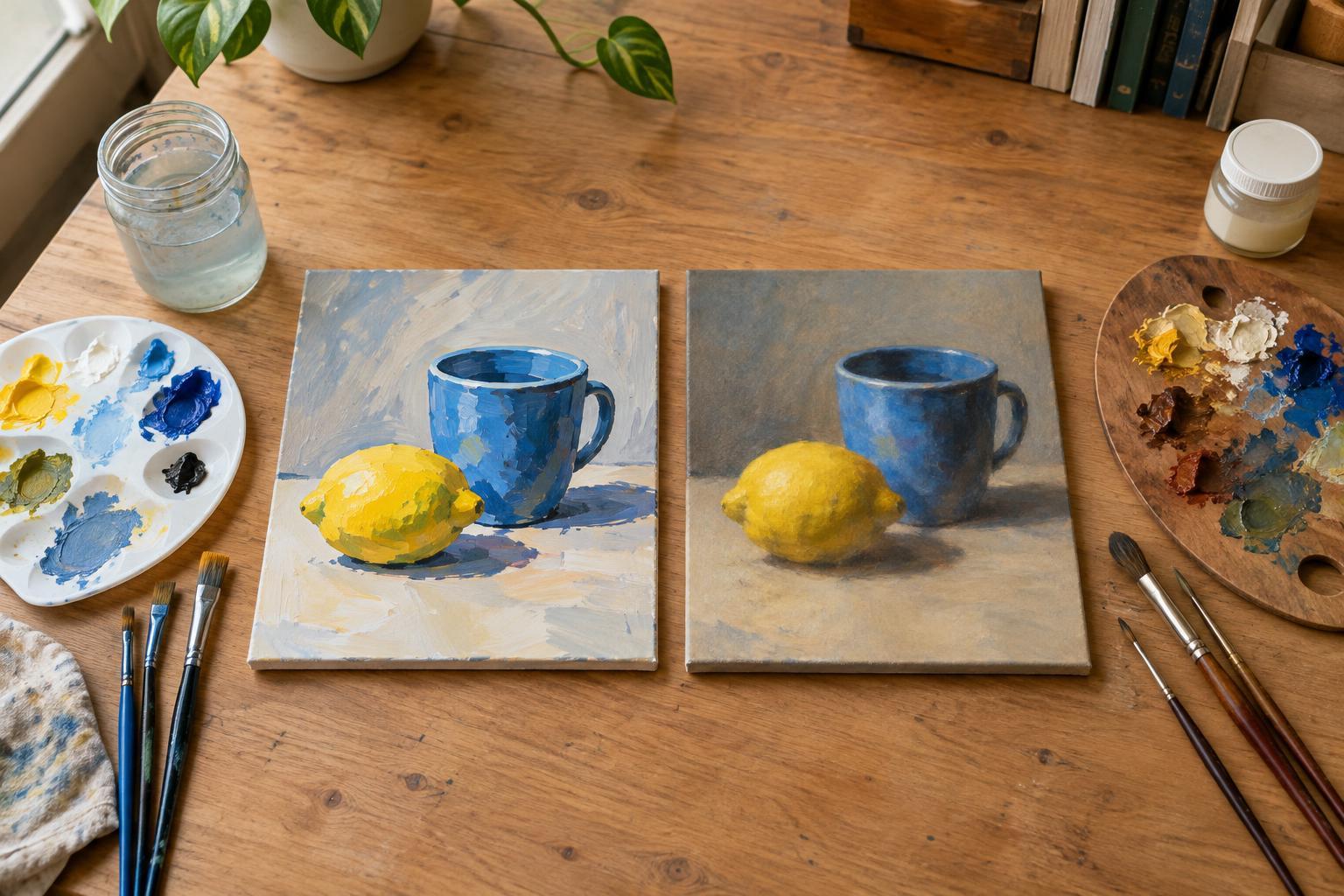
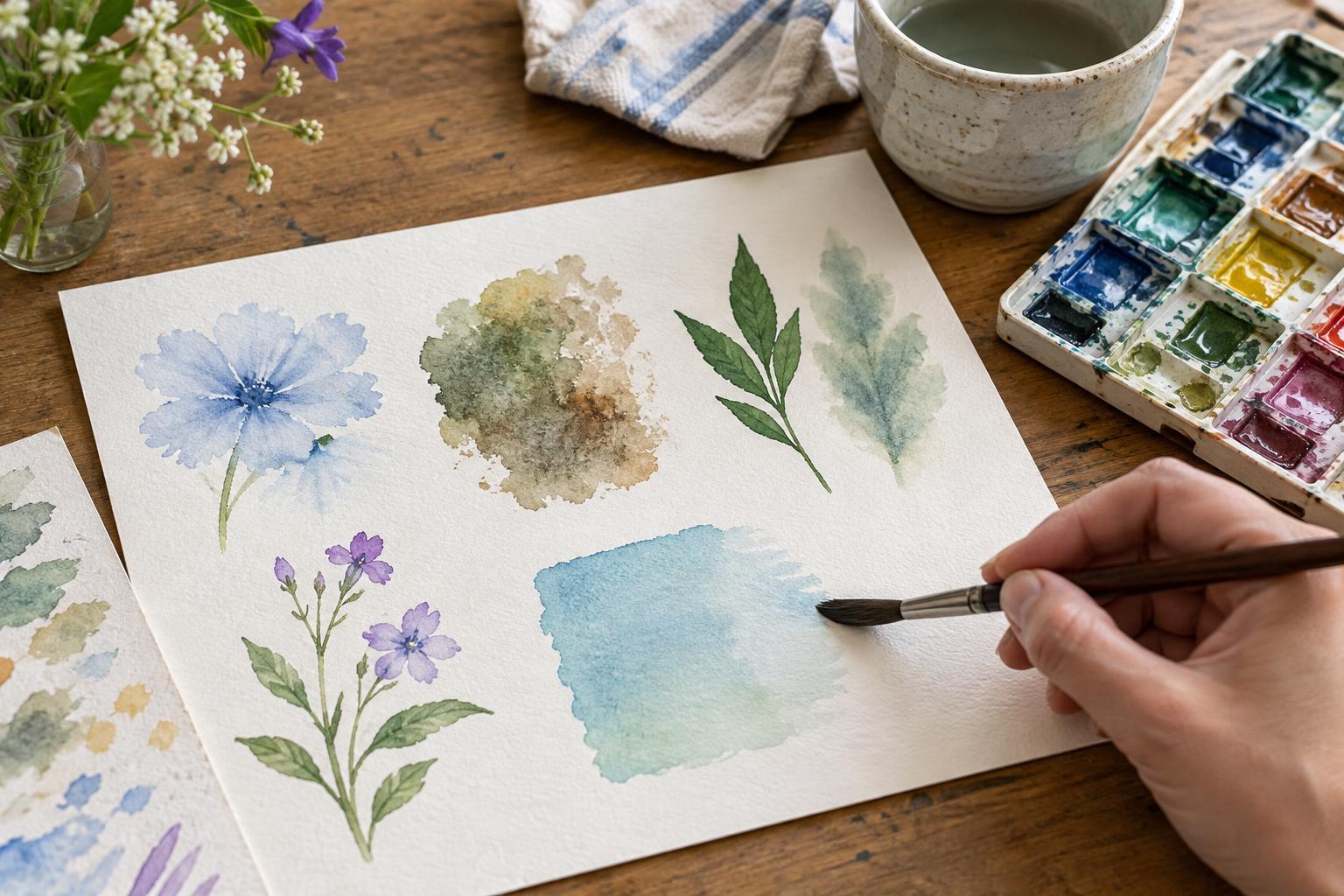
Choose a modest first goal, such as painting a leaf, a mug or a page of color swatches. That gives you a better shopping test than trying to prepare for every technique at once. If a supply helps you complete that first page, it belongs in your kit. If you cannot yet picture when you would use it, leave it on the wish list.
Put paper first
Watercolor paper is the purchase most worth prioritizing. Ordinary printer paper tends to buckle and tear when wet, making it harder to tell whether a problem comes from your technique or the surface. Look for a pad or small block labeled for watercolor. A heavier sheet generally tolerates more water and gentle reworking than a thin one, though no paper is immune to scrubbing.
Cold-pressed paper has a lightly textured surface that works well for many beginner exercises. Hot-pressed paper is smoother and may appeal to you later if you enjoy fine lines and precise details. You do not need a large sheet or an expensive bound journal to begin; a small pad gives you room to experiment without making every page feel precious.
Paper composition affects both feel and price. Cotton paper is often valued for the way it handles water, but a beginner does not need to buy it to learn basic brush control. Start with a watercolor pad you are comfortable using freely. If you find yourself painting regularly, try a few sheets of another paper before committing to a larger purchase.
Choose paints and brushes you can learn with
A compact set of watercolor pans is a straightforward starting point. Tubes work too, but pans keep portions contained and are convenient for short practice sessions. You do not need dozens of colors. A small selection that includes a yellow, a red and a blue gives you plenty to explore; additional colors can be useful, but they are not a substitute for learning how much water and pigment to put on the brush.
Before buying extra paints, make a swatch of every color you own. Then mix pairs of colors and note which combinations you like. This simple exercise shows what your set can already do and reveals any gaps that matter to the subjects you actually paint. Color names can vary between sets, so use the colors in front of you rather than worrying about finding one supposedly perfect beginner palette.
For brushes, start with one medium round watercolor brush that forms a reasonably fine point when wet. It can lay down a small wash and make narrower marks with its tip. A smaller round brush is optional if you enjoy detail. There is no need for a large collection of specialty shapes yet. Rinse brushes gently, reshape their tips and let them dry without leaving the bristles standing in water.
Fill out the kit with ordinary household items
Keep two containers of clean water nearby if you can: one for rinsing paint from the brush and one for picking up cleaner water. A ceramic plate or the mixing area built into a paint set can serve as a palette. Add a cloth or paper towel for blotting. These small items help you control how wet your brush is, which matters as much as the color you choose.
A pencil and eraser are useful for lightly planning a subject, but keep the sketch simple. A board or firm surface under your paper helps if you are working at a table; low-tack tape can hold down a loose sheet. Test tape carefully and remove it slowly, since paper surfaces can lift. Protect the table, especially if you are experimenting with lots of water.
Let the extras wait until you know why you want them
Masking fluid, specialty brushes, elaborate palettes and large assortments of paint can all have a place, but none is required for a first painting. Some extras also bring their own learning curve. Rather than buying a tool because it appears in a tutorial, try the exercise with your basic kit and notice what feels limiting. You might discover that you need a larger brush for broad washes, or that more practice with your current one solves the problem.
After several sessions, review what you enjoyed. If you like painting outdoors, a compact container and portable setup may be worthwhile. If you prefer painting at home, you might spend your next supply budget on paper instead. The best beginner kit is not the most complete one: it is the one you will set out, use and learn from.