Think in roles, not ingredients
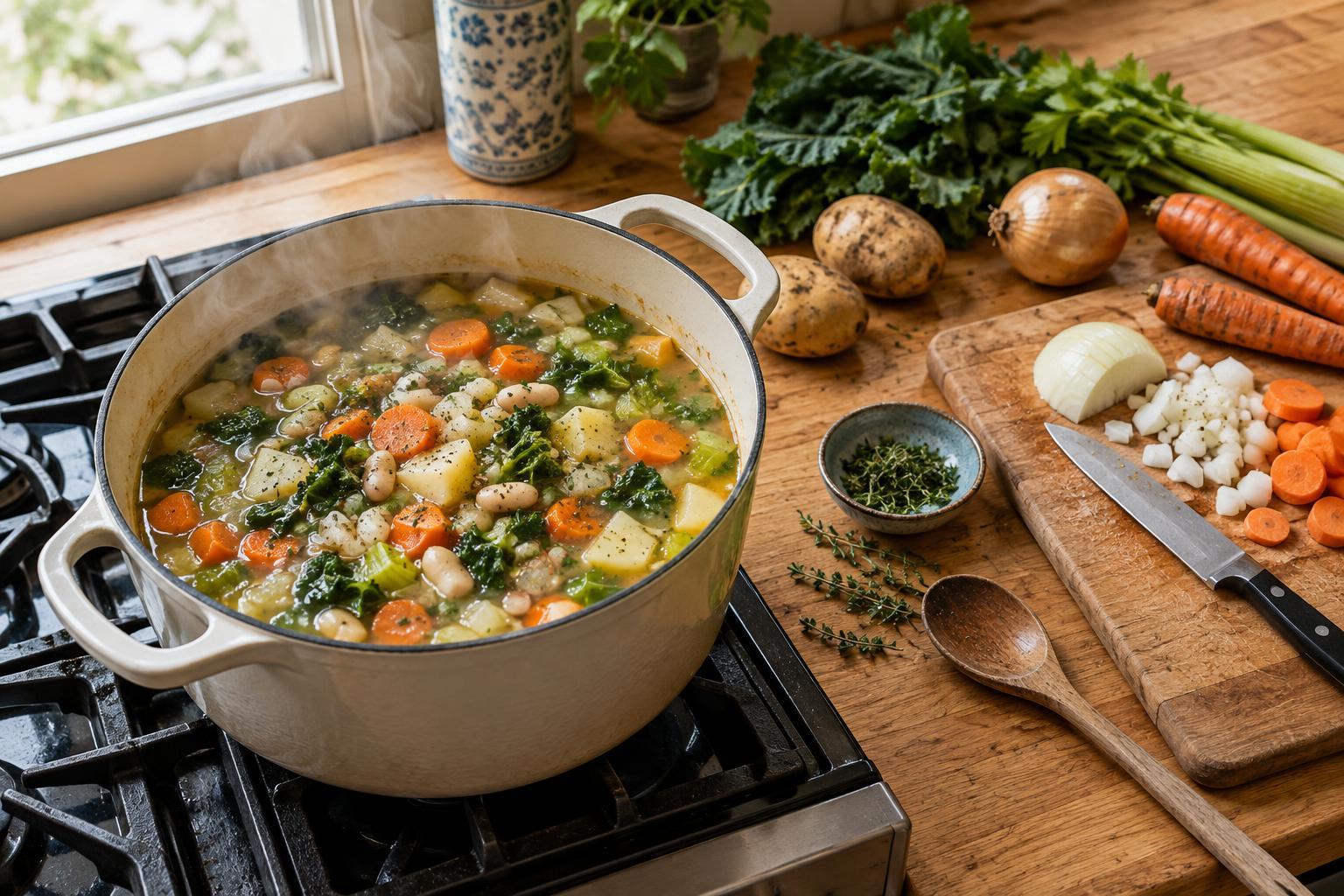
You do not need a fixed list of vegetables to make a good soup. Instead, give each ingredient a job. An onion, leek, or a few cloves of garlic can form a savory base. Firm vegetables such as carrots, celery, squash, potatoes, and turnips provide body. Softer vegetables such as zucchini, peas, and green beans add variety. Leafy greens and fresh herbs bring a final layer of color and flavor.
Choose two or three vegetables you want to feature, then add supporting ingredients if you have them. A pot built around carrots, potatoes, and kale will feel different from one built around zucchini, tomatoes, and white beans, but both follow the same method. Beans, lentils, rice, or small pasta can make the soup more filling; they also affect how much liquid the pot needs. If you are using cooked leftovers, plan to add them late so they heat through without falling apart.
Start with a savory base
Set a roomy pot over medium heat and add a little oil. Cook chopped onion, leek, or celery with a small pinch of salt, stirring occasionally, until it softens and smells inviting. This step gives the broth flavor before any liquid goes in. If you have garlic, add it near the end and stir briefly so it does not scorch.
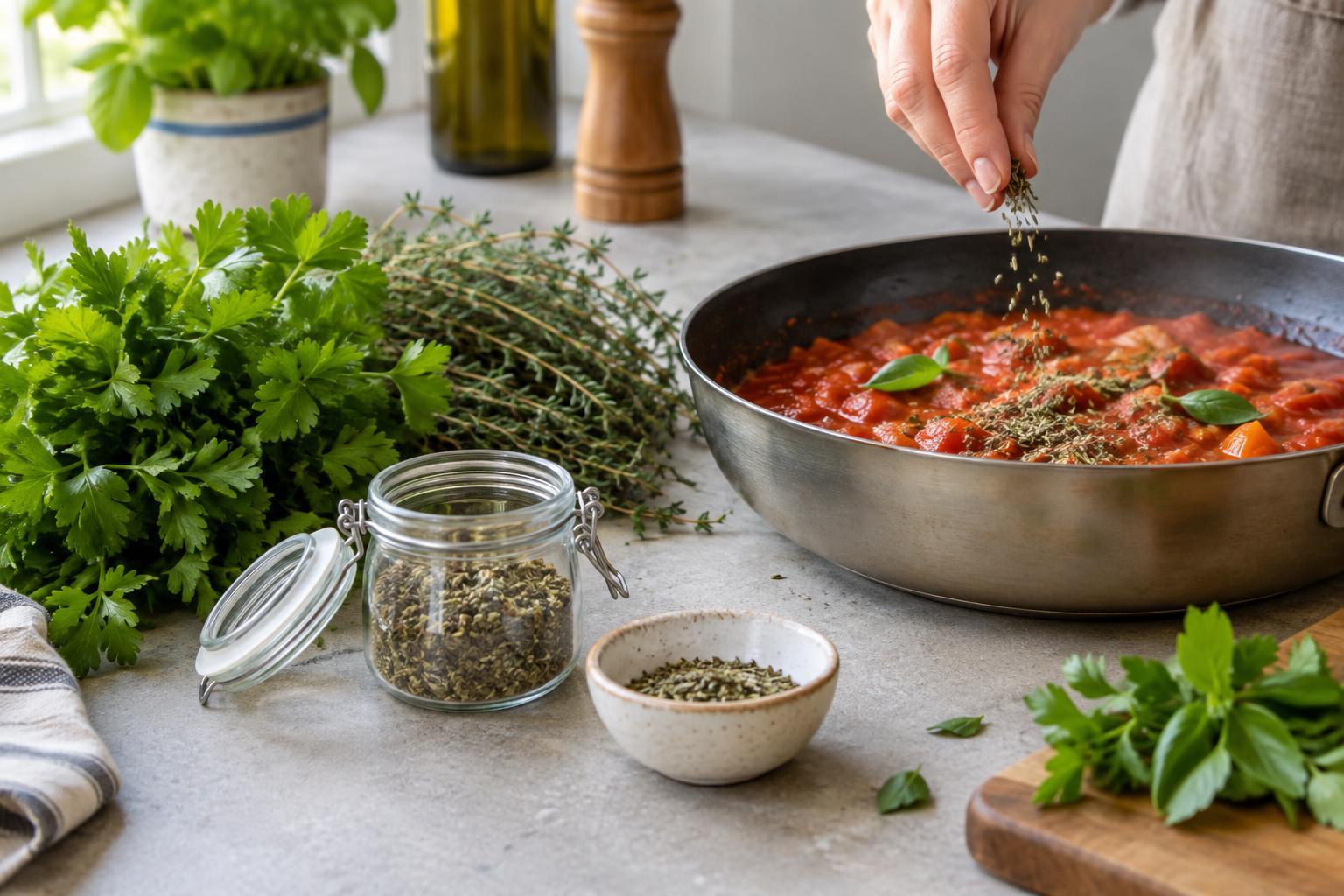
Now decide which direction the soup should take. For an earthy pot, try dried thyme, rosemary, or a bay leaf. For warmth, try cumin and a little smoked paprika. A spoonful of tomato paste can add depth; stir it into the vegetables for a minute before adding liquid. You do not need many seasonings at once. Pick a small combination that suits your vegetables, knowing you can make final adjustments after everything has cooked.
Add liquid and cook in stages
Add your firm vegetables and enough water or broth to nearly cover them. You can always add more liquid, while removing excess takes time. Bring the pot to a boil, then lower the heat to a gentle simmer. Stir occasionally and test a piece of the firmest vegetable with a fork. It should be tender without turning mushy. If you are using uncooked lentils or grains, account for their cooking time and the extra liquid they may absorb.
Add quick-cooking vegetables only when the firmer ones are getting close. Peas and chopped zucchini need less time than carrots or potatoes; tender greens can go in near the end. Cooked beans and leftover vegetables usually need only enough simmering to become hot. Pasta is best added with an eye on the pot, since it absorbs broth and keeps softening as it sits. If you expect leftovers, you can cook pasta separately and add it to individual bowls.
Adjust flavor and texture at the end
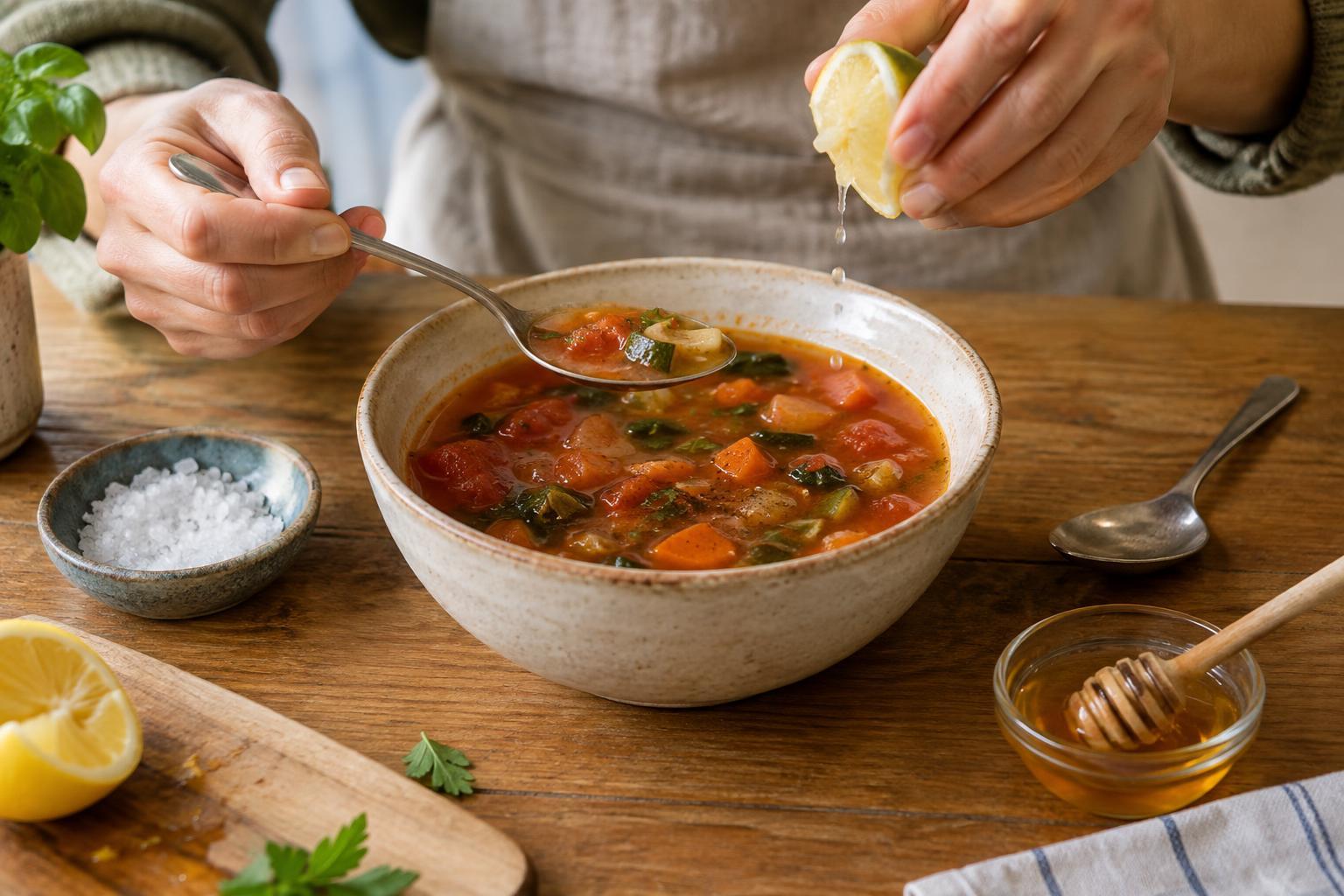
Taste the broth before serving. If it seems flat, add a little salt, stir, and taste again. A squeeze of lemon or a small splash of vinegar can brighten a soup that tastes heavy, while a drizzle of olive oil can give a lean broth a rounder feel. Add these finishing touches gradually: it is easier to add more than to undo too much.
Texture is flexible, too. For a thicker soup, mash some of the potatoes or beans against the side of the pot and stir them back in. For a smoother result, blend a portion of the soup, taking care with the hot liquid, then return it to the pot. If the soup is too thick, add water or broth a little at a time. If it is too thin, simmer it uncovered for a while or add something with body, such as cooked beans.
Make the next pot easier
Notice what worked while you eat. Did the carrots need more time than you expected? Did the broth improve with lemon? A quick note about those choices is more useful than trying to remember an exact recipe. Next time, you can keep the same method and change the vegetables, seasonings, or filling ingredient.
Let leftovers cool before refrigerating them in covered containers. Soup with grains or pasta may thicken as it sits, so add a splash of liquid when reheating and heat it thoroughly. The goal is not to make the same soup every time. It is to learn a dependable sequence: soften a base, simmer sturdy ingredients, add delicate ones later, and taste before serving.