Why vinaigrette separates
Oil and vinegar naturally pull apart. When you whisk or shake them, the oil breaks into tiny droplets that spread through the vinegar. That mixture is called an emulsion. A basic oil-and-vinegar dressing may look uniform at first, then separate while you finish making the salad.
The goal at home is not a dressing that can never separate. It is one that stays mixed long enough to coat your food evenly and is easy to bring back together. Mustard helps: it gives the dressing body and makes the oil droplets less likely to join up quickly. A small amount adds flavor, too, without needing to make the dressing taste strongly of mustard.
Start with a flexible ratio
For a small batch, use three tablespoons of olive oil, one tablespoon of vinegar, and one teaspoon of Dijon mustard. Add a pinch of salt and a few grinds of pepper. This familiar three-parts-oil-to-one-part-vinegar ratio makes a useful starting point, not a rule. If you like a sharper dressing, add a little more vinegar; if it tastes too tart, add more oil.
Choose ingredients you enjoy on their own. Red wine vinegar makes a lively all-purpose dressing, while cider vinegar has a fruitier edge. Lemon juice can replace some or all of the vinegar, though its tartness can vary. A mild olive oil is versatile; a strongly flavored one will be more noticeable. Taste the finished dressing on a leaf of lettuce or a piece of the food you plan to serve, rather than only from a spoon.
Mix it in a bowl or a jar
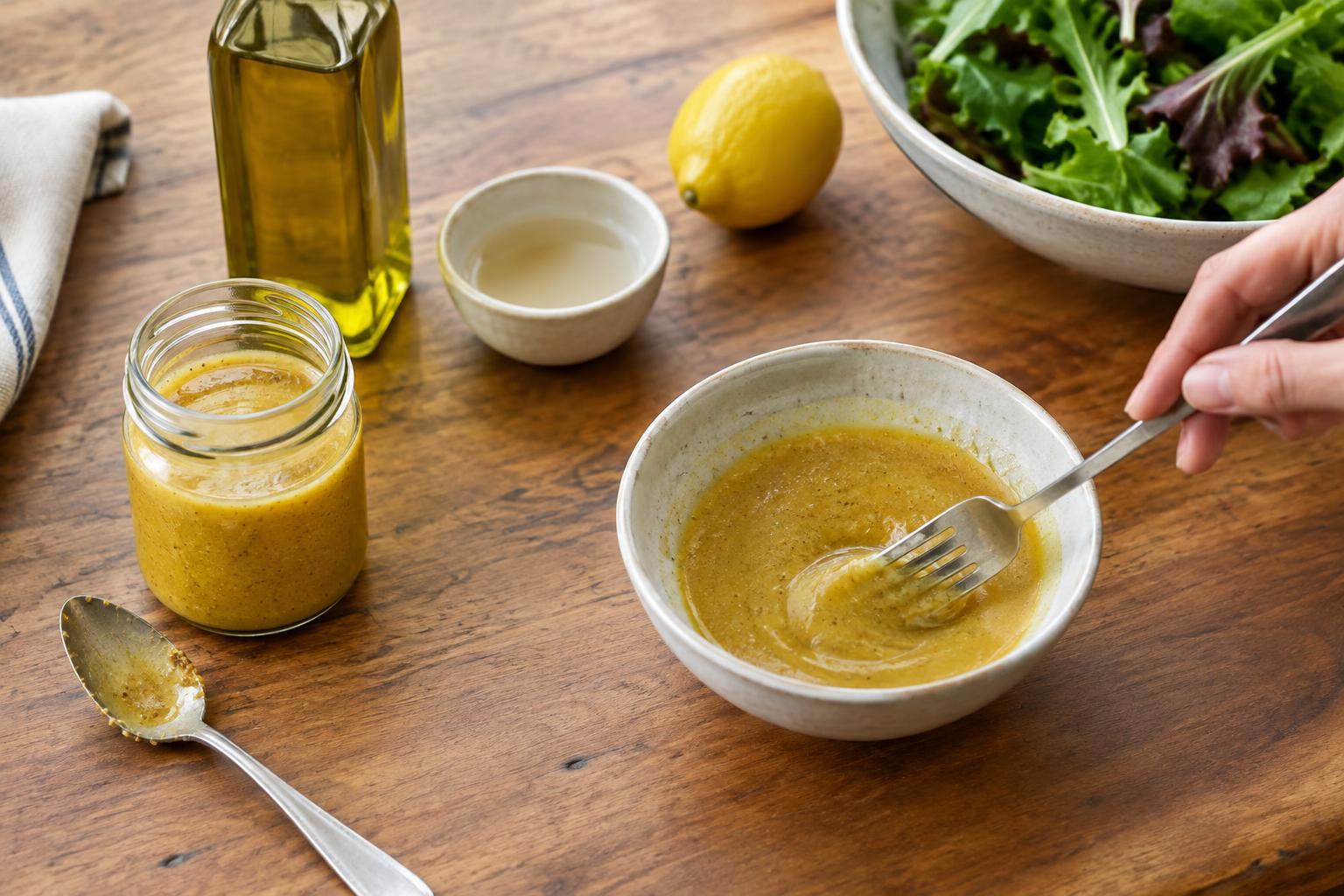
For the most control, put the vinegar, mustard, salt and pepper in a small bowl and whisk them together. Then pour in the oil slowly while whisking continuously. Starting with a thin stream helps break the oil into small droplets. Once the dressing looks smooth and slightly thickened, taste it and adjust the seasoning.
For a quicker method, add everything to a small jar with a tight-fitting lid and shake vigorously until the dressing looks evenly blended. Leave enough room in the jar for the ingredients to move. Shaking may produce a looser mixture than careful whisking, but it is convenient for a weeknight salad and makes remixing easy. Check that the lid is secure before you start.
Make it work with the food
Add extras after you know how the basic dressing tastes. A little honey can soften a sharp vinegar; finely chopped herbs can make the dressing feel fresh. If you add minced shallot or garlic, use a light hand so it does not overwhelm delicate greens. If the vinaigrette seems too thick to drizzle, whisk in a small splash of water until it flows the way you want.
Dress salad leaves just before serving. Add a small amount, toss well, and add more only if needed. The aim is a light coating, not a pool at the bottom of the bowl. For firmer foods such as cooked grains or roasted vegetables, the same vinaigrette can be stirred through while the food is still slightly warm, then tasted again before serving.
Fix a split dressing and store leftovers
If your vinaigrette separates, nothing has gone wrong. Shake the jar again, or put a little mustard in a clean bowl and whisk the separated dressing into it gradually. If the flavor seems flat after mixing, try another pinch of salt or a few drops of vinegar before adding more oil.
Keep leftover homemade vinaigrette covered in the refrigerator, particularly if it contains fresh herbs, shallot or garlic. Make modest batches you can use within a few days rather than leaving fresh ingredients sitting in oil. Olive oil may turn cloudy or thicken when chilled; let the dressing warm briefly in the jar, then shake it before serving.