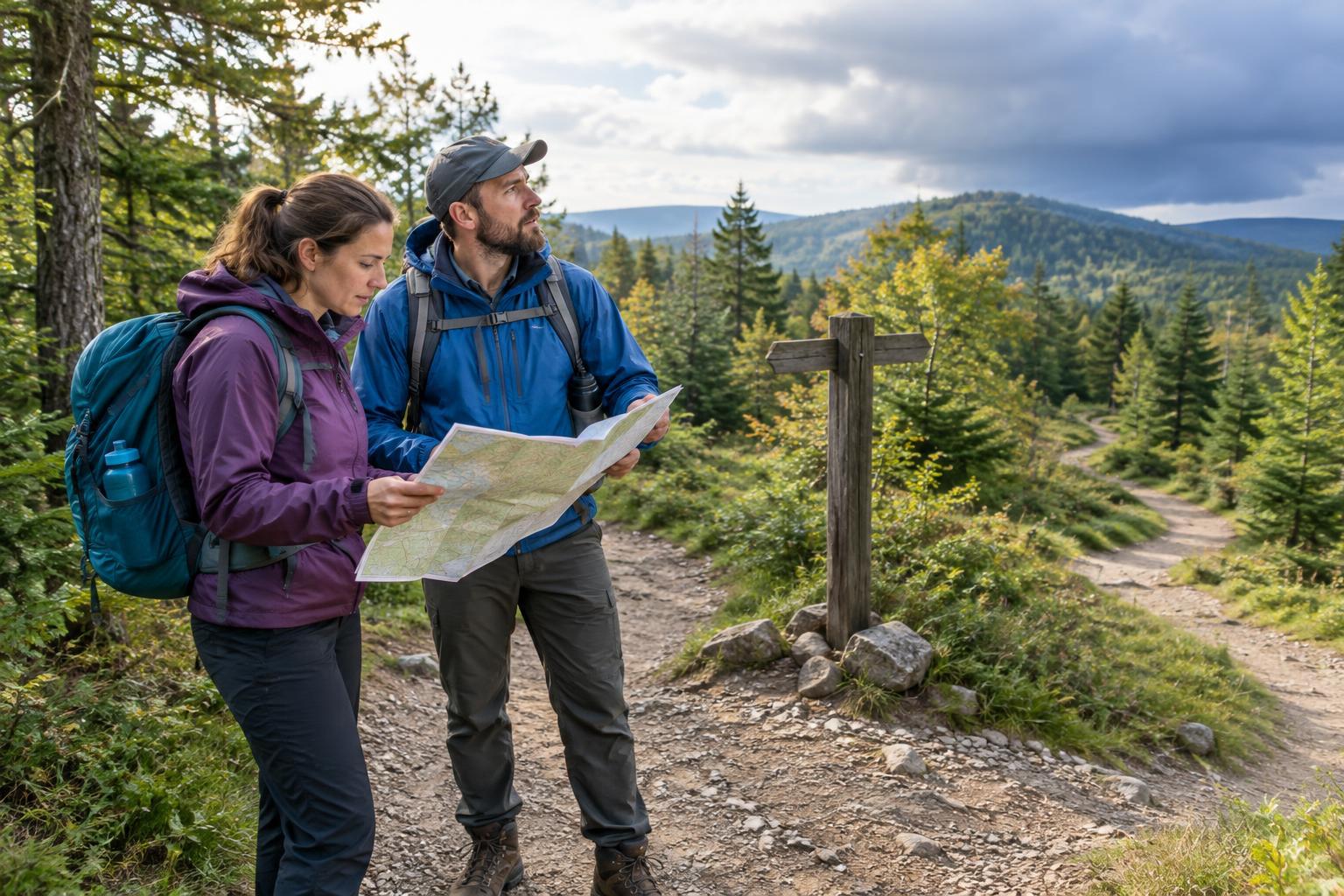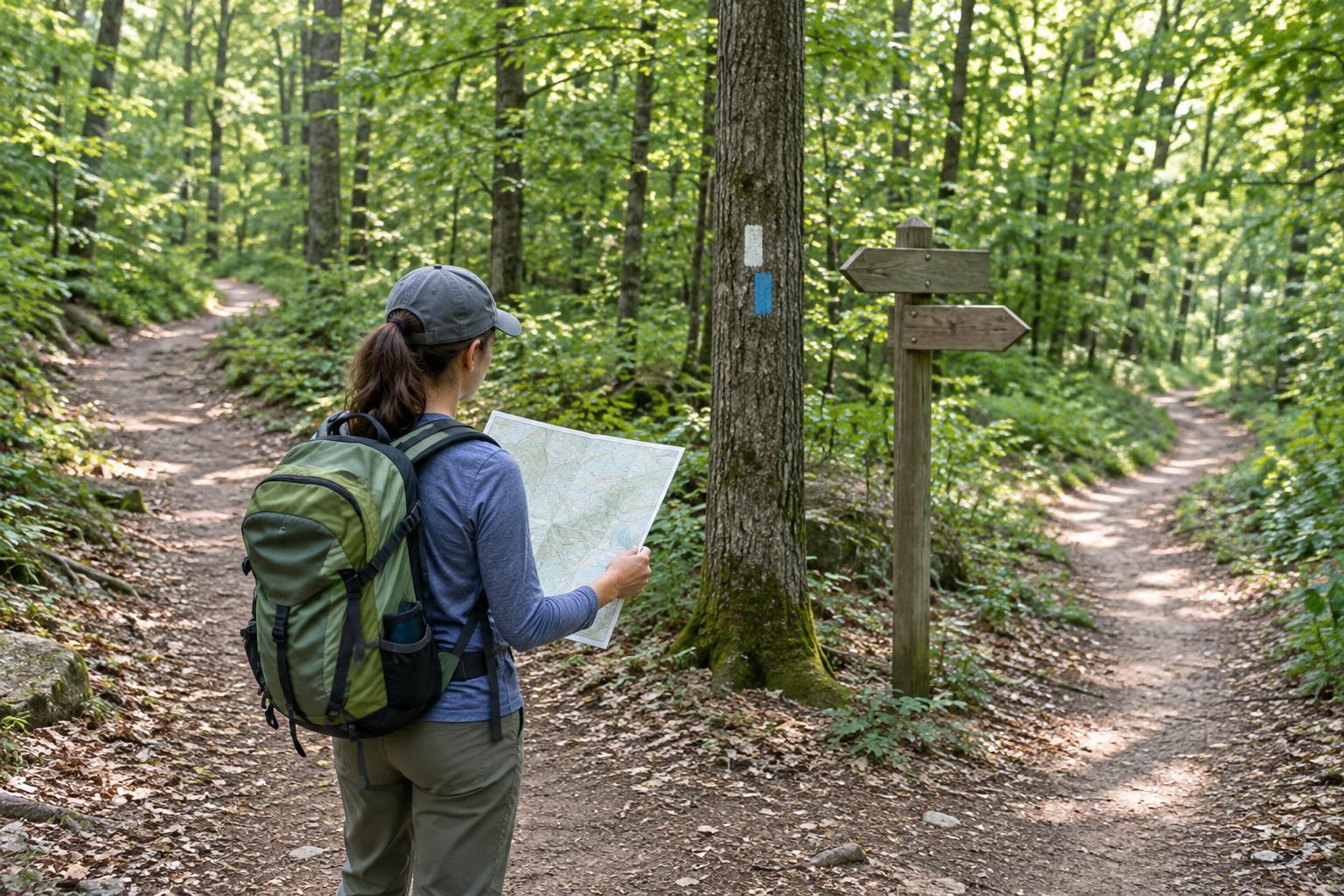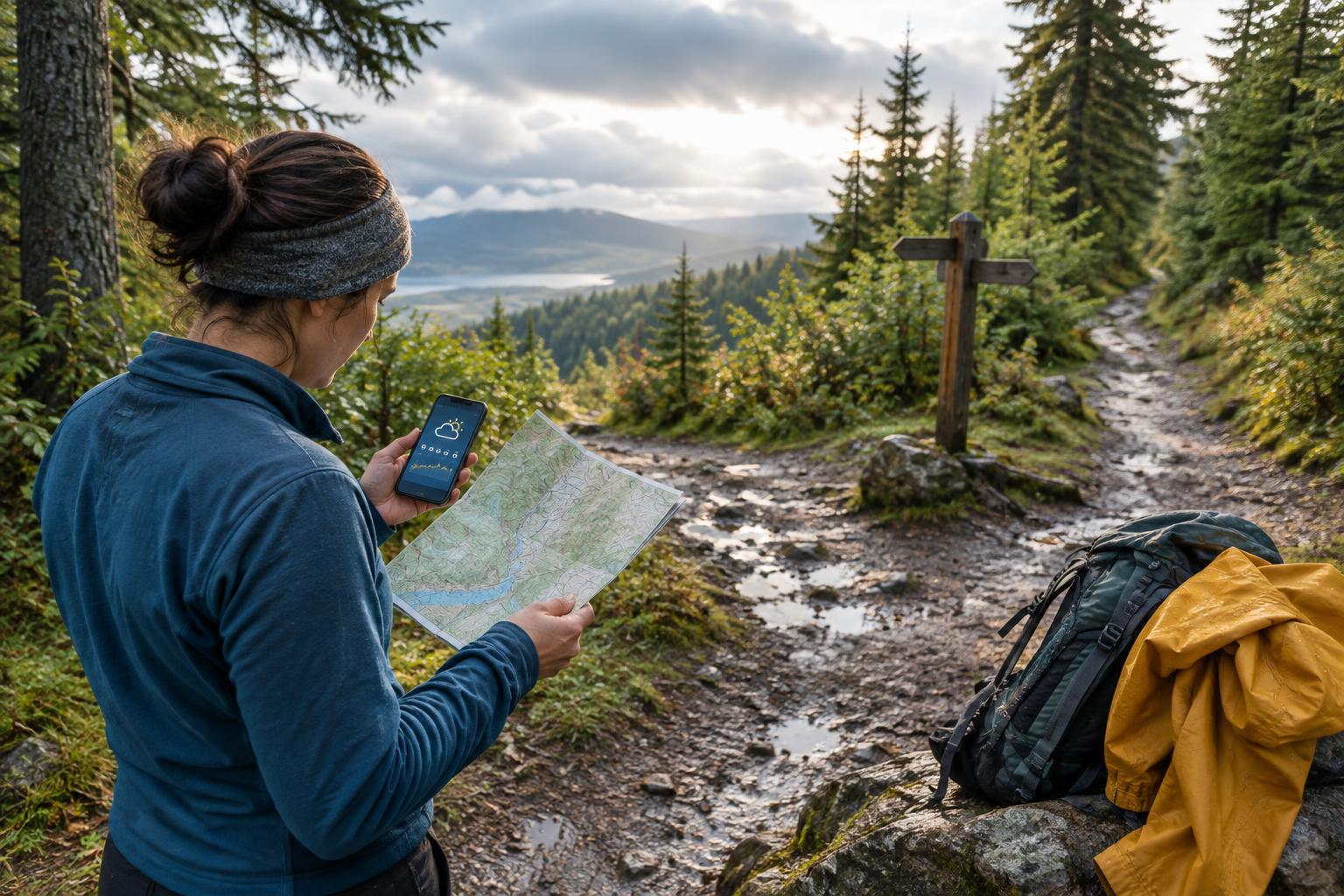
Start with the route, not just the forecast
Before checking the weather, pin down where you intend to go. Note the trailhead, approximate distance, elevation changes and any exposed ridges, stream crossings or sections far from an easy exit. Weather at a nearby town may not describe conditions higher up or in a shaded valley. A short walk on a paved path calls for different preparation than a loop with steep, muddy slopes.
Estimate how long the outing might take at a comfortable pace, allowing time for breaks and slower sections. Then check conditions for the places you expect to pass through and for the hours you expect to be outside. This gives you a more useful question than “Will it rain today?”: “What might this route be like while I’m on it?”
Read the forecast for changes and consequences
Look at the hourly forecast as well as the daily summary. Pay attention to the timing of rain, storms, temperature changes and sunset. Consider wind if the route crosses open ground, and remember that wet weather can make roots, rocks, boardwalks and slopes slippery. A forecast is an estimate, so treat a narrow window of good weather as uncertain rather than guaranteed.
Think about how conditions affect this particular route. Light rain might be manageable on a short, well-maintained path but less appealing on a long trail with difficult footing. Warm, sunny weather can also require adjustments, such as carrying enough water and choosing a route with shade. If the forecast includes conditions you would not be comfortable handling, choose a shorter or less exposed option instead of relying on the weather to cooperate.
Check official trail information first
Look for notices from the park, land manager or trail operator responsible for the area. These may tell you about closures, damaged bridges, maintenance work, seasonal restrictions or changes to parking and access. Check that the notice applies to your exact trail and entrance; similarly named routes can be easy to confuse. A closed trail is not an invitation to find a way around a barrier.
If no recent update appears, do not assume the trail is in perfect shape. Some local paths have limited reporting, and conditions can change between updates. Use the official information as a starting point, then compare it with the forecast and any other available clues. If a key part of the route remains unclear, such as whether a crossing is passable, pick a route that does not depend on it.
Use recent reports without treating them as promises
Reports from other walkers can help fill in details about mud, fallen trees, standing water or overgrown sections. Check when a report was posted, which direction the person traveled and whether they describe the same route you plan to take. A photo can offer context, but it captures only one place and one moment. Several consistent observations are more useful than a single enthusiastic review.
Be especially cautious after rain, strong wind or a sharp temperature change, when an older description may no longer fit. Conditions can also vary along one trail: a dry trailhead does not rule out a muddy low section farther on. If reports conflict, plan around the harder condition, ask a local visitor center if one is available, or choose another walk.
Make a simple go, change or stay-home plan
Before leaving, decide what would make you shorten the walk or turn around. That might be worsening weather, a blocked trail, unexpectedly slow progress or reaching a crossing that feels unsafe. Identify an easier alternate route so a change of plans still leaves room for an enjoyable outing. Let someone know your intended route and expected return time, especially if you will be away from busy areas.
Check for updates again close to departure, and bring a map you can use without a connection if phone service may be unreliable. Pack for the conditions you reasonably expect, with enough water and an extra layer if the weather may change. At the trailhead, take another look: if the ground, sky or posted notices tell a different story from your plan, adjust it. Turning back is a useful decision, not a failed adventure.