Start with what you are fastening
Before reaching for a box of hardware, identify three things: what you are attaching, what it is attaching to, and how it will be used. A lightweight picture frame on drywall is a different job from a coat hook that will be pulled on every day. A screw or nail that works well in solid wood may hold poorly in the hollow space behind drywall.
Consider the direction of the force, too. A fastener supporting a load that hangs straight down has a different task from one holding a shelf bracket that pulls outward from the wall. For anything heavy, valuable or likely to be bumped or tugged, look for solid backing such as a wall stud or blocking. If you are unsure what is behind a wall, locate it before drilling; wires and pipes can be hidden there.
Choose screws for grip and easy adjustment
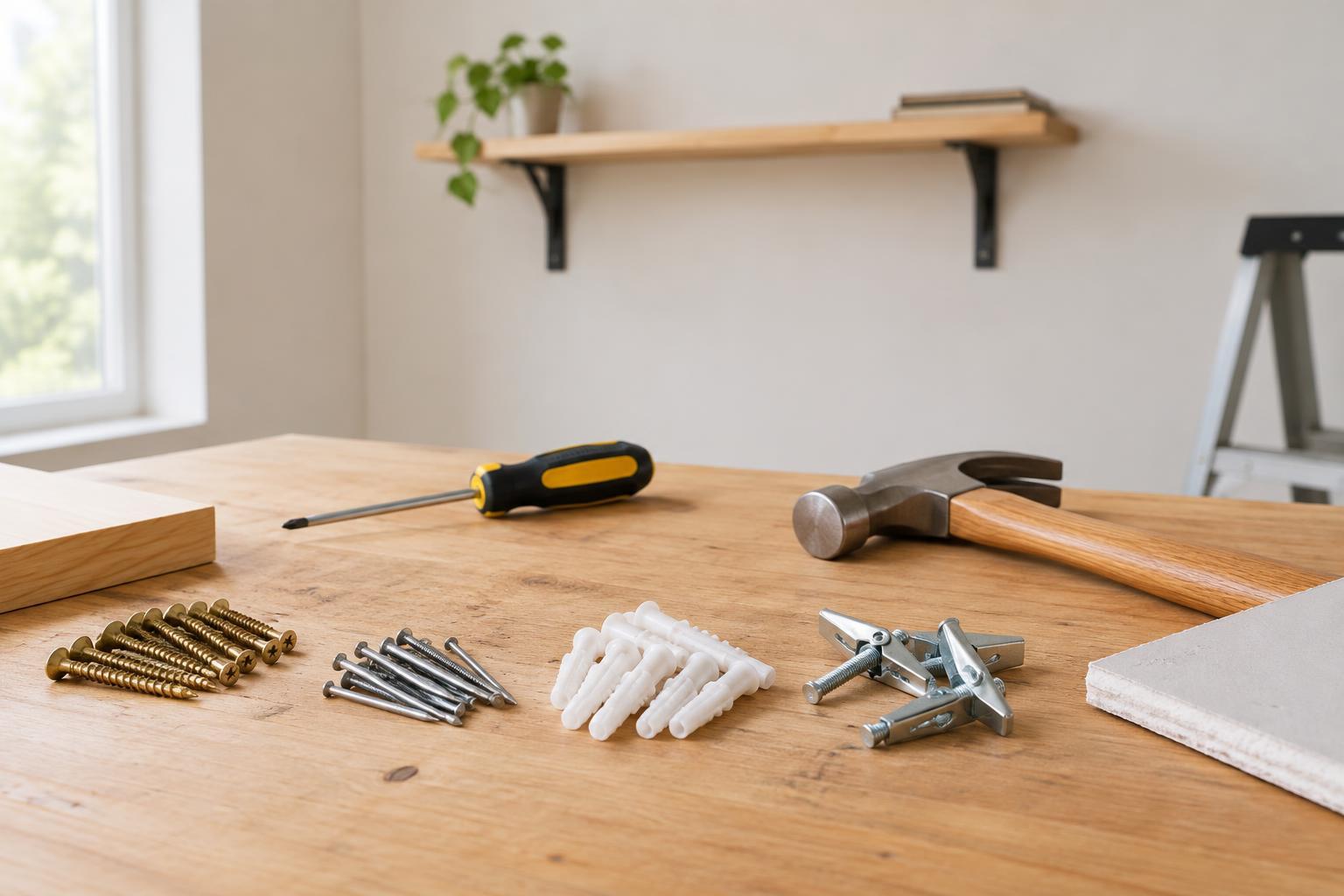
Screws are a useful default when you want parts held firmly together or might need to remove them later. Wood screws suit many small wood projects, while screws supplied with hinges, brackets or other hardware are often selected to fit that item. Drywall screws are intended primarily for installing drywall; they are not an all-purpose substitute for screws chosen to carry a load.
Pick a screw long enough to pass through the first piece and bite securely into the supporting material, without emerging from the far side or reaching something hidden. Diameter matters as well: a screw that is too thin may not hold well, while one that is too thick can split wood. A pilot hole can make driving easier and reduce splitting, especially near an edge. Match the driver bit to the screw head, keep it straight, and stop when the head is seated rather than forcing it deeper.
Use nails where a neat, quick connection makes sense
Nails are handy for light trim and other jobs where the pieces are supported and a small, unobtrusive head is welcome. Finish nails leave a smaller visible mark than nails with broad heads. They can be a good choice for attaching a narrow decorative strip, but they are usually a poor choice for a shelf bracket or a hook that will be pulled away from the wall.
Choose a nail that can reach well into the backing without passing through it. Thin trim may split, so start a short distance from the end or make a small pilot hole if needed. When fastening trim to a wall, try to nail into framing rather than relying on drywall alone. If the connection needs to resist repeated movement, a suitable screw will often be easier to tighten or replace.
Match wall anchors to the wall
A wall anchor helps a screw hold where there is no stud or other solid backing. Common drywall anchors include types that expand in the hole and types that open behind the wall. They are not interchangeable: each needs a particular hole size, screw size and amount of space behind the drywall. Use the instructions on the anchor package, including any guidance about wall thickness and load.
Plaster, brick and concrete call for different approaches. Old plaster can be brittle, and masonry generally needs an anchor designed for the material and a correctly sized drilled hole. Do not assume a drywall anchor will work in either. For a heavy shelf, a television mount or anything that could cause injury if it fell, follow the item manufacturer’s mounting instructions and use appropriate structural backing. When the wall construction or load is uncertain, pause rather than guessing.
Make a small-job checklist
At the store or workbench, check the base material, the thickness of the item being attached, and whether the fastener will be exposed to moisture. Outdoor or damp locations call for fasteners and hardware suited to those conditions; an indoor fastener may corrode or stain surrounding material. Check that you have the matching drill bit, driver bit and any anchor-specified screws before making a hole.
Finally, measure and mark the location, then test the fit without overtightening. If a screw spins without gripping, an anchor loosens, or the surrounding wall crumbles, do not treat it as secure. Repair the hole or choose a sound location and a more suitable fastening method. A few minutes spent matching the fastener to the job can save a crooked installation and a second trip for supplies.