Start with a few useful habits
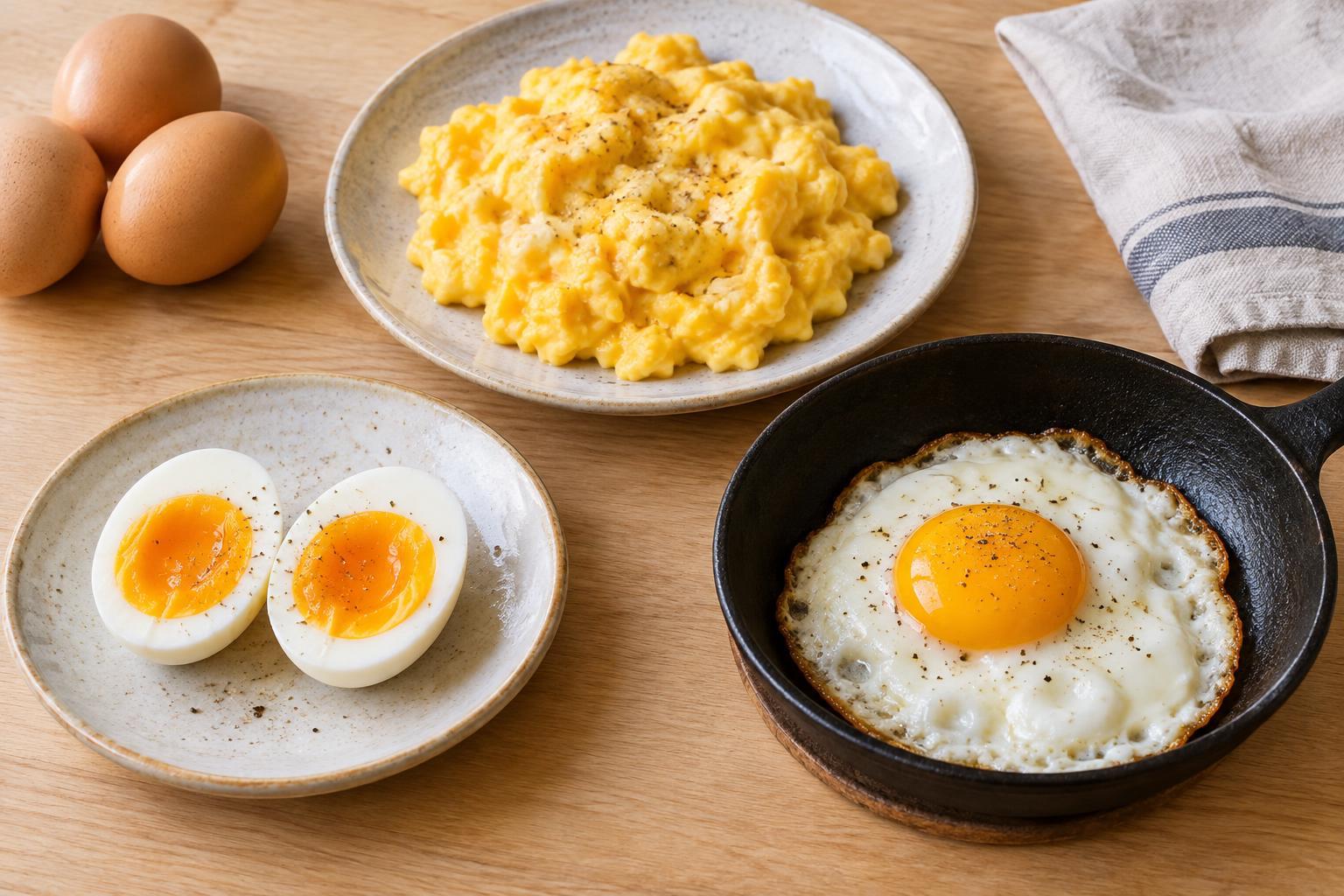
Eggs can be quick to cook, but a small change in heat or timing makes a noticeable difference. Before you begin, decide what texture you want: a set yolk for a sandwich, soft curds for breakfast, or crisp edges on a fried egg. Put your plate and any toppings nearby so you can serve the eggs as soon as they are ready.
Use clean utensils and crack each egg into a small bowl if you want to check for bits of shell before it reaches the pan. Keep raw egg away from foods you will eat without cooking, and wash hands and surfaces after handling it. For anyone who needs to avoid undercooked eggs, cook the whites and yolks until firm.
Boiled eggs: Use the clock, then check your preference
For a straightforward method, bring a pot of water to a gentle boil. Lower in large eggs with a spoon, taking care not to drop them against the bottom. Keep the water at a gentle boil rather than a vigorous one, which can knock the eggs around. Start a timer once the eggs are in the water. As a starting point, try about 6 minutes for a soft yolk, 8 minutes for a firmer but still tender yolk, or 10 to 12 minutes for a fully set yolk. Egg size, starting temperature and the strength of the boil can change the result, so adjust your next batch to suit your kitchen.
When the timer ends, transfer the eggs to a bowl of cold water. This makes them easier to handle and helps stop further cooking. To peel, tap the shell gently all over, then begin at the wider end and work under running water if the shell sticks. Eggs do not always peel neatly; if appearance matters, cook an extra one as a backup. Slice boiled eggs for toast or salad, or keep them whole until you are ready to eat.
Scrambled eggs: Let gentle heat do the work
Crack two eggs per person into a bowl and beat them with a fork until the whites and yolks are combined. Add a pinch of salt if you like. A splash of milk is optional, not essential; the more important choices are the pan heat and when you stop cooking. Warm a nonstick or well-seasoned skillet over low to medium-low heat, then add a little butter or oil.
Pour in the eggs and wait a few seconds for a thin layer to begin setting. Use a spatula to push the cooked egg gently from the edges toward the center, letting uncooked egg flow into the cleared space. Repeat until soft curds form. Take the pan off the heat when the eggs look nearly done, because they will continue to firm up briefly in the warm pan. If they are browning before curds form, lower the heat next time. If you prefer firmer scrambled eggs, leave them on the heat a little longer, stirring gently.
Fried eggs: Match the method to the yolk
Heat a small skillet over medium or medium-low heat and add enough oil or butter to lightly coat the surface. Crack an egg into a small bowl, then slide it into the pan. This gives you more control than cracking it directly over hot fat. For a sunny-side-up egg, cook it without flipping until the white has set and the yolk is as firm as you want it. If the top of the white is slow to set, briefly cover the pan with a lid; trapped steam will cook the surface, though it may also cloud the yolk.
For an over-easy egg, wait until the white is mostly set, then slide a thin spatula underneath and flip it carefully. Cook the second side briefly for a runny yolk or longer for a firmer one. If you like crisp edges, use slightly higher heat and enough oil for the edges to sizzle, watching closely so the underside does not burn. If the egg spreads widely or sticks, try a smaller pan, a little more fat or gentler heat.
Make the next egg better
The most useful tool for improving eggs is a simple observation. Notice whether the pan was too hot, the yolk set sooner than expected, or the scrambled eggs stayed on the heat a little too long. Change one thing next time rather than the whole method. Once you know the texture you like, eggs become an easy starting point for a meal: add boiled eggs to a grain bowl, spoon scrambled eggs onto toast, or serve a fried egg over leftover vegetables.