Start with the right pot and a measured ratio
Burned rice often comes from too much heat after the water has been absorbed. A heavy-bottomed saucepan helps spread heat more evenly, while a well-fitting lid keeps steam in the pot. Choose a pan with room for the rice to expand; for one cup of dry rice, a medium saucepan is usually more comfortable than a small one.
For a starting batch of long-grain white rice, use one cup of dry rice and 1¾ cups of water. Add a pinch of salt if you like. Rice varieties and pots behave differently, so use the directions on the package when they differ from this method. Measure the rice and water with the same cup rather than guessing by the water level in the pan.
You can rinse the rice in a sieve under cool water until the runoff is less cloudy, then drain it well. Rinsing removes some loose surface starch and can help the grains stay separate, but it is optional for many dishes. If the package advises against rinsing, follow that guidance.
Bring it to a boil, then turn it down
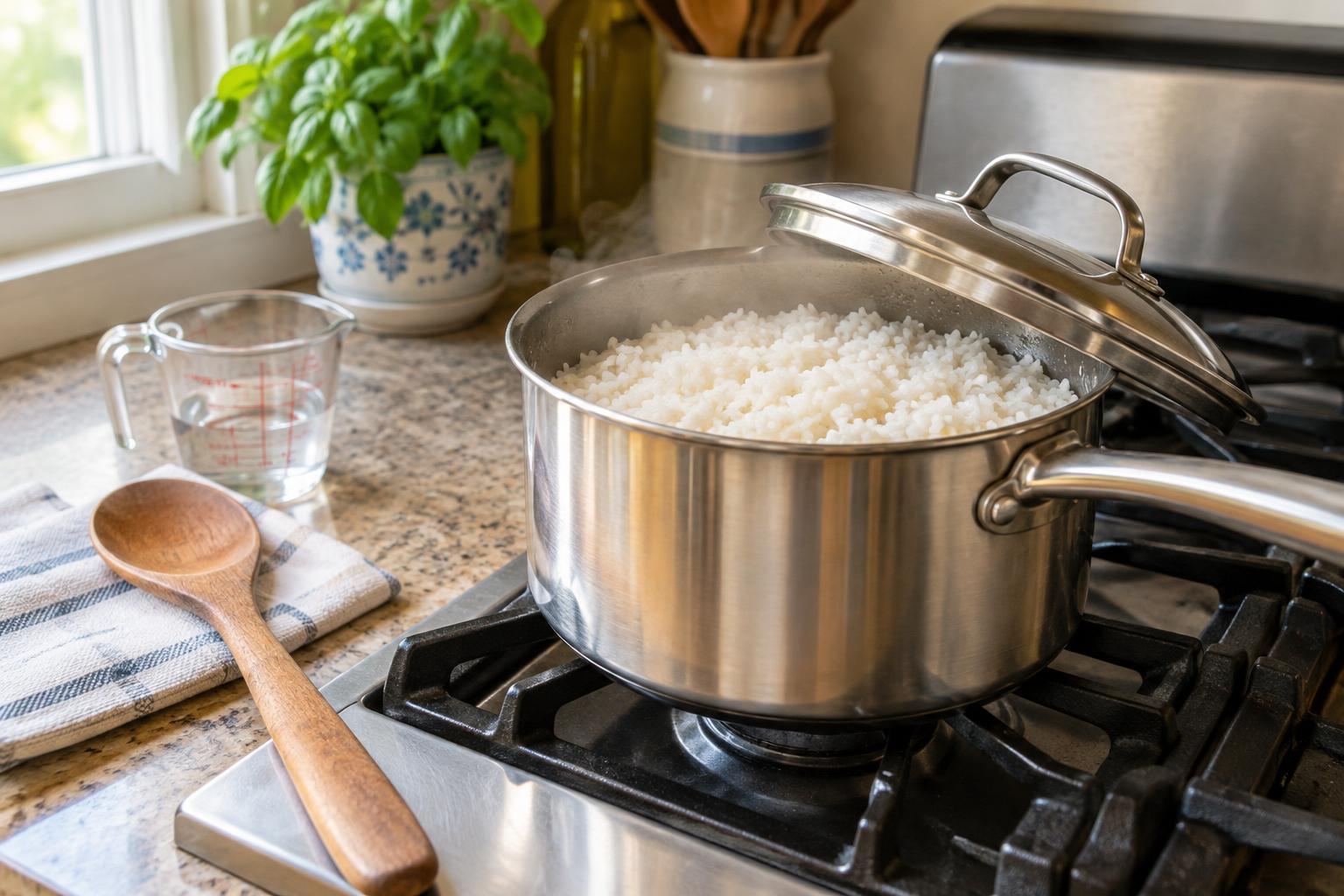
Put the rice and water in the saucepan and bring them to a lively simmer over medium-high heat. Give the rice one gentle stir to make sure no grains are stuck to the bottom. As soon as the water is bubbling across the surface, cover the pot and turn the burner down to low. This change matters: rice needs gentle heat and trapped steam to finish cooking, not a vigorous boil.
Leave the lid on for about 15 to 18 minutes for long-grain white rice. Avoid stirring during this stage, which can break grains and release more starch. You should hear only a faint simmer. If steam is pouring from the lid or you hear aggressive bubbling, turn the heat down. On a powerful burner, the lowest setting may still be too hot; moving the pot to a smaller burner can help.
When the time is up, briefly lift the lid and check the center. If the water is gone and the rice looks tender, turn off the heat. If you see water pooled at the bottom, cover the pan and cook for another two or three minutes on low before checking again.
Let the rice rest before fluffing
Once the heat is off, keep the lid on and let the pot sit for about 10 minutes. During this rest, moisture has time to settle through the rice, so the top is less likely to be dry while the bottom is damp. Set the pot on a cool burner if your stove retains a lot of heat; leaving it over a hot element can continue to cook the bottom.
Finally, lift the lid and use a fork to gently separate the grains. If a little rice has stuck to the bottom, loosen what comes away easily rather than scraping any darkened layer into the rest of the batch. Serve the rice soon, or cool leftovers promptly and refrigerate them rather than leaving them at room temperature for an extended period.
Adjust the next batch based on what happened
If the bottom browned before the top was cooked, lower the heat sooner next time or try a heavier pot. Check that the lid fits closely: escaping steam can leave the upper grains firm while the bottom overheats. Resist repeatedly lifting the lid, which also lets steam out and makes the cooking time less predictable.
If the rice is firm and the pot is dry, sprinkle in a tablespoon or two of water, cover it and warm it on low for a few minutes. If the rice is soft but wet, leave it covered over low heat briefly, then turn off the burner and give it a longer rest. For your next batch, make a small adjustment to the water rather than changing the ratio dramatically. Keeping a note of the pot, burner setting and amount of water makes a successful batch easier to repeat.
Use a different plan for other kinds of rice
The same basic rhythm—bring to a simmer, cover, cook gently and rest—works for many types of rice, but the quantities and times change. Brown rice generally needs more water and substantially longer cooking than white rice. Short-grain rice may be intentionally stickier, while some seasoned or packaged rice mixes have their own instructions. Start with the package guidance for those varieties instead of assuming the white-rice ratio will work.
If you are learning, cook one type of rice a few times before switching. Once you know how a quiet simmer sounds on your stove and how your pot holds heat, the process becomes less about watching the clock and more about making small, reliable adjustments.