Start with a pot that gives pasta room
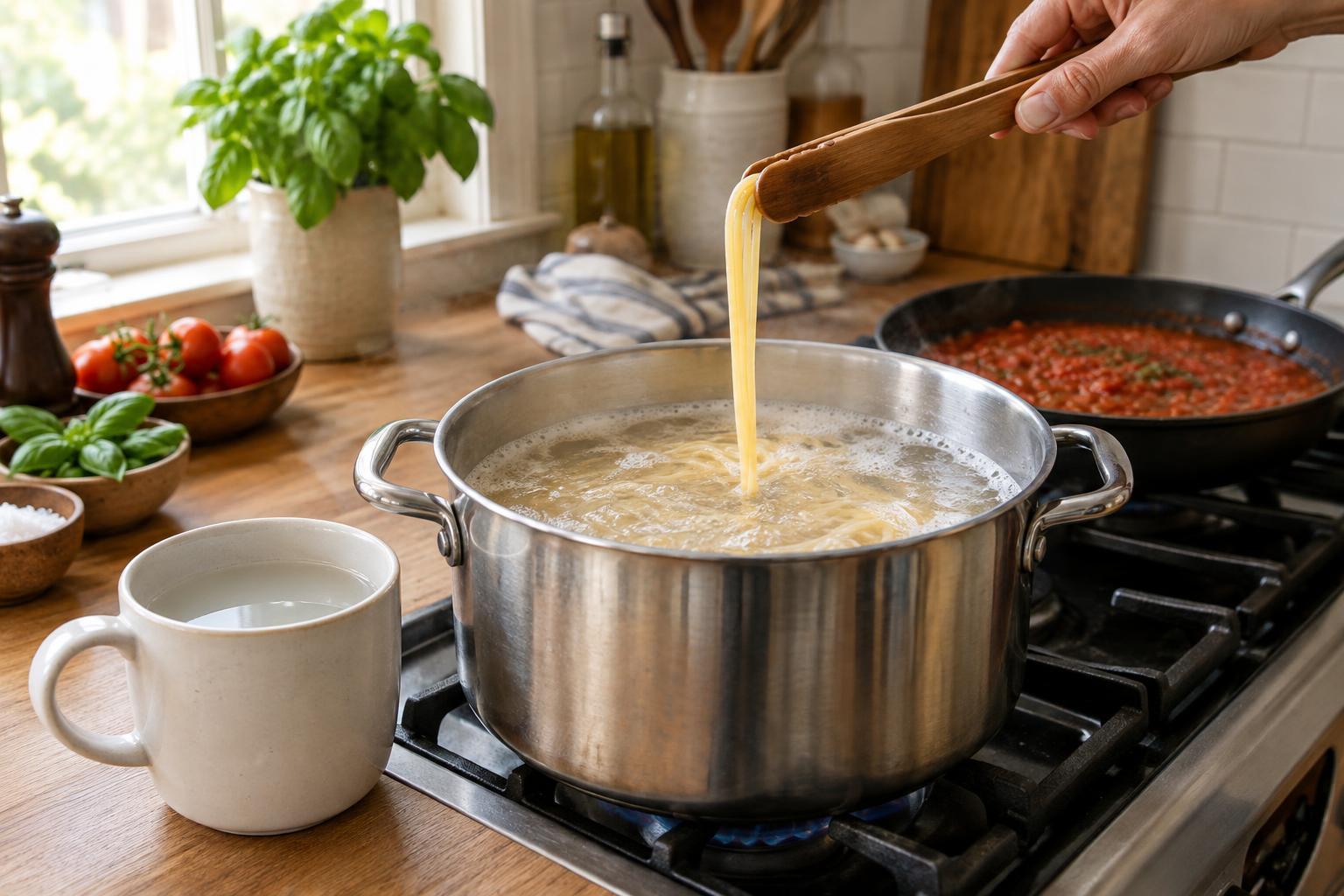
Choose a pot large enough for the pasta to move freely once you stir it. The water does not need to reach a particular depth, but it should comfortably cover the pasta after it softens. Bring the water to a full boil before adding dried pasta. If long strands stick out at first, give them a moment to bend, then ease them under the surface rather than breaking them to fit.
Stir soon after adding the pasta and a few more times while it cooks. This matters most in the first minute, when dry pieces are likely to cling together. Keep the water boiling steadily; an excessively vigorous boil can make it harder to handle the pot without improving the pasta. A lid helps water heat faster, but take it off or leave it ajar after adding pasta so you can watch for foaming.
Salt the water for the pasta, not the pot
Add salt when the water reaches a boil, then stir before adding the pasta. Pasta absorbs some of its cooking water, so this is a chance to season the noodles themselves. Unsalted pasta can taste flat even under a flavorful sauce. You do not need to make the water taste like the sea: that can leave both the pasta and any saved cooking water too salty.
Use a moderate amount as a starting point and adjust next time based on the finished dish. The amount of water, type of salt and saltiness of the sauce all affect the result. If your sauce contains salty ingredients such as olives, cured meat or a generous amount of cheese, season the water more cautiously. Taste the finished pasta before adding more salt at the table.
Use the timer as a reminder to taste
The package time is a useful guide, not a guarantee. Set a timer for a minute or two before the suggested time, lift out one piece, let it cool briefly and bite into it. For many dishes, the goal is pasta that is tender throughout but still offers a little resistance. If the middle is hard or chalky, give it more time and test again. If it feels soft with no bite, drain it promptly.
Think about what happens after draining, too. Pasta tossed in a warm pan of sauce will keep cooking for a short time, so you may prefer to take it out while it is slightly firmer than you want on the plate. Fresh pasta often cooks much faster than dried pasta, while gluten-free varieties may have a narrower window between firm and soft. Frequent tasting is more reliable than assuming every shape behaves the same way.
Save a mug of pasta water before draining
Before you carry the pot to the sink, scoop out a mug of cooking water with a heat-safe cup or ladle. Do this before draining; it is easy to forget once the colander is out. The water contains some starch released by the pasta. When added to a sauce, it supplies liquid and can help the sauce cling to the noodles instead of sitting separately in the pan.
Start with a small splash in the sauce, then toss the pasta vigorously over gentle heat. Add more water a little at a time if the mixture looks dry or thick. This works especially well when the sauce contains oil, butter or cheese, but it can also loosen tomato sauce that has reduced too far. Pasta water is not a substitute for seasoning or a well-made sauce, and its saltiness varies, so taste before adding a large amount.
Finish the pasta in its sauce
Aim to have the sauce ready when the pasta is nearly done. Drain the pasta, transfer it to the sauce and toss until each piece is coated. A minute of tossing gives the noodles a chance to pick up flavor and lets you judge whether they need another splash of reserved water. If the sauce becomes thin, keep tossing briefly over gentle heat rather than adding more ingredients immediately.
For most hot pasta dishes, skip rinsing after draining: rinsing cools the noodles and washes away surface starch that helps sauce stick. Rinsing can make sense when you deliberately want to cool pasta for a salad. Once the texture and coating look right, serve the dish. Keep the reserved water nearby until you have plated it, then discard what you do not need.