Start with a small plan
Exploring beyond a park’s main path does not have to mean going far. It might mean taking a marked side trail, walking the usual loop in reverse, or spending ten minutes beside a pond you normally pass. Pick one change rather than trying to see everything. A modest plan leaves room to notice what interests you without turning a pleasant outing into a checklist.
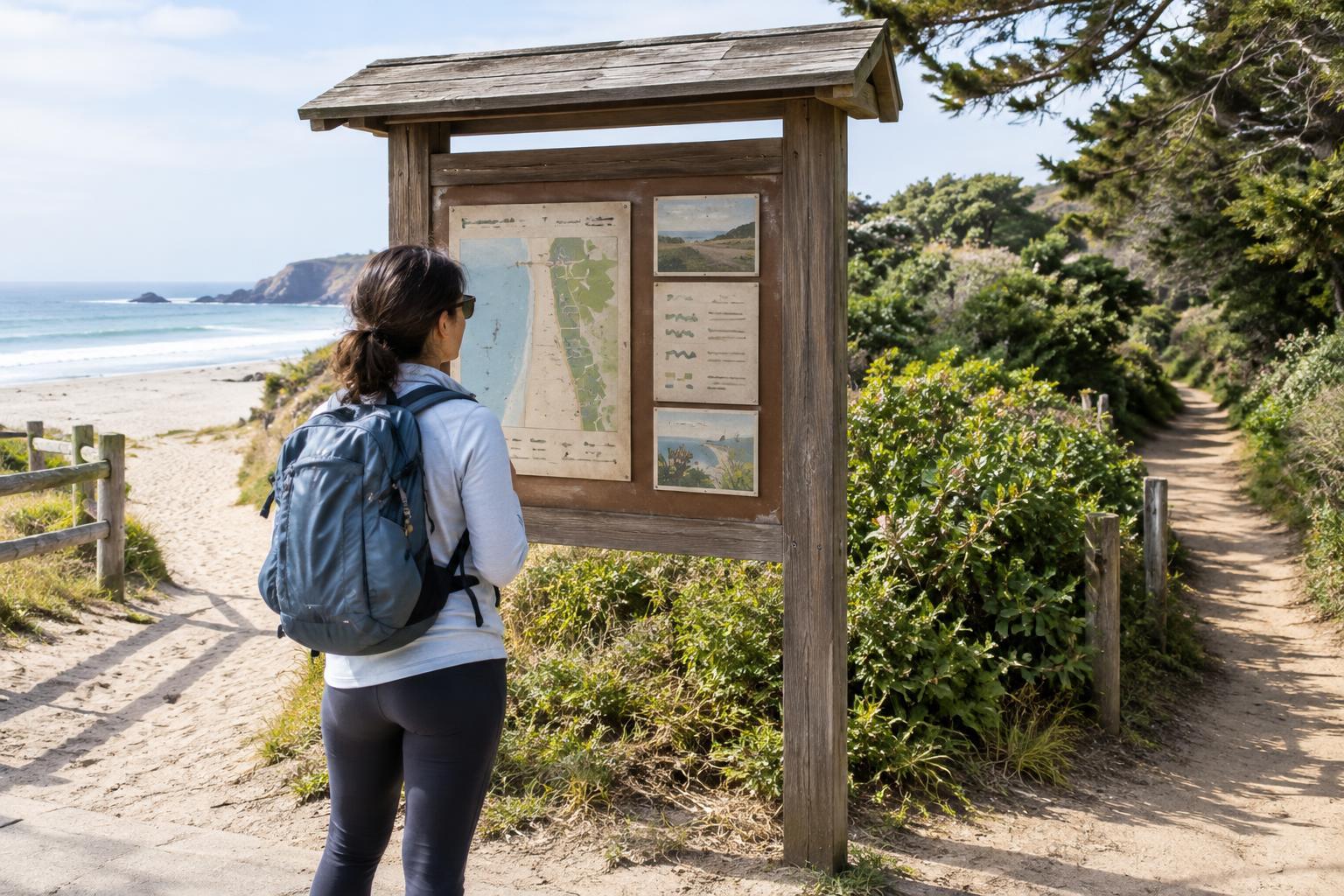
Before you leave, check the park map if one is available. Look for permitted paths, entrances, restrooms, and a route back to where you started. Choose a distance that fits your time and energy, and consider the conditions you may encounter: a grassy trail can feel quite different from a paved path after rain. If you are visiting with someone else, agree on a comfortable pace and a point where you will turn back.
Follow a question instead of a destination
A simple question can give your walk direction without requiring a schedule. Where does the sound of water become noticeable? Which parts of the park offer shade? What changes when a paved route gives way to a permitted woodland path? Choose one question at the entrance, then let it guide a few stops along the way.
Use your senses without feeling that you need to identify everything. Notice the texture of a tree’s bark, the shape of fallen leaves, or the difference between a busy picnic area and a quieter stretch of trail. You can take a photo, jot down a few words, or simply remember a detail to look for next time. Observation is worthwhile even when you never learn the name of the plant or bird you noticed.
Explore edges and connections
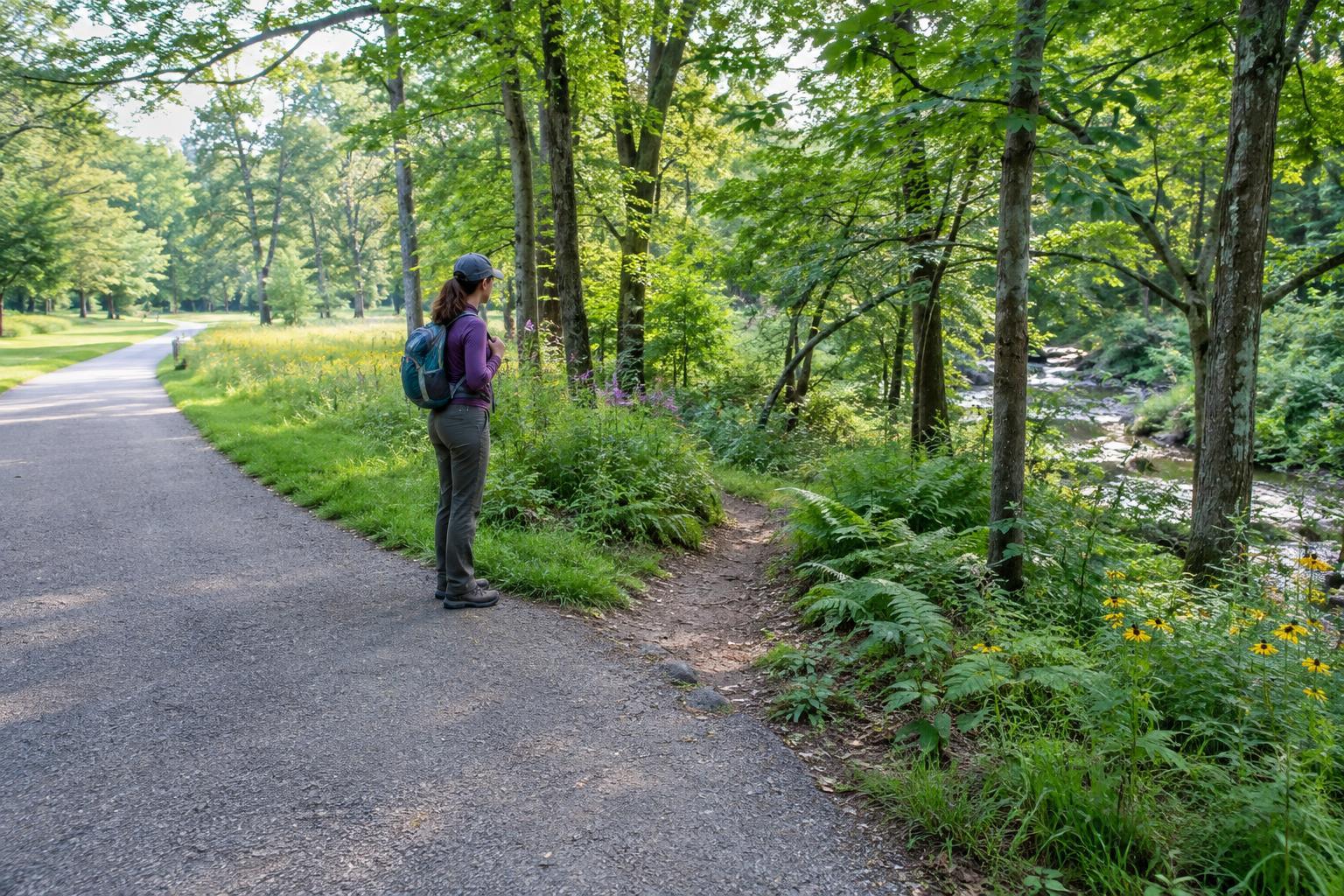
Main paths often lead straight to the park’s most obvious feature. Side routes may show you how its spaces connect. At a marked junction, pause and see whether one path leads toward open grass, a stand of trees, a garden, or another entrance. A short detour can offer a different view without adding much distance.
Pay attention to transitions. A bench at the edge of a clearing may be a good place to compare the sounds of two areas. A bridge or overlook may help you understand where a stream runs. Even an ordinary park boundary can be interesting: notice how the landscape changes where maintained grounds meet a wilder-looking area. Stay on routes open to visitors, and treat barriers, restoration areas, and private property as firm boundaries.
Make the outing comfortable and low-impact
Bring what makes a short walk easier for you, such as water, comfortable shoes, sun protection, or a layer for changing conditions. Keep your phone charged if you rely on it for a map, but do not assume every path will have a clear signal. At unfamiliar junctions, note a landmark or take a photo of the trail sign so the return route is easier to recognize.
Give other visitors room to pass, keep noise at a considerate level, and follow posted guidance about pets, bikes, and trail use. Leave plants, rocks, and other natural features where they are. If a path is muddy, narrow, or difficult to follow, turning around is a sensible choice. The aim is to enjoy the park as it is, not to push through an unsuitable route.
Give yourself a reason to return
You do not need to cover the whole park in one visit. Before heading home, choose one place you would like to revisit or one path you might try another day. A brief note can help: “quiet bench near the garden entrance” is more useful than a detailed log you will never read.
On a later visit, try changing just one element. Enter from a different gate, walk at a different time of day, or bring a friend who may notice things you missed. Familiarity makes small differences easier to spot. Over time, the park becomes more than a route to finish; it becomes a collection of places you know how to enjoy.