Start by identifying who manages the place
A beach, park or trail may be managed by a town, a regional park agency, a state or national authority, or a private organization. The name of the place alone may not tell you which rules apply. A trail can also cross from one property into another, so rules may change along the route.
Before you go, search for the destination’s official page and look for its managing organization. Start there rather than relying only on a map listing, social post or visitor review. Check the page for opening hours, entry fees, parking arrangements, permitted activities and contact details. If you are planning a longer walk, look for a route map that shows access points and boundaries. Saving the page or noting the office phone number can help if you need to check something later.
Check the rules that affect your plans
Focus first on what you intend to do. If you are bringing a dog, find out whether pets are allowed, where leashes are required and whether there are seasonal restrictions. For a beach day, check rules on swimming areas, fires, fishing and collecting shells or other natural objects. For a park gathering, look into group-size limits, reservations, food preparation and equipment. On a trail, check whether bikes or horses share the route and whether visitors must stay on marked paths.
Rules may differ even between nearby destinations. A public beach may have a protected area with separate access limits; a park may allow bicycles on paved paths but not on narrow footpaths. Do not assume that an activity is permitted because you have seen other people doing it. If a rule is hard to find, contact the managing organization and describe your specific plan.
Look for updates close to departure
A general rules page is only part of the picture. Access can change because of maintenance, weather, habitat protection, events or other temporary conditions. Check official alerts or notices shortly before leaving, especially if your outing depends on a particular parking lot, trail segment or beach entrance. Where relevant, also check conditions such as tides or weather through an appropriate information source.
Digital maps are useful for finding a route, but they may not show a recent closure or a changed entrance. Keep a backup plan: another permitted route, a nearby destination or the option to turn around. If the official information is incomplete, that is a reason to ask before setting out, not to assume the route will be open.
Read signs when you arrive
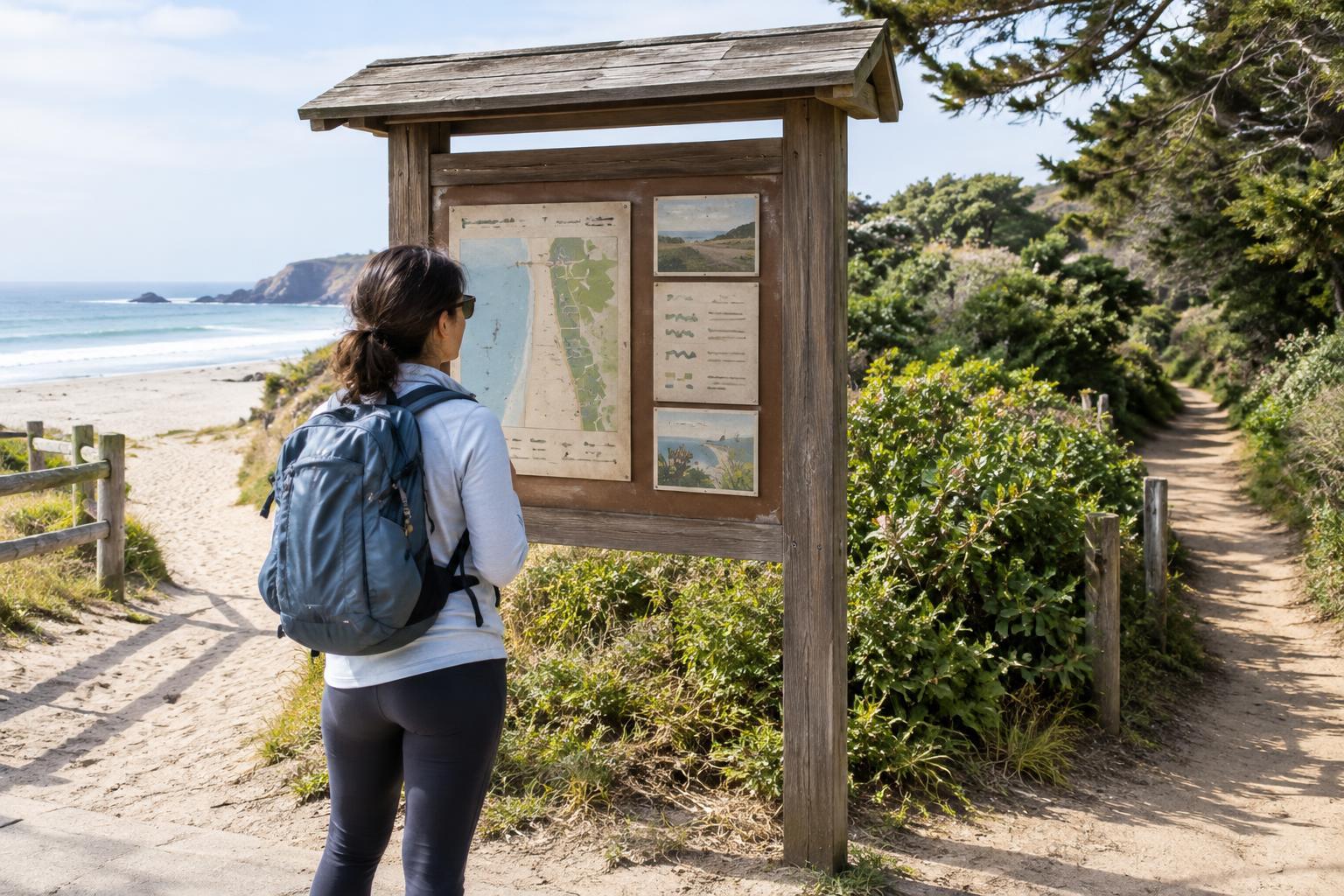
At the entrance, pause to read the notice board and any signs near gates, parking areas or trail junctions. Look for hours, boundary markers, temporary closures and instructions that apply to a particular area. A sign on site may provide more specific information than the general guidance you read at home. If a gate is closed or a route is marked off, choose another way rather than going around the barrier.
If signs seem to conflict with what you found online, take the more cautious option until you can clarify the situation with staff or the managing organization. Be especially careful at junctions and shoreline access points, where it can be easy to move into an area with different rules. On a multi-use trail, watch for posted right-of-way instructions and make room for others to pass safely.
Make following the rules part of the outing
Pack for the requirements you found: a leash if needed, a way to carry out litter, and any reservation or entry information you may have to show. Keep to permitted areas, leave plants and wildlife undisturbed, and use designated facilities where provided. These habits make it simpler to respect posted rules even when you are focused on enjoying the place.
If you are unsure about a rule during your visit, stop and check rather than guessing. Staff or official contact details on a notice board may help; if you cannot get an answer, choose the option least likely to disturb people or the place. Finding the rules takes only a few deliberate steps, and it gives you more freedom to enjoy your local adventure without an avoidable surprise.