Find out where the door catches
A door that needs a shove to close may be rubbing against its frame, dragging on the floor, or catching at the latch. Start by opening and closing it slowly. Watch the gap between the door and frame, and note exactly when you feel resistance. A flashlight can help you see a narrow gap.
Look for shiny patches, scuffed paint, or worn wood along the door’s edges and the frame. If the contact point is hard to spot, place a thin piece of paper between the door and frame and close the door gently. Slide the paper around the perimeter; a spot where it will not move freely may reveal the rub. Do not force the door shut, especially if it has a glass panel.
Check whether the problem changes with damp weather. Wood can expand as it takes on moisture, making a close-fitting door stick intermittently. Also look for a loose hinge, a sagging door, or a latch that hits the strike plate instead of entering its opening. Identifying the cause will save you from sanding an edge that was not the real problem.
Tighten the hinges first
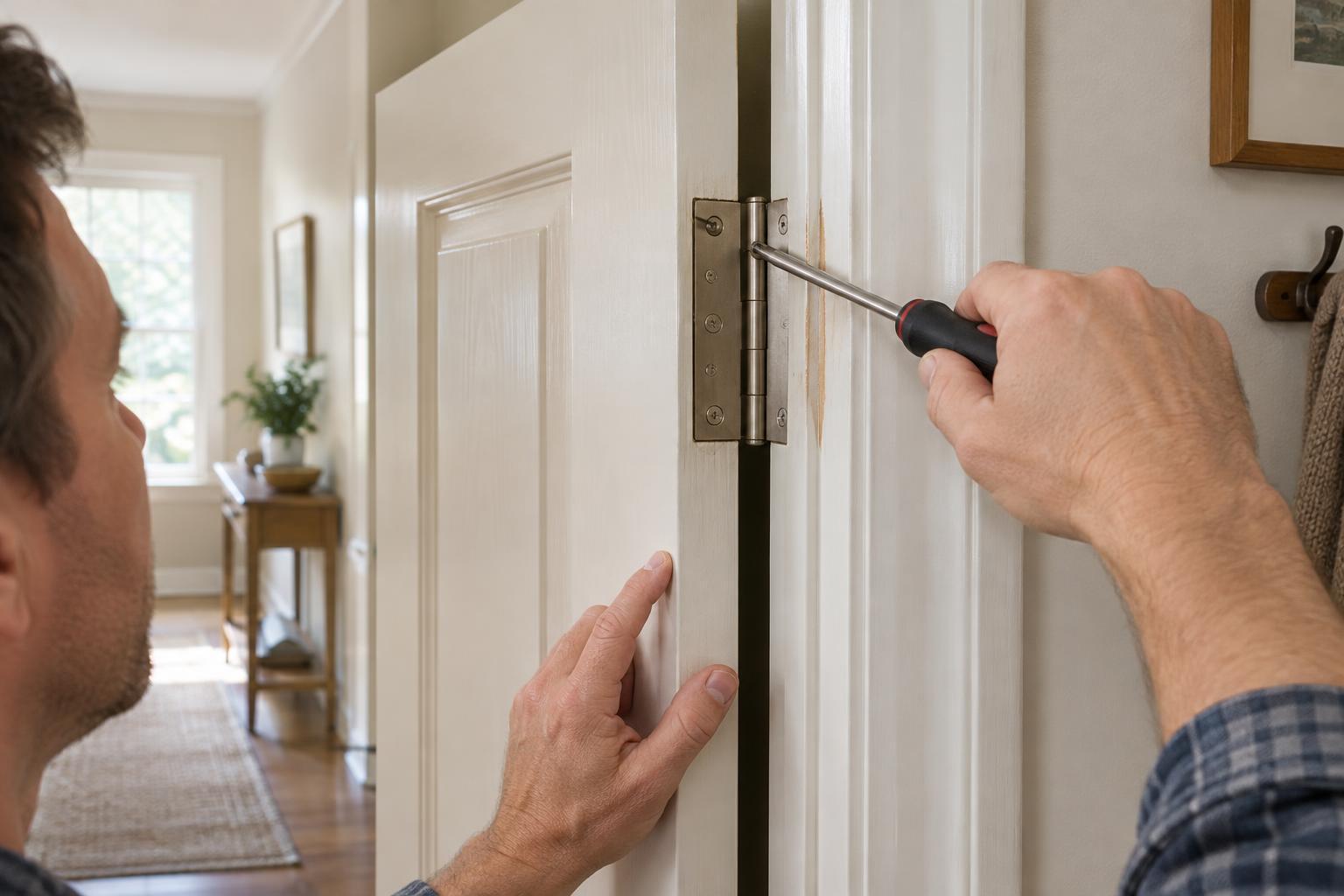
Loose hinges are a common place to begin because they are easy to check and adjust. Support the door with a wedge or a folded piece of cardboard underneath it, then test each hinge screw with a screwdriver. Tighten loose screws until snug, without overtightening them. Remove the support and test the door again.
If a screw turns without gripping, its hole may be stripped. For a simple repair in a wooden frame, remove the screw, press a wood sliver or a small amount of wood glue and wooden toothpicks into the hole, let the glue dry, and trim the material flush before reinstalling the screw. A longer screw that reaches sound framing may also work, provided it is suitable for the hinge and does not interfere with anything behind the frame. Check one hole at a time so the hinge stays positioned.
If the top corner of the door has dropped and rubs near the latch side, securing the upper hinge may be enough to lift it back into place. Test after each change rather than adjusting every hinge at once.
Check the latch and frame alignment
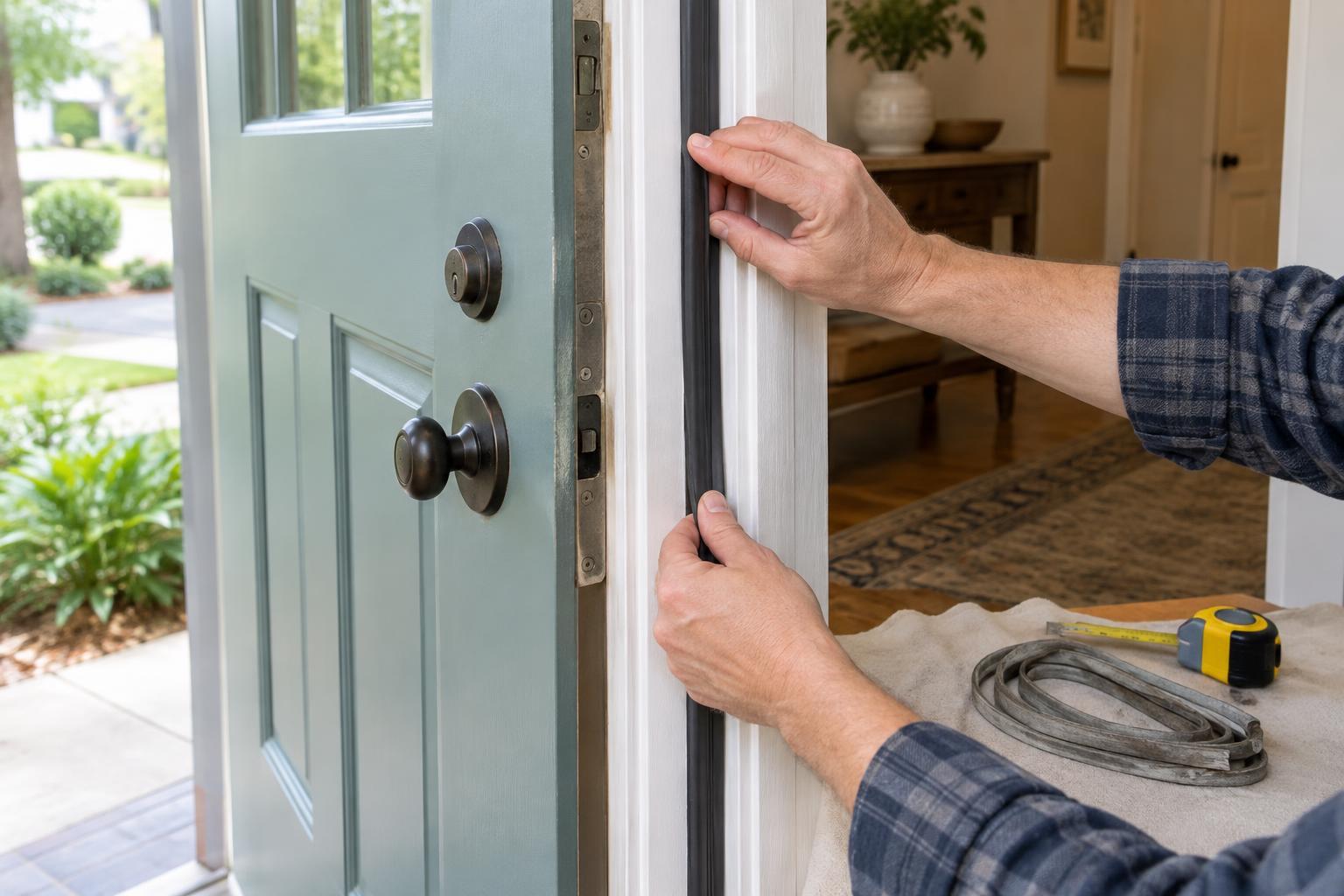
If the door moves freely until it is almost closed, examine the latch and strike plate. A mark above or below the plate’s opening suggests the latch is hitting metal rather than sliding into place. First confirm that the hinges are tight: a sagging door can cause a latch problem, and moving the strike plate too soon may hide the cause.
For a small mismatch, tightening the strike plate screws or carefully filing the edge of its opening may provide clearance. Remove only a little material, then test the latch again. If the plate must move noticeably, you may need to fill the old screw holes before repositioning it. Keep the latch able to engage securely; a door that swings open after being nudged is not fixed.
If the frame itself looks visibly shifted, cracked, or loose, small hinge and latch adjustments may not last. Consider getting help rather than forcing the door or making extensive changes to the frame.
Trim a rubbing edge only when needed
When the hinges are secure and the latch lines up, a tight spot along the door’s edge may need a little material removed. Mark the exact rubbing area with a pencil. If it is painted, check whether built-up paint is the main obstruction; a light sanding may be sufficient. Put down a dust sheet, wear eye protection, and follow appropriate precautions if you are unsure what is in an old coating.
For bare wood that still rubs, remove the door if necessary and use a hand plane or sanding block to take off a small amount at a time. Keep the tool flat and work gradually so the edge stays even. Rehang and test the door before removing more. A large, uneven gap can be harder to correct than the original sticking.
After the door closes smoothly, seal any exposed wood with a suitable finish. This helps protect the newly trimmed edge from moisture. Allow the finish to dry before closing the door fully so it does not bond to the frame.
Test the repair in everyday use
Open and close the door several times at a normal pace. It should move without scraping, latch without a shove, and remain closed when gently pushed. Look along the edges for a reasonably consistent gap, while remembering that older doors and frames may not be perfectly square.
If the sticking returns, check for a recurring moisture source, such as a nearby leak or persistent dampness, before trimming the door again. A door that suddenly becomes difficult to operate, or one whose frame is moving, deserves a closer inspection. Starting with the simplest checks usually makes the repair smaller, tidier, and easier to undo.