Choose a repair that fits the hole
Before reaching for filler, look at the size and condition of the damaged area. A nail hole or a shallow dent usually needs only lightweight spackling paste. A slightly larger hole, such as one left by a wall anchor, may need joint compound applied in a couple of thin coats. If the opening is too wide for compound to bridge without sagging, a self-adhesive mesh patch can give the repair a surface to hold onto.
Check the drywall around the opening, too. If it feels soft, is damp, or crumbles well beyond the visible hole, a surface patch may not solve the underlying problem. The same is true of a large opening with unsupported edges. This guide is for small, dry, stable damage; bigger or recurring damage may call for replacing a section of drywall after the cause has been addressed.
Gather supplies and prepare the wall
For a typical small repair, gather spackling paste or joint compound, a putty knife, a sanding sponge or fine-grit sandpaper, a clean cloth, primer and matching paint. Add a self-adhesive mesh patch if the hole cannot be filled neatly on its own. A wider putty knife can make it easier to blend the edges of a mesh repair into the surrounding wall.
Move or cover anything you want to protect from dust. Remove loose paper, flaking paint and protruding bits of drywall with a utility knife, taking care not to enlarge the hole unnecessarily. If an old anchor is still in the wall, remove it before patching. Wipe away dust and let the surface dry. Avoid cutting or drilling into a wall when you do not know what may be behind it; wiring and pipes can be hidden nearby.
Fill tiny holes and shallow dents
Scoop a small amount of spackling paste onto the putty knife. Press it firmly into the hole, then draw the knife across the surface to scrape away the excess. For a dent, spread just enough paste to bring the low spot level with the wall. It is tempting to leave a generous mound, but extra material means more sanding later.
Let the filler dry according to its packaging. Some products shrink slightly, especially when pushed into a deeper anchor hole, so inspect the repair after it dries. Apply another thin coat if you can still see a dip. Once the final coat is dry, sand gently until the repair feels smooth under your hand. Wipe off the dust before moving on to primer.
Use a mesh patch for a wider opening
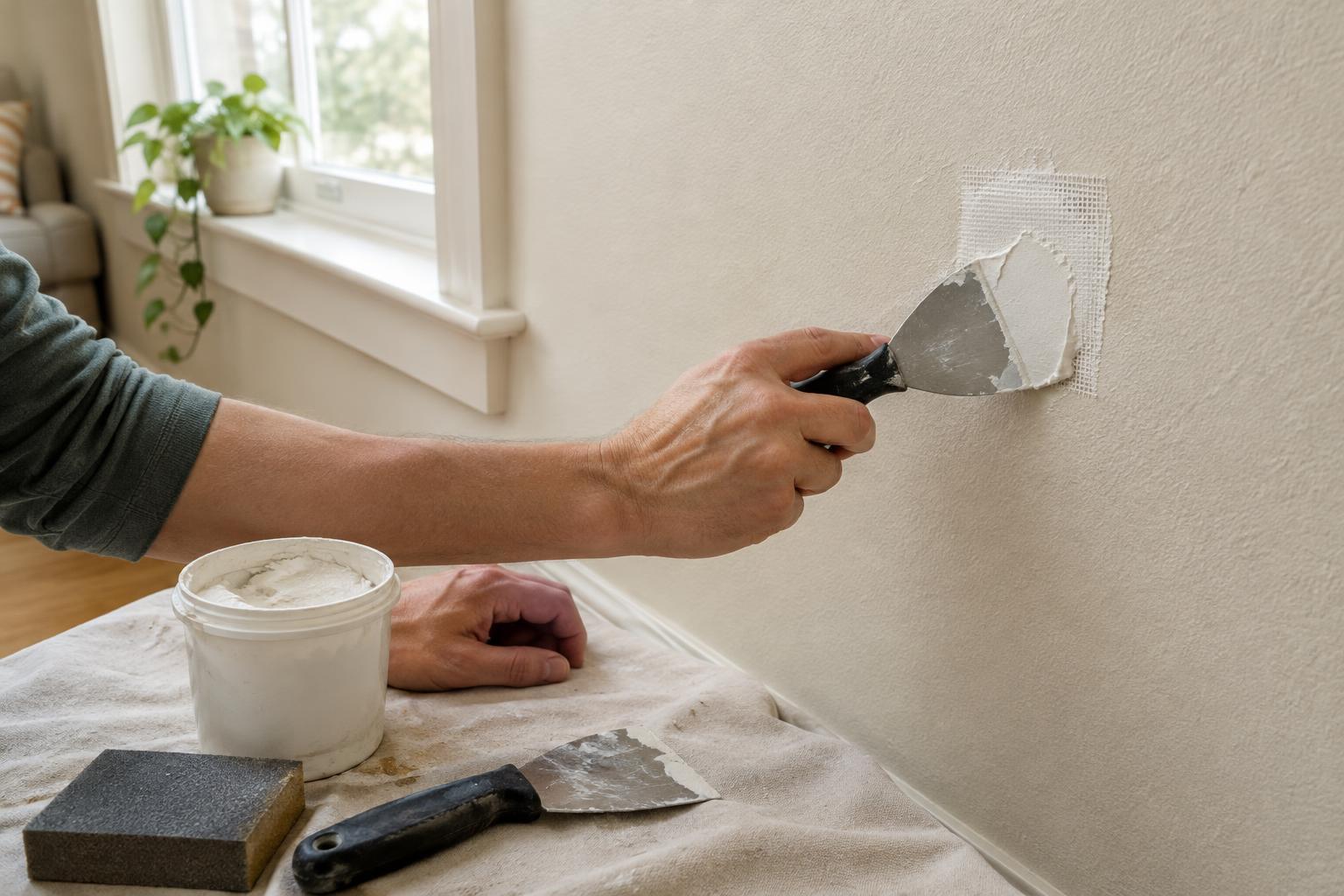
If the hole is small but too wide to hold filler by itself, center a self-adhesive mesh patch over it on clean, dry drywall. Press the patch flat, paying particular attention to its edges. With a putty knife, spread joint compound over the mesh and a little beyond it. Use light pressure near the center so you do not push compound through the opening, then smooth the outer edges as thinly as you can.
Allow that coat to dry fully before adding another. For the next coat, spread the compound farther beyond the patch to make a gradual transition to the wall. Two or more thin coats usually look flatter than one thick coat. When everything is dry, sand lightly and check the result from different angles. If you can see a ridge around the patch, add a thin coat around its edges, let it dry and sand again. Stop sanding before you expose the mesh.
Prime, paint and check the finish
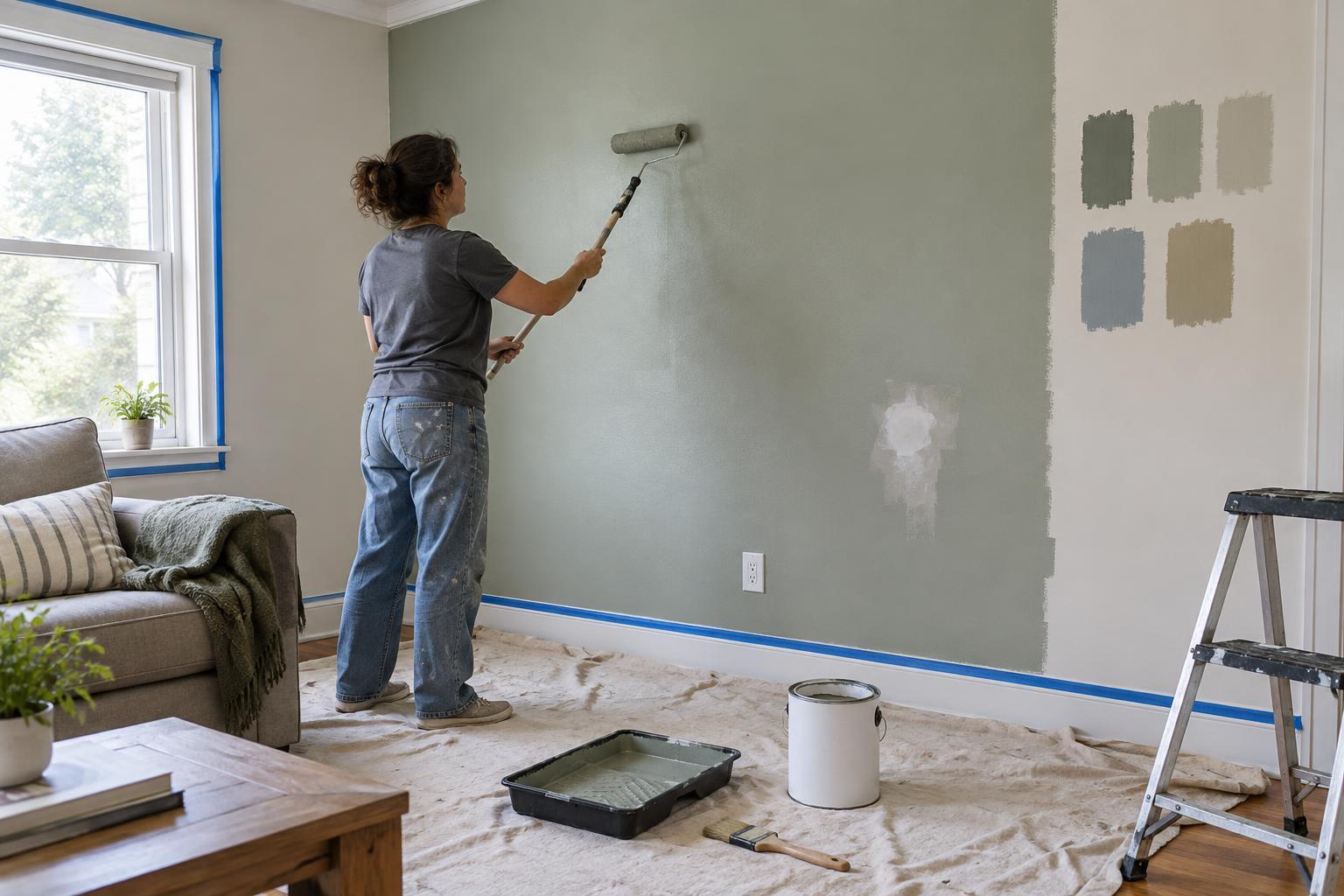
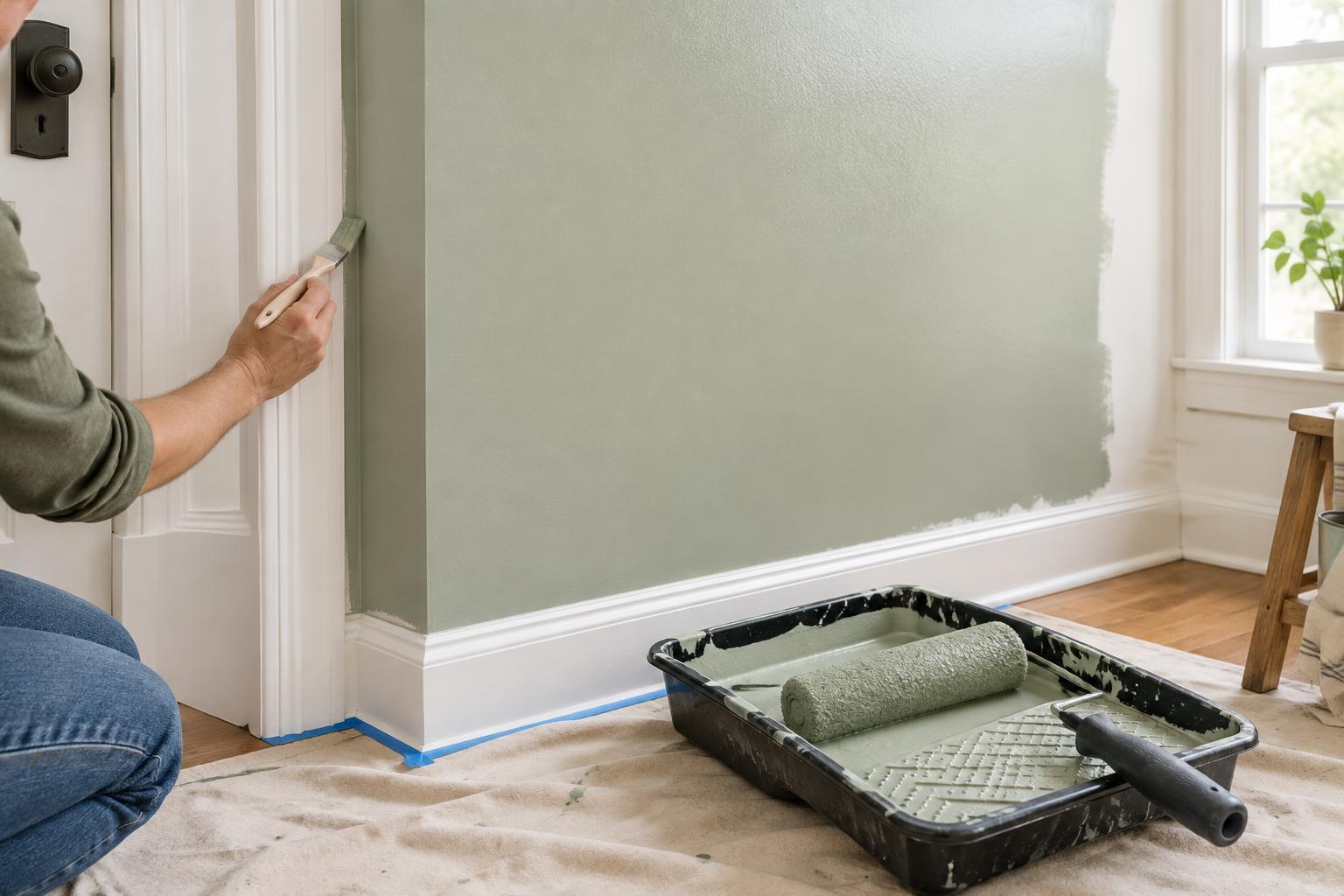
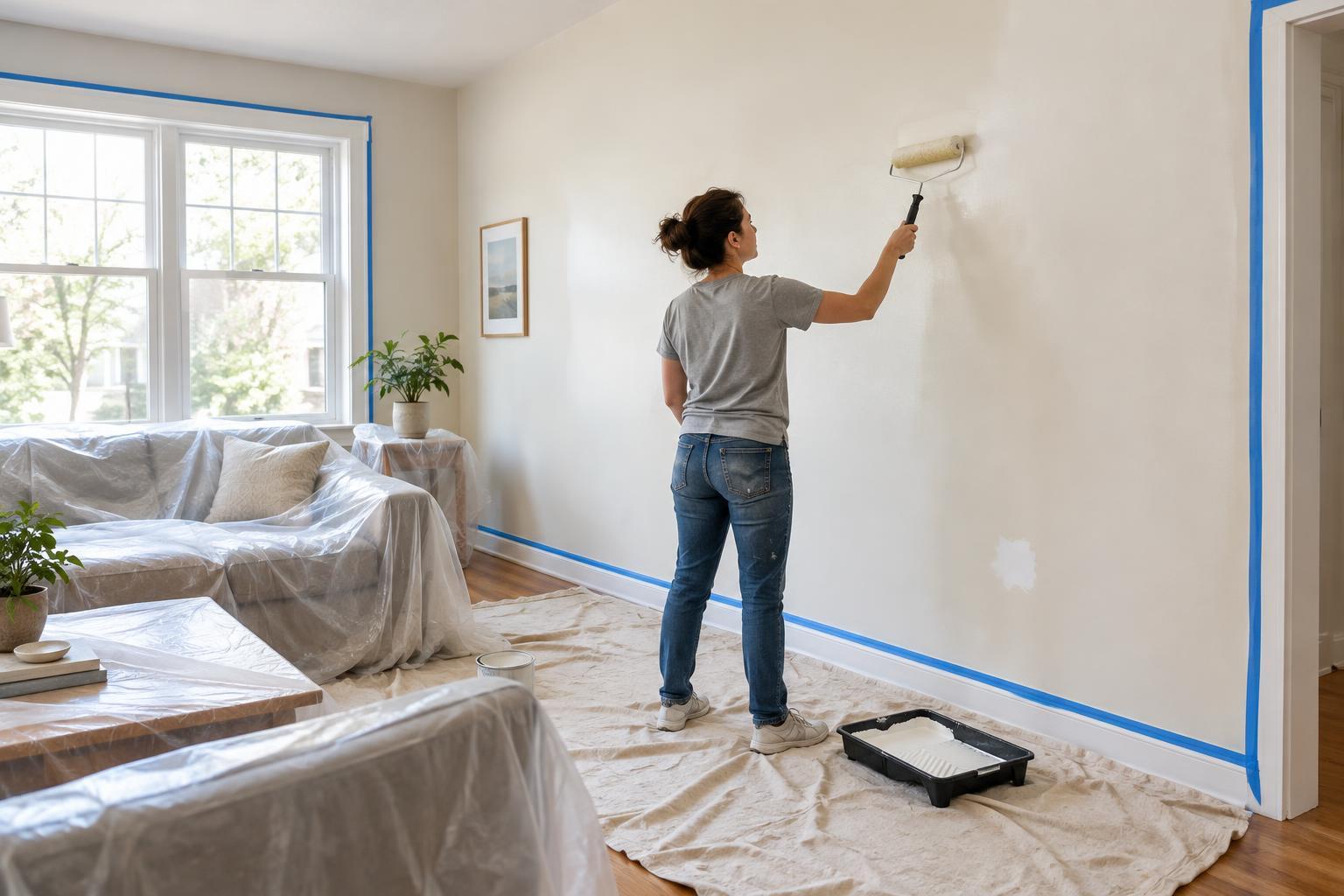
Brush away sanding dust, then prime the repaired area. Primer helps keep the patch from absorbing paint differently from the surrounding wall. Once it dries, apply matching wall paint, following the paint container’s directions for any additional coat. Even an exact paint color may stand out if the existing finish has faded or has a different sheen. Painting a larger area, sometimes to the nearest corner, can make the repair less noticeable.
Wall texture can also affect the result. On a lightly textured wall, you may be able to mimic the surrounding finish with a suitable texture product before priming, but test your method somewhere inconspicuous first. Finally, look at the patch in ordinary room lighting rather than only under a work lamp. A smooth repair that blends in during everyday use is the goal; it does not need to be invisible from every angle.