Read the whole recipe once
A recipe is more than a shopping list followed by instructions. It is a plan with tasks that may overlap, pauses that may be easy to miss and decisions you will have to make along the way. Before taking out a pan, read from the first ingredient to the final serving instruction. You are looking for the shape of the project, not trying to memorize every sentence.
Notice the yield first. A recipe for two portions may not fill the needs of four people, while a large batch may require more storage space than you have. Then look for instructions that affect when you can serve the food: chilling dough, soaking beans, bringing ingredients to room temperature or letting a cooked dish rest. A recipe described as quick can still have a long waiting period if its stated time counts only active work.
Turn the ingredient list into a prep checklist
Read each ingredient line as an instruction. “One onion, finely diced” tells you both what to buy and what to do before that onion reaches the pan. “One cup cooked rice” is not the same as one cup uncooked rice. Likewise, “chopped nuts” and “nuts, chopped” can sometimes imply different measuring points. If precision matters, follow the recipe’s wording rather than guessing.
Check whether an ingredient appears more than once in the method. Half the oil might be used for sautéing and the rest for a dressing. Mentally divide those amounts, or note them on a copy of the recipe, so you do not add everything at the first mention. Mark any unfamiliar ingredient or technique now, when there is time to decide whether you can make the recipe as written.
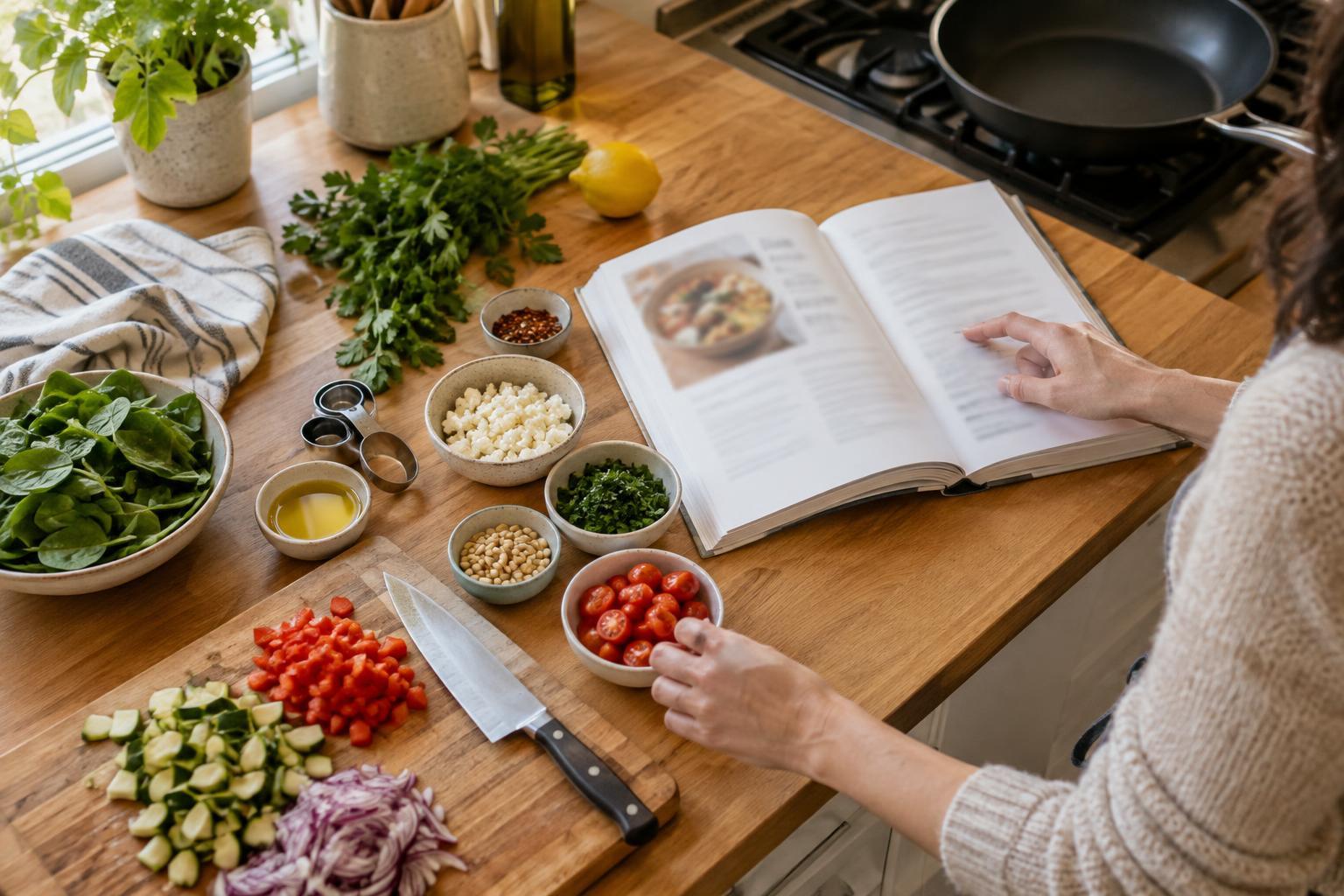
Before cooking, put the ingredients you need on the counter and confirm that you have enough of each. You do not have to arrange every measured item in a separate bowl. For many everyday meals, it is enough to wash produce, open packages and group ingredients by the step in which they will be used. Keep items that need refrigeration chilled until you are ready for them.
Build a realistic timeline
Recipe times are useful estimates, not guarantees. Your chopping speed, stove and cookware can all change how long dinner takes. Separate the work into active time, such as slicing vegetables, and mostly hands-off time, such as simmering or baking. Ask which tasks must happen in order and which can happen together. You might chop herbs while a pot simmers, but you cannot start a marinade after the food was meant to sit in it for an hour.
Pay special attention to fast steps. If the instructions say to add garlic, stir briefly and then pour in tomatoes, have the tomatoes ready before the garlic goes into the pan. A calm stretch of prep before cooking is often easier than racing to measure an ingredient while something is browning. If several dishes need to finish together, work backward from serving time and allow a little room for delays.
Check equipment and translate vague directions
Scan the method for tools as well as ingredients: a large skillet, a baking dish, a blender, a lid or a fine-mesh strainer. Check that your chosen pan can hold the food comfortably. Crowding a pan can make browning harder, while a much larger baking dish can change the depth of a casserole and how it cooks. If you need to substitute a tool, consider what that tool does rather than matching its name exactly.
Recipes often combine a time with a sensory cue: “cook for about five minutes, until softened” or “bake until the top is golden.” Treat the cue as an important part of the instruction. Before starting, picture what “softened,” “simmering” or “reduced by half” will look like. A simmer has gentle bubbling; a vigorous boil is more forceful. If a direction is unclear, pause and identify what change the step is trying to achieve.
Know where you can adjust—and where to be careful
A recipe can be a guide without being a script. In many savory dishes, you can adjust herbs or add a little more acidity after tasting. Other parts are less flexible: changing the main liquid in a dough, skipping a thickener or substantially altering baking-pan size may change the result. For food safety, follow reliable temperature guidance when cooking foods such as meat and poultry rather than relying on color alone.
Make one final pass over the ending. Does the dish need seasoning after cooking, a squeeze of lemon, a garnish or time to cool? Those small instructions are easy to overlook once you are hungry. When you have read the recipe this way, you do not need every step committed to memory. You simply begin with a clearer plan, the right ingredients close at hand and a better sense of what to watch for.