Choose a small area and a simple theme
You do not need a famous landmark to enjoy an architecture walk. A few blocks near a library, a shopping street, or a familiar residential area can offer plenty to examine. Pick a route you can cover comfortably, leaving time to stop without feeling rushed. If possible, note where you will start and finish, where you can cross busy roads, and whether you will need a place to rest.
A loose theme gives the walk direction. You might compare front doors, look for different ways buildings meet the street, or notice how older and newer structures sit beside each other. Another option is to follow a single material, such as brick, wood, or glass. Keep the theme flexible: an unexpected detail may be more interesting than anything you planned to find.
Begin with the building’s overall shape
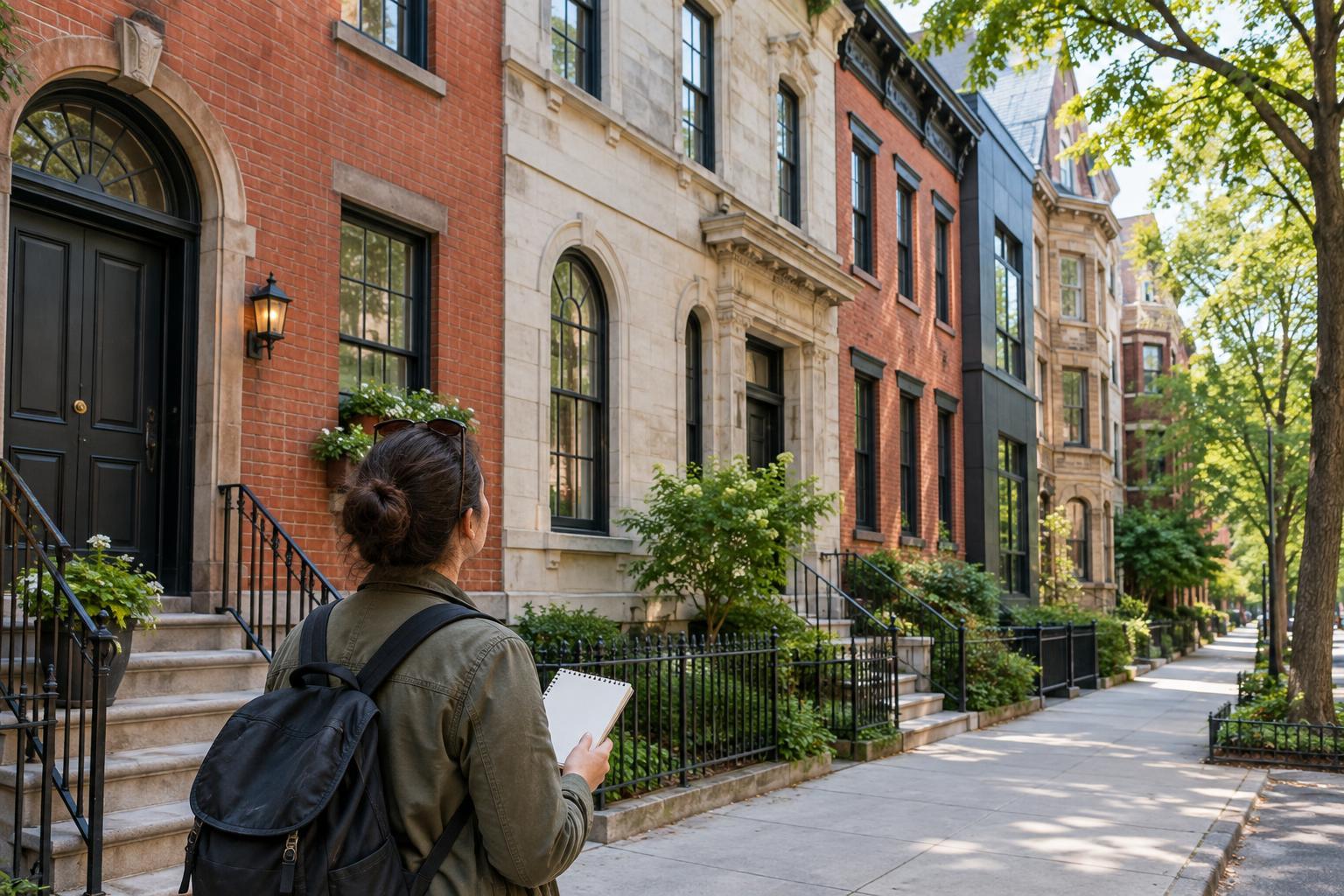
When you reach a building, pause across the street or in another safe public spot where you can see it as a whole. What is its general shape? Is it tall and narrow, low and wide, or made of several connected parts? Look at the roofline, the spacing of windows, and the position of the entrance. These broad features often tell you more about the design than one decorative detail viewed up close.
Next, consider how the building relates to its surroundings. Does it sit directly beside the sidewalk or behind a garden? Does the entrance invite a direct approach, or is it tucked around a corner? Compare neighboring buildings rather than trying to name an architectural style immediately. Asking “What is different here?” is usually more useful than trying to identify every feature on sight.
Look closer at materials and everyday decisions
Once you have the overall impression, scan for details at eye level and above. Notice how materials meet at corners, whether window frames repeat, and where shade or shelter has been provided. A step, railing, awning, or recessed doorway may reveal how a building handles rain, sunlight, or a change in ground level. You can also look for signs of adaptation, such as a closed-up opening or a newer entrance.
Treat your observations as questions, not conclusions. A patch of different-colored brick might suggest a change, but appearance alone may not explain when or why it happened. Likewise, an ornate facade does not tell you everything about a building’s age or original use. If you want to investigate later, write down the question rather than guessing at an answer during the walk.
Make a record you will want to revisit
You can document the walk with a notebook, a phone, or a quick sketch on scrap paper. For each stop, record its location in a way you will recognize later, then add one thing you noticed and one question it raised. A simple note such as “corner building: windows become smaller on the top floor” is more useful than a long list of impressions you cannot match to a place.
Photographs can help you compare buildings afterward, but take a moment to frame what you are trying to remember. One wider image shows context; a second can capture a particular detail. Follow any posted photography rules, and be considerate around homes, businesses, and people going about their day. You do not need to photograph every stop. Sometimes a short description sharpens your attention better than another image.
Finish with a few comparisons
At the end of the route, choose two or three buildings that stayed with you. What did they have in common? How did they differ in their entrances, windows, materials, or relationship to the sidewalk? Revisiting your notes can reveal patterns you missed while walking, such as a repeated roof shape or a shift from small storefronts to larger buildings.
Keep the outing comfortable and respectful throughout. Stay on public routes unless a space clearly welcomes visitors, avoid blocking entrances, and watch for traffic when stepping back to view a facade. If a route has uneven pavement, stairs, or few places to pause, adapt it rather than pushing through. A good self-guided walk is not a test of how many buildings you can identify. It is a way to pay closer attention to places you might otherwise pass without noticing.