Start with the safest checks
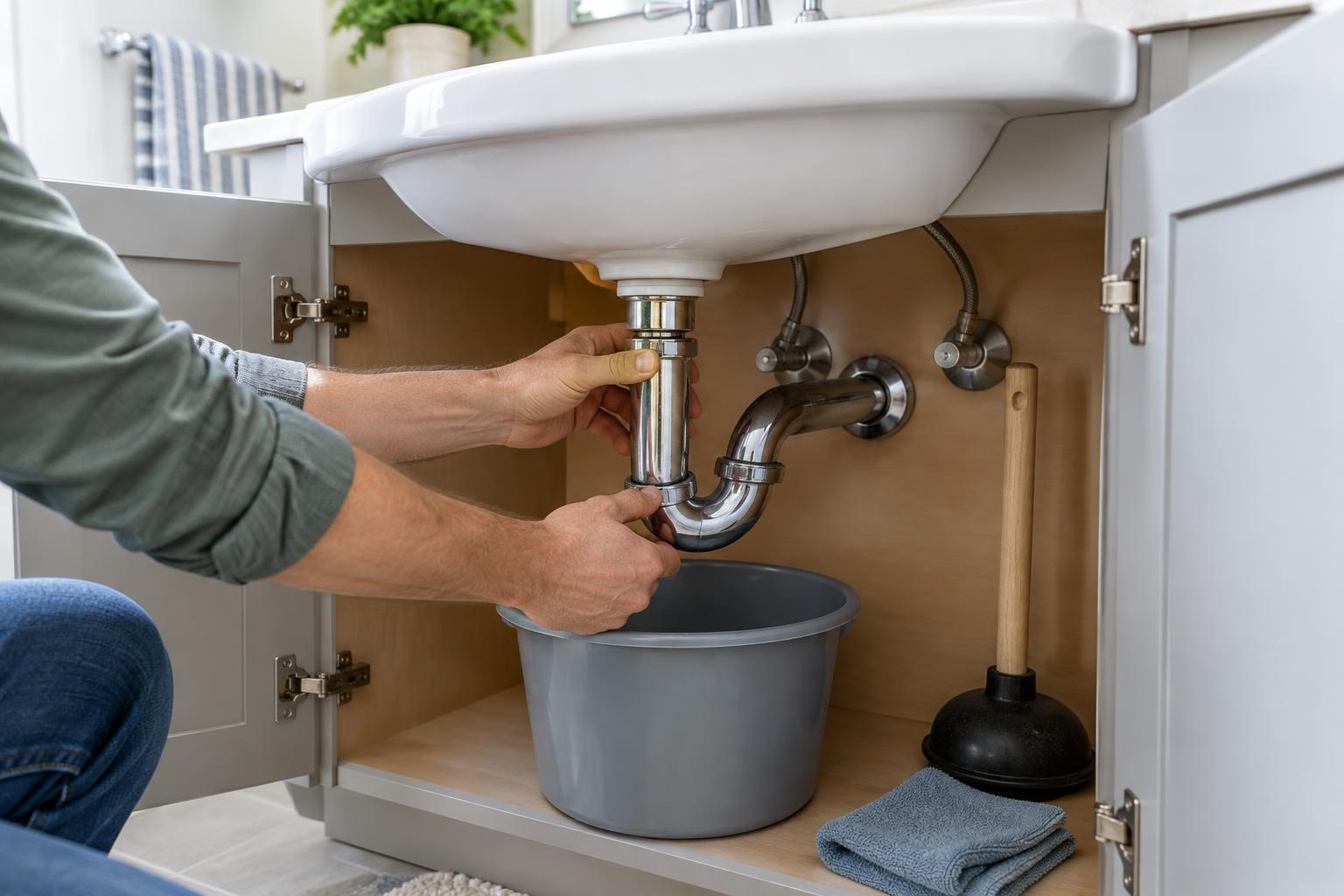
Before taking anything apart, notice how the sink behaves. Does water drain slowly, or does it stand still? Is just one sink affected? A clog close to the drain is often easier to reach than one farther along the pipe. Clear the area under the sink, put on gloves, and keep a bucket and old towel nearby.
If you have already poured a chemical drain cleaner into the sink, do not plunge it or open the pipes. Splashing or spills could expose you to the cleaner. Follow the product’s safety directions and seek help from a plumber if the blockage remains. Never mix drain-cleaning products with each other or with household cleaners.
For a bathroom sink, lift out any visible hair or debris around the drain opening. A removable stopper may be holding the clog in place. Some stoppers lift out; others connect to a rod beneath the sink. If yours does not come out easily, look at how it is attached before pulling harder. Take a photo of the connection if you plan to disconnect it, so you can put it back the same way.
Try a plunger before dismantling pipes
A small cup plunger can move a clog that sits just beyond the drain. Add enough water to cover the plunger’s rim. On a bathroom sink, press a damp cloth firmly over the overflow opening near the top of the basin; otherwise, air can escape there instead of pushing against the blockage. If you have a double kitchen sink, cover the other drain as well.
Center the plunger over the drain and work it with several steady pushes and pulls, keeping the rim sealed against the basin. Lift it and see whether the water moves. You may need to repeat the process a few times. Avoid excessive force, especially if the fittings under the sink are loose. If water starts leaking below, stop and check the connections.
Once water drains, run it briefly and watch the pipes underneath for drips. A plunger can shift debris without removing all of it, so a sink that slows again quickly may need a more direct cleaning.
Clean the stopper or trap
Hair, soap residue, and food scraps can collect where you can reach them. For a bathroom sink, remove and clean the stopper if its design allows. A flexible plastic drain-cleaning strip can help pull hair from just inside the opening. Draw debris out gently rather than pushing it deeper, and dispose of it in the trash.
If the drain is still blocked, the curved pipe under the sink, called the P-trap, is a sensible next place to check. Set a bucket underneath it, then loosen the slip nuts that hold the curved section in place. Many loosen by hand, but a tool may be needed. Keep track of the washers and how they sit. Empty the trap into the bucket and remove any buildup with a small brush. Do not force a fitting that seems stuck or fragile.
Reassemble the trap, making sure the washers are seated and the nuts are snug but not overtightened. Run a little water, then increase the flow while checking every connection for leaks. If a joint drips, turn off the water and reseat it. Older or damaged fittings may need replacement rather than more tightening.
Know when to stop and call for help
If the stopper and trap are clear but the sink still backs up, the blockage may be farther down the line. A small hand-operated drain auger may reach it, but use one only if you can feed and retrieve it without forcing it. A powered tool or aggressive twisting can damage some plumbing. Be particularly cautious with a kitchen sink that has a garbage disposal: switch off and unplug the unit or disconnect its power before reaching near it, and never put your hand inside it.
Call a plumber if several fixtures drain poorly, water backs up into another fixture, you notice a sewage smell, or the clog returns despite cleaning the accessible parts. Those signs may point to a problem beyond the sink trap. It is also reasonable to get help if a connection leaks or you are unsure how to reassemble it.
To reduce future clogs, use a sink strainer and empty it into the trash. Keep grease and cooking oil out of the kitchen drain, and remove hair from bathroom stoppers regularly. These small habits will not prevent every blockage, but they can keep the most common debris from building up where water needs to flow.