Start with the recipe’s units
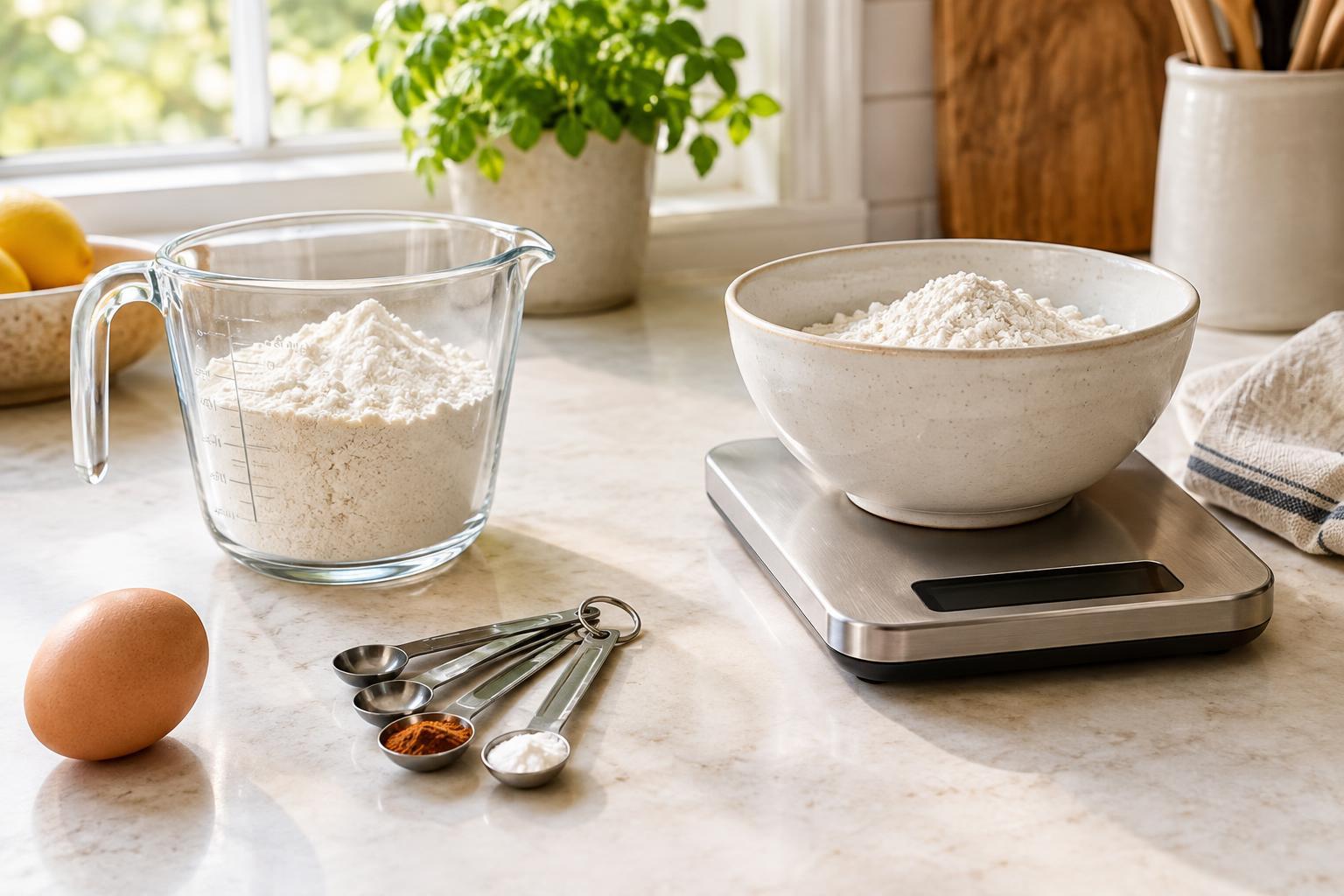
Before reaching for a tool, check how the recipe lists each ingredient. Cups and spoons measure volume: how much space an ingredient takes up. A scale measures weight. Neither is the best choice for everything. A recipe written in grams is easiest to follow with a scale, while one written in teaspoons calls for measuring spoons. Switching methods without a reliable conversion can change the amount you add.
It also helps to read any directions attached to an ingredient. “One cup chopped nuts” means chop the nuts before measuring; “one cup nuts, chopped” generally means measure them first. If the wording is unclear, choose a method and use it consistently. For familiar, flexible dishes, a small difference may not matter much. In baking, where the balance of ingredients affects texture, following the stated method is more important.
Use cups for volume-based recipes
Measuring cups are useful when a recipe gives amounts in cups, particularly for liquids or ingredients that are easy to pour. For water, milk or oil, use a liquid measuring cup with a spout. Set it on a level surface and read the marking at eye level. Holding the cup in the air can make it harder to judge the line.
For flour, sugar and other dry ingredients, use dry measuring cups that you can fill and level. Spoon flour gently into the cup, then sweep a straight edge across the top unless the recipe specifies another method. Scooping directly with the cup can pack in extra flour. Brown sugar is an exception when a recipe says “packed”: press it into the cup so it holds its shape when turned out. Avoid shaking or pressing other dry ingredients down unless instructed.
Reach for spoons when amounts are small
Measuring spoons suit ingredients used in small amounts, such as spices, baking powder, extracts and salt. For dry ingredients, fill the spoon and level it rather than judging by the shape of a mound. For liquids, fill the spoon over a bowl or sink to catch spills, and check that you are using a measuring spoon rather than an eating spoon. An ordinary table spoon is not a dependable substitute.
Small measurements deserve attention because an accidental extra spoonful can have a noticeable effect, especially with strong flavors or leavening ingredients. If a recipe asks for a fraction of a teaspoon, use a marked spoon if you have one. If you do not, a careful estimate may be fine for a pinch of seasoning in a flexible dish, but it is less dependable for baking.
Choose a scale for repeatable amounts
A kitchen scale is especially handy for flour, chopped ingredients and anything awkward to fit neatly into a cup. It also reduces the number of dishes you need: place a bowl on the scale, press the tare button to reset the display to zero, and add an ingredient until you reach the amount in the recipe. Tare again before adding the next ingredient, provided you will not need to remove anything already in the bowl.
Weighing helps you repeat your own results because it avoids differences caused by how firmly an ingredient is packed into a cup. It does not make every recipe foolproof, and it is not a reason to guess at conversions. A cup of flour and a cup of sugar occupy the same volume but do not weigh the same. When a recipe provides both volume and weight, use one set of measurements throughout rather than mixing numbers from different versions.
Build a simple measuring routine
You do not need to weigh every ingredient to cook well. Keep dry cups, a liquid cup and measuring spoons available, and add a scale if you often bake or want to make recipes more repeatable. Check that your tools use the units the recipe expects, set them on a stable surface, and measure before you begin cooking when timing matters.
As you make a recipe again, note what you used: spooned-and-leveled flour or a weight in grams, for example. That small record is more useful than trying to remember why one batch turned out differently. Over time, choosing a tool becomes straightforward: follow the recipe’s units, measure small amounts with spoons, use the appropriate cup for volume, and turn to the scale when weight is given or consistency matters most.