Read the pan, not just the dial
Low, medium and high are starting points, not fixed cooking temperatures. A heavy pan holds heat differently from a thin one, and a small burner heats differently from a large one. Even the amount of food you add changes what happens next. Instead of setting a dial and walking away, watch the food, listen to the pan and adjust as you go.
The three techniques have different goals. Simmering uses gently moving liquid to cook food steadily. Sautéing cooks small or thin pieces in a little fat while you move them around. Searing uses strong contact heat to brown a food’s surface. Choosing between them is less about following a rule for a particular ingredient and more about the result you want: tender and moist, quickly cooked, or deeply browned.
Simmer for steady, gentle cooking
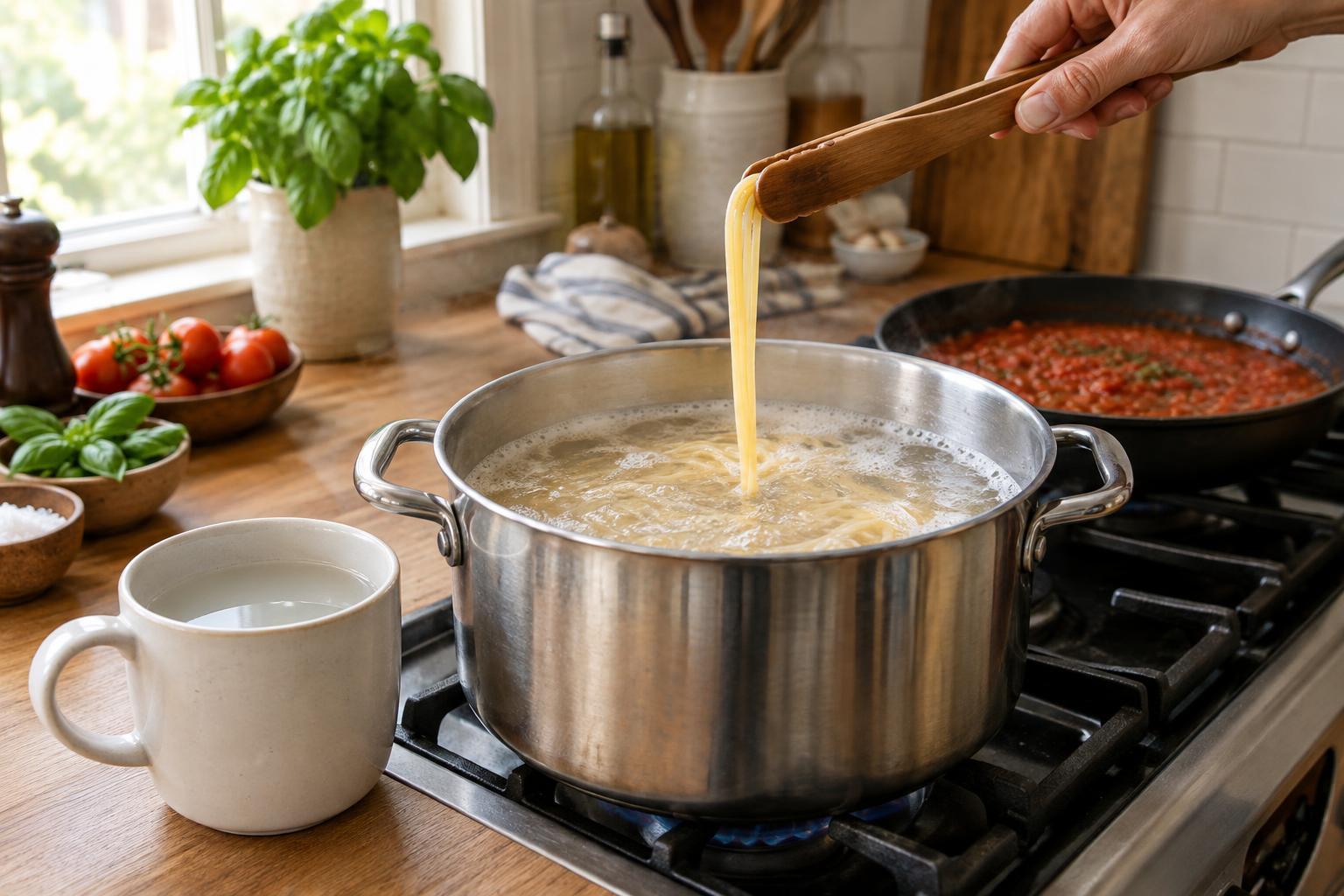
A simmer looks like small bubbles rising regularly through a liquid, with some movement at the surface. A rolling boil is much more vigorous. To bring a pot to a simmer, you can start at a higher setting, then turn the heat down once bubbles appear. Check it again after a few minutes: the pot and burner may keep adding heat after you lower the dial.
Simmering suits soups, sauces, beans and foods that need time in liquid without being tossed around aggressively. It can also help a sauce reduce as water evaporates. Use a lid when you want to limit evaporation; leave it partly or fully uncovered when you want the liquid to thicken. Stir occasionally, especially if the mixture contains starch or thick ingredients that might settle on the bottom.
If the liquid is splashing and the food is breaking apart, lower the heat. If the surface is completely still and cooking has stalled, raise it slightly. You are looking for enough activity to keep the pot cooking, not the most bubbles you can produce.
Sauté for quick, even cooking
To sauté, warm a skillet, add a modest amount of oil or other cooking fat, then add food cut into pieces that will cook at a similar pace. Medium or medium-high heat is often a useful starting point, but the food gives better guidance than the dial. You want a steady sizzle when it meets the pan. Stir or toss often enough to expose new surfaces to the heat.
This method works well for sliced vegetables, mushrooms and small pieces of food that you want to cook without a long bath in liquid. Give them room. A crowded pan traps moisture, so the food may soften and steam rather than develop any browning. If you have a lot to cook, use a larger skillet or work in batches.
If the food turns dark before it softens, lower the heat or cut the pieces smaller next time. If it sits quietly and releases a pool of liquid, the pan may be too cool or too full. Let some moisture evaporate before expecting browning, and avoid adding more food until there is space.
Sear for a browned surface
Searing is about direct contact between food and a hot pan. It is useful when you want a browned crust on something that can sit in place for a few minutes, such as a thick mushroom slice, tofu or a piece of meat. Pat the surface dry, warm the pan, add a suitable amount of oil, and lay the food down carefully. An immediate, lively sizzle is a useful sign; heavy smoke is a sign to reduce the heat.
Leave the food undisturbed long enough for browning to develop, then lift an edge to check. Moving it constantly interrupts contact with the pan. Searing does not necessarily cook a thick item all the way through, so you may need to finish it over gentler heat or by another cooking method. For meat and poultry, use an appropriate food thermometer to check doneness rather than judging by the crust alone.
Make heat adjustments part of cooking
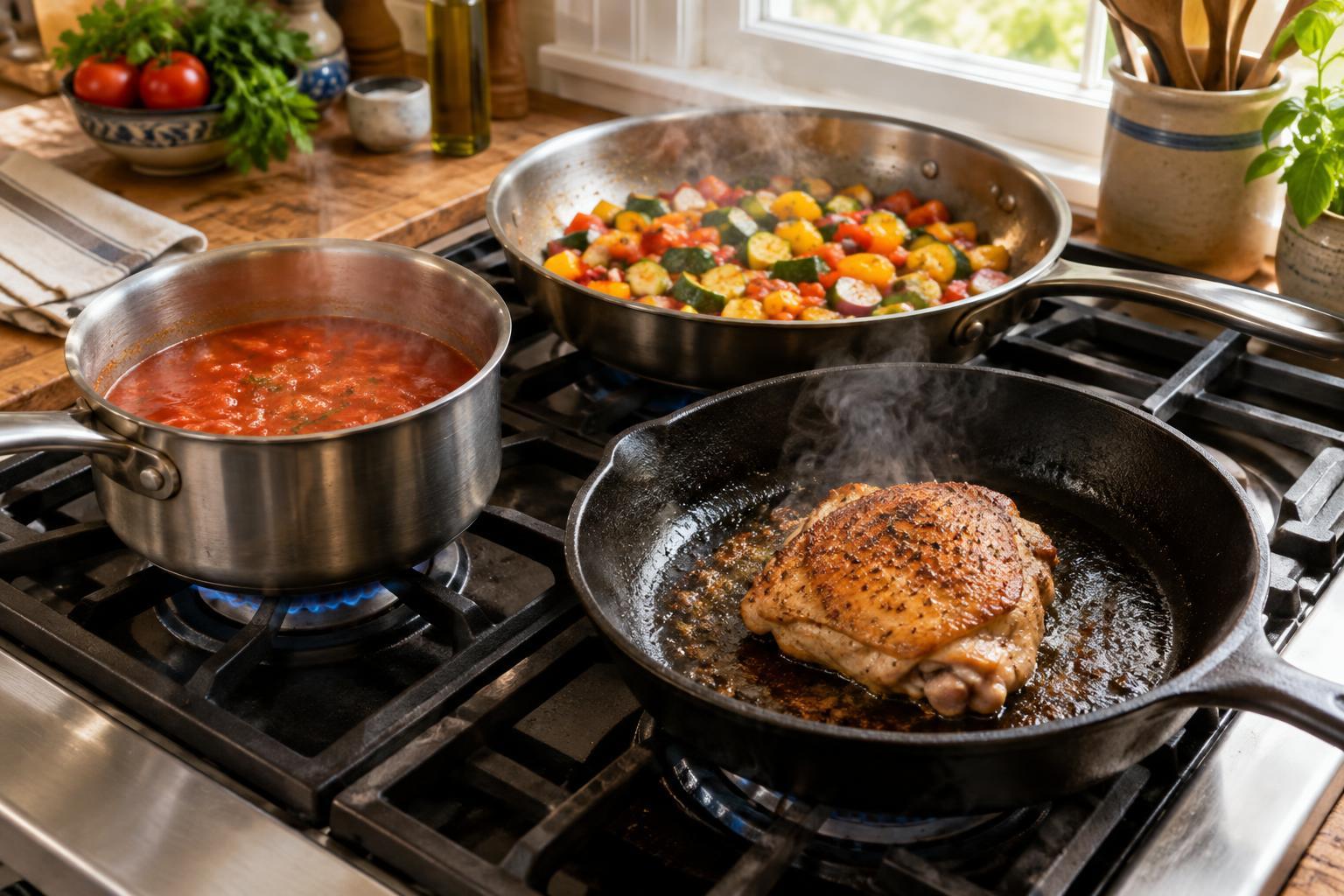
A common sequence uses more than one technique. You might sauté onions until softened, briefly sear mushrooms in the same pan, then add liquid and simmer a sauce. The pan needs a moment to respond each time you change the dial, so make small adjustments and watch what happens.
Keep a safe place nearby to set down a hot pan, and turn the heat down or move the pan off the burner if oil begins smoking or food starts to burn. With practice, the cues become familiar: gentle bubbles for a simmer, a steady moving sizzle for a sauté, and strong, controlled contact heat for a sear. Those signals travel with you from one stove and recipe to the next.