Start with the shape of the walk
A walking loop begins and ends at the same place without retracing most of its path. An out-and-back follows a route to a chosen turning point, then returns the way you came. Neither is automatically more interesting, easier or safer. The better choice depends on how much time you have, how certain you want your distance to be and what the route is like underfoot.
For a short local adventure, first decide where you need to finish: your front door, a parked car or a transit stop. Then think about what would make the walk feel worthwhile today. You might want unfamiliar streets and changing views, or you might prefer a familiar path where you can turn around whenever you please.
Choose a loop for variety and a clear finish
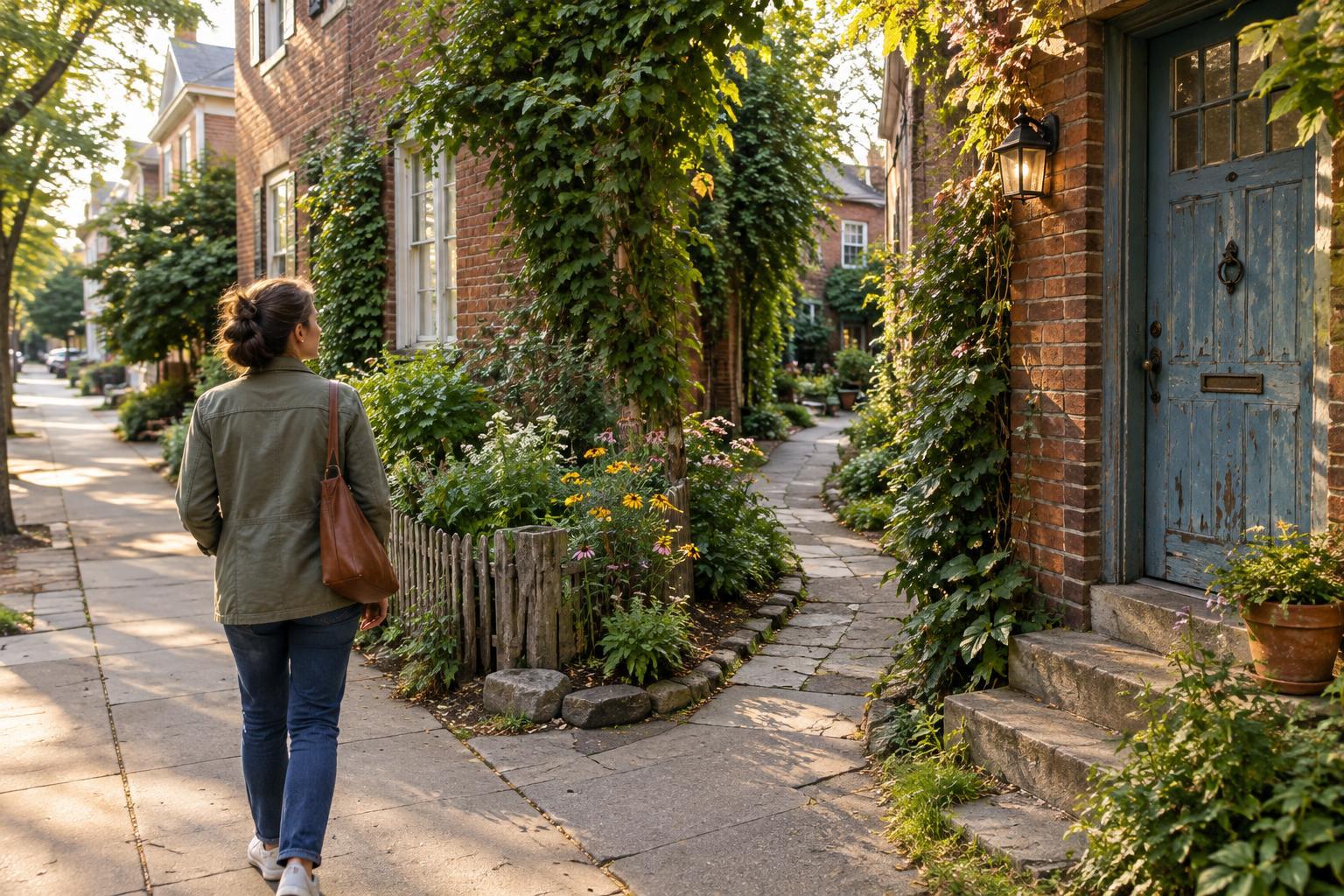
A loop can make a familiar area feel new. You might leave through a residential street, follow a park path and return past a row of shops. Because the scenery keeps changing, a loop can be appealing when the walk itself is the day’s activity. It also removes the moment when you have to decide whether to keep going or turn back.
The trade-off is that a loop can be less flexible once you are well into it. A route that looks compact on a map may include a steep section, a missing sidewalk or a crossing you would rather avoid. Before setting out, check the full circuit rather than only the first stretch. Notice where you could shorten it, and leave enough time to complete it at a comfortable pace.
Choose an out-and-back for flexibility
An out-and-back is useful when your available time or energy is uncertain. Walk toward a park entrance, viewpoint or café, then turn around early if needed. Retracing your steps makes the return route more predictable: you have already seen its crossings, slopes and surfaces. That can be reassuring in an unfamiliar neighborhood or on a path where route choices are sparse.
Its main drawback is that the second half may feel repetitive. A small purpose can help: notice details you missed on the way out, or make the turning point a place to pause and have a drink of water. Remember that reaching the destination is only halfway. If you have a firm deadline, set a turnaround time before you leave rather than waiting until you feel ready to head home.
Match the route to your conditions
Distance alone does not tell you how a walk will feel. Hills, uneven ground, traffic crossings and exposure to sun or wind can matter more than the outline on a map. If you want a gentler outing, look for a route with suitable surfaces and places to pause. If you are walking with someone else, agree on a comfortable pace and a rough duration before choosing the shape of the route.
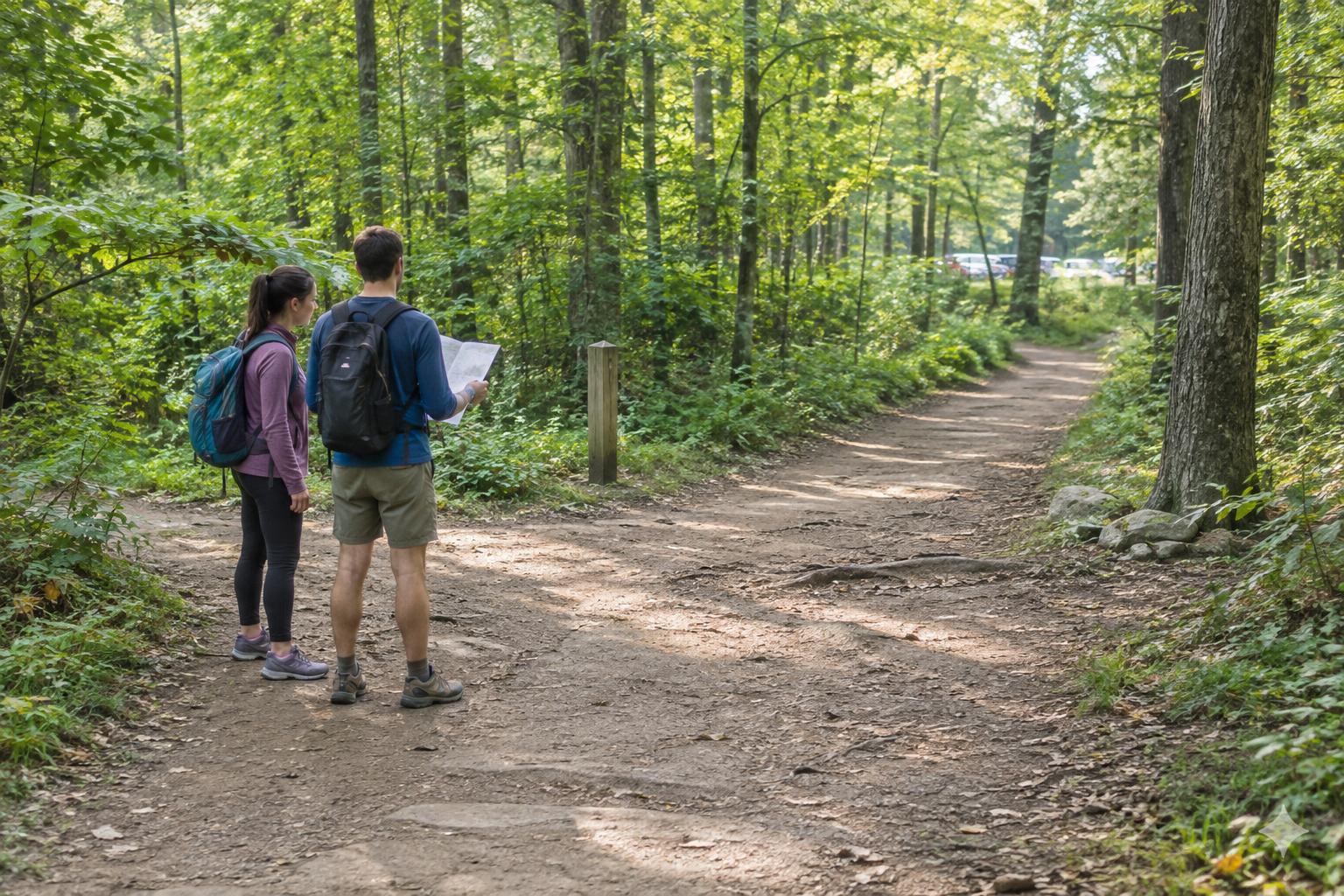
Think about navigation, too. A simple loop through connected streets may be easy to follow, while a network of similar-looking trails can be confusing. An out-and-back is often straightforward, but you should still note junctions on the way out. Whichever you choose, check whether paths are publicly accessible and consider what you will do if a gate is closed or a section does not suit you.
Try a low-pressure version of each
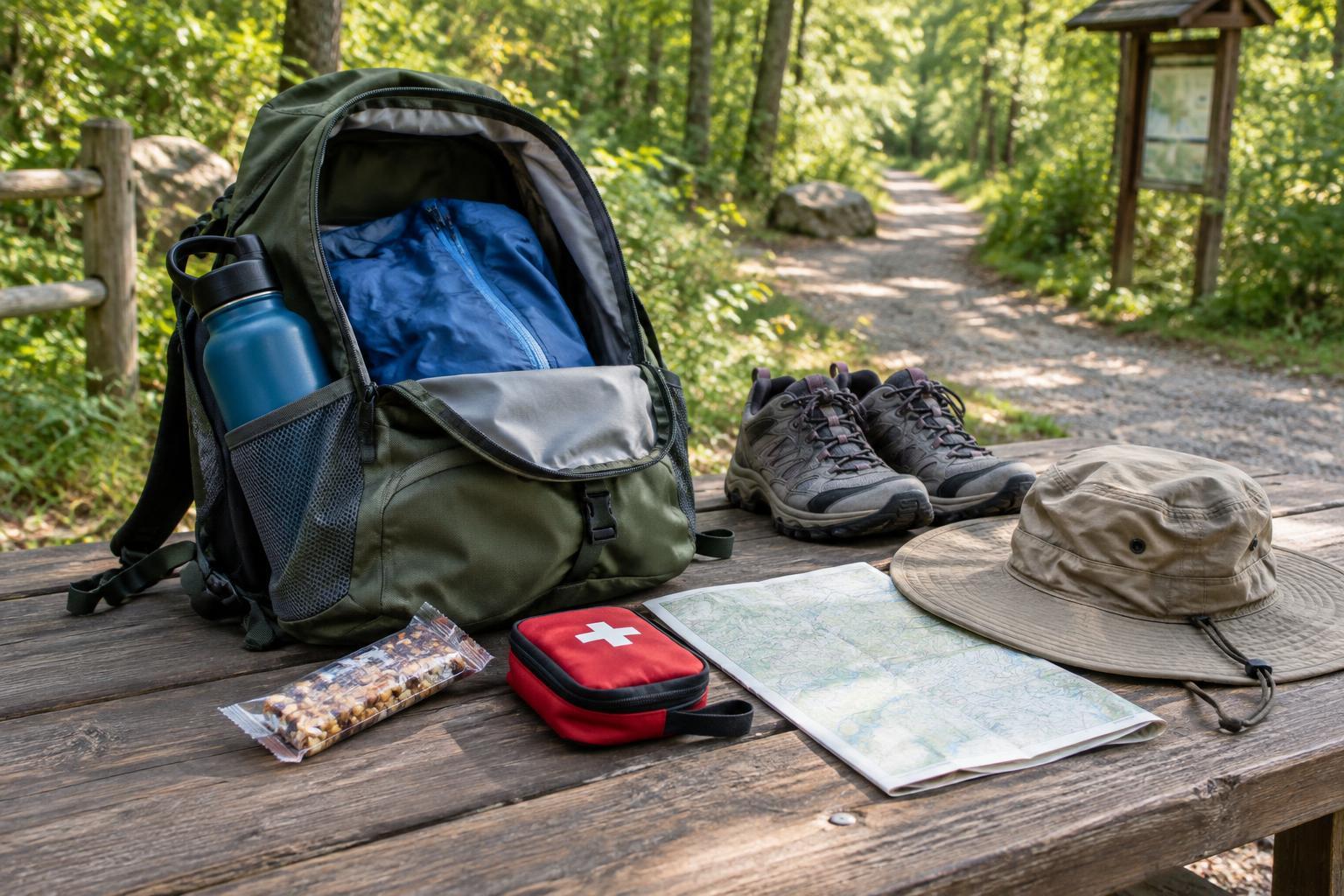
To test a loop, pick a modest circuit with an obvious halfway point and at least one way to cut it short. To test an out-and-back, choose a clear path and a turnaround point that fits your schedule. Bring what you normally need for the conditions, and let someone know your plan if you are going somewhere unfamiliar or relatively isolated.
Afterward, ask yourself what worked. Did you enjoy new scenery all the way around, or did you like knowing exactly what the return would involve? Did the route leave room for an unplanned pause? Your answer may change from day to day. A loop is often the better fit when you want variety and have time to complete a circuit; an out-and-back shines when you want a flexible, easy-to-adjust walk.