Start with the route, not the backpack
A short day hike might be a well-marked loop near town or a quieter trail with little shade and no services. Before packing, check the route length, expected walking time, terrain and forecast. Notice whether the trail has steep sections, exposed stretches or stream crossings, and look for any access rules or closures. Those details matter more than a generic packing list.
Choose a small, comfortable daypack that leaves your hands free. Put heavier items close to your back and things you may need often, such as a jacket or snack, where you can reach them. You do not need to fill the bag just because there is space. The goal is to carry what helps you enjoy the walk and handle a reasonable change of plans.
Bring water and food you will actually use
Carry drinking water even if the trail is short. How much you need depends on the weather, your pace, the terrain and who is walking with you. Bring extra if it will be hot or if you are unsure how long the route will take. Do not assume a tap, stream or shop will be available unless you have confirmed it; untreated natural water may not be safe to drink.
A simple snack is useful if the walk takes longer than expected. Choose something easy to carry and eat, such as fruit, a sandwich or a snack you already know you like. If you are hiking with children or a group, pack with the slowest walker and possible breaks in mind. Bring a small bag for wrappers and other rubbish so everything you carry in can come out with you.
Dress for changes, not just the starting point
Wear shoes that fit well and suit the trail surface. Comfortable walking shoes may be enough for a smooth, dry path, while uneven, muddy or rocky ground may call for footwear with better grip. Socks that stay comfortable as you walk can matter as much as the shoes. If the footwear is new, try it on shorter walks before making it part of a longer outing.
Pack a light extra layer and rain protection when the forecast or location calls for them. A sunny trailhead does not guarantee the same conditions on a shaded ridge or on the return trip. For exposed walks, consider a hat, sunscreen and sunglasses. In cooler conditions, a warm layer can make a rest stop or an unexpected delay much more comfortable. Keep any layer you are likely to need near the top of your pack.
Keep navigation and small essentials handy
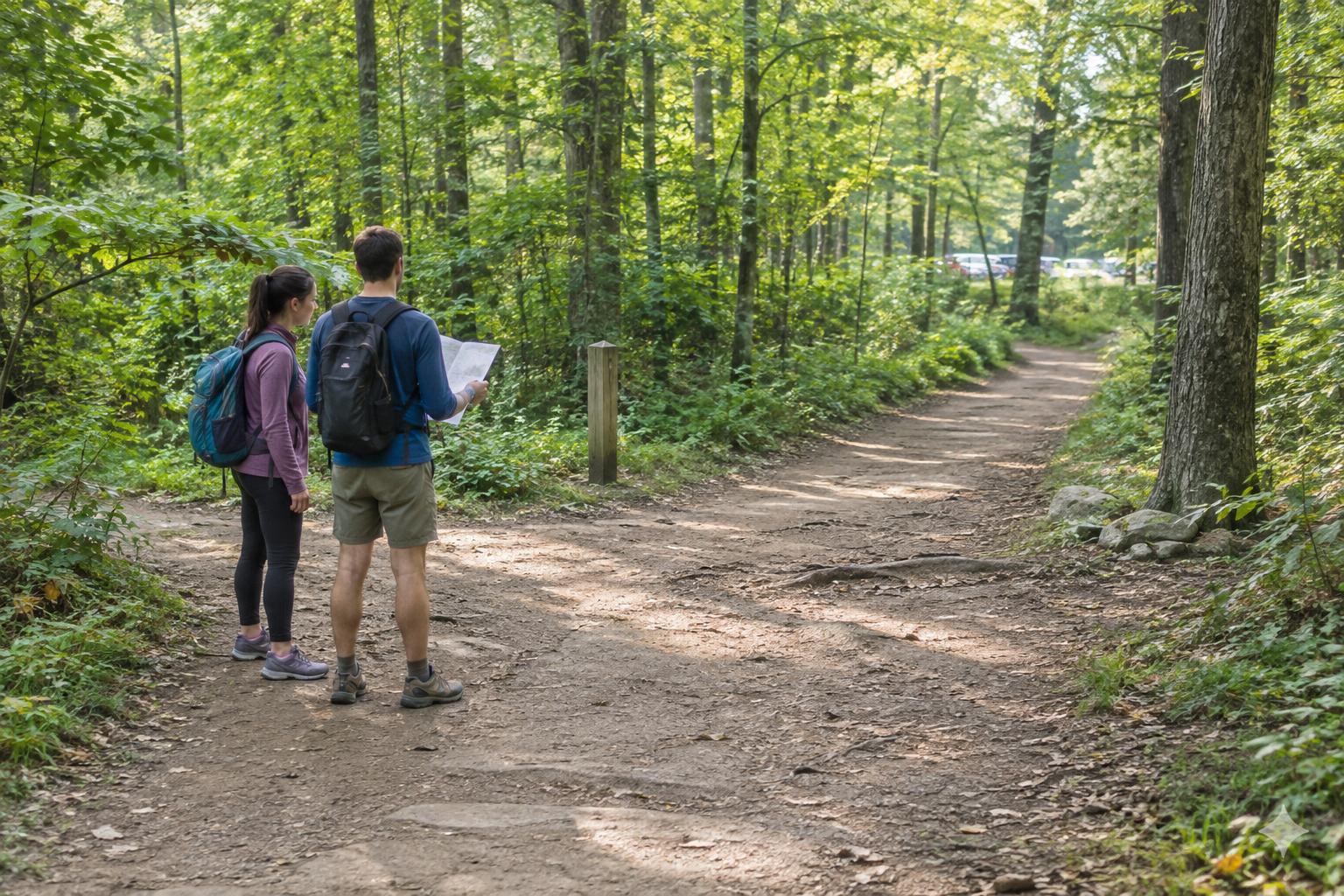
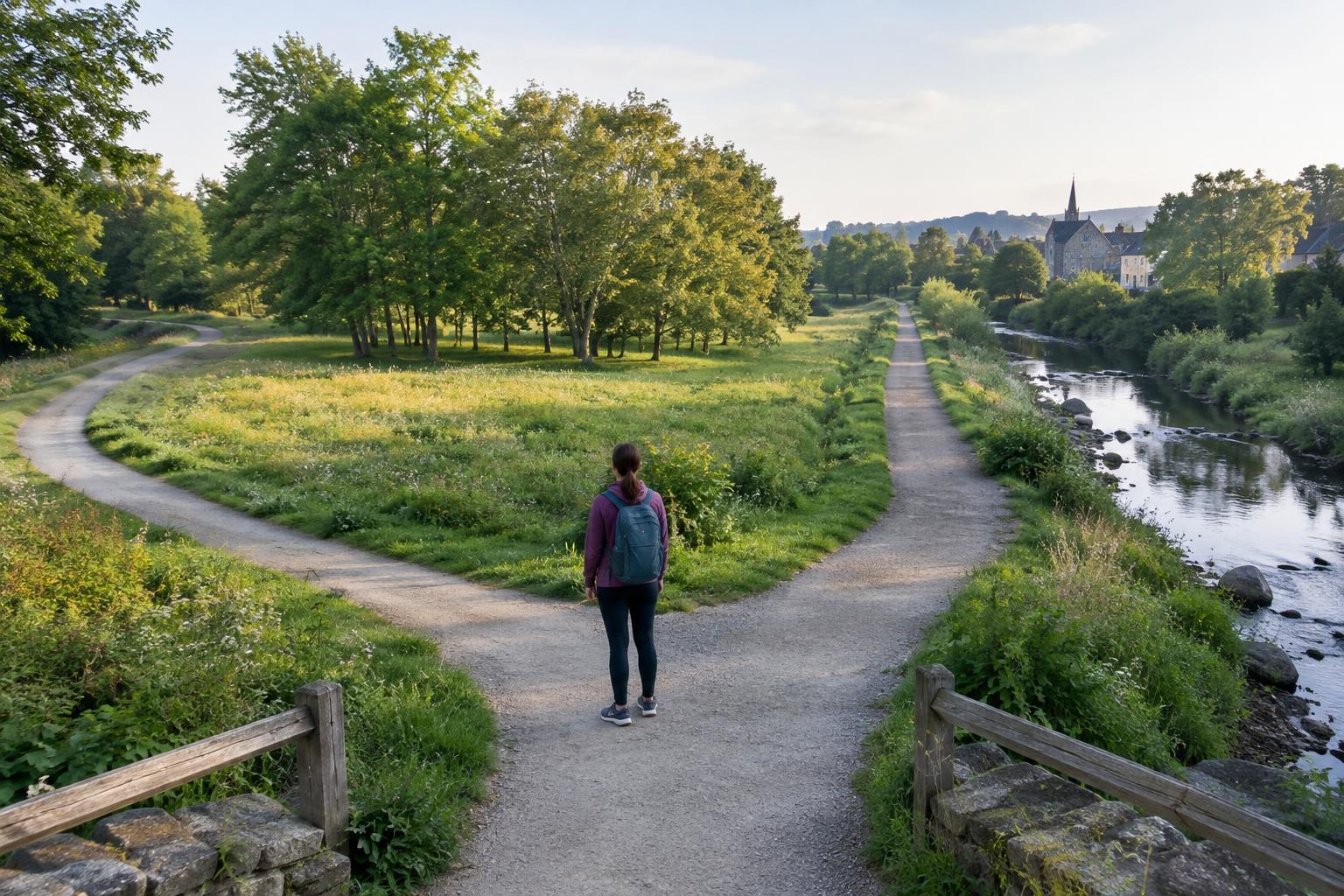
Save or carry a route map before you leave, and know where the trail starts, branches and ends. A phone can help with navigation, but reception and battery life are not guaranteed. For a less familiar route, an offline map or paper map provides a useful backup. Tell someone who is not joining you where you plan to walk and when you expect to return, especially if the trail is quiet.
Pack a charged phone, any personal medication you may need, and a small first-aid kit suited to minor problems such as blisters or scrapes. A few tissues, hand sanitizer and a compact light can also earn their place, particularly if there is a chance you will finish later than planned. If you bring a power bank, check that it is charged rather than treating it as a substitute for planning your return.
Do a final check before setting off
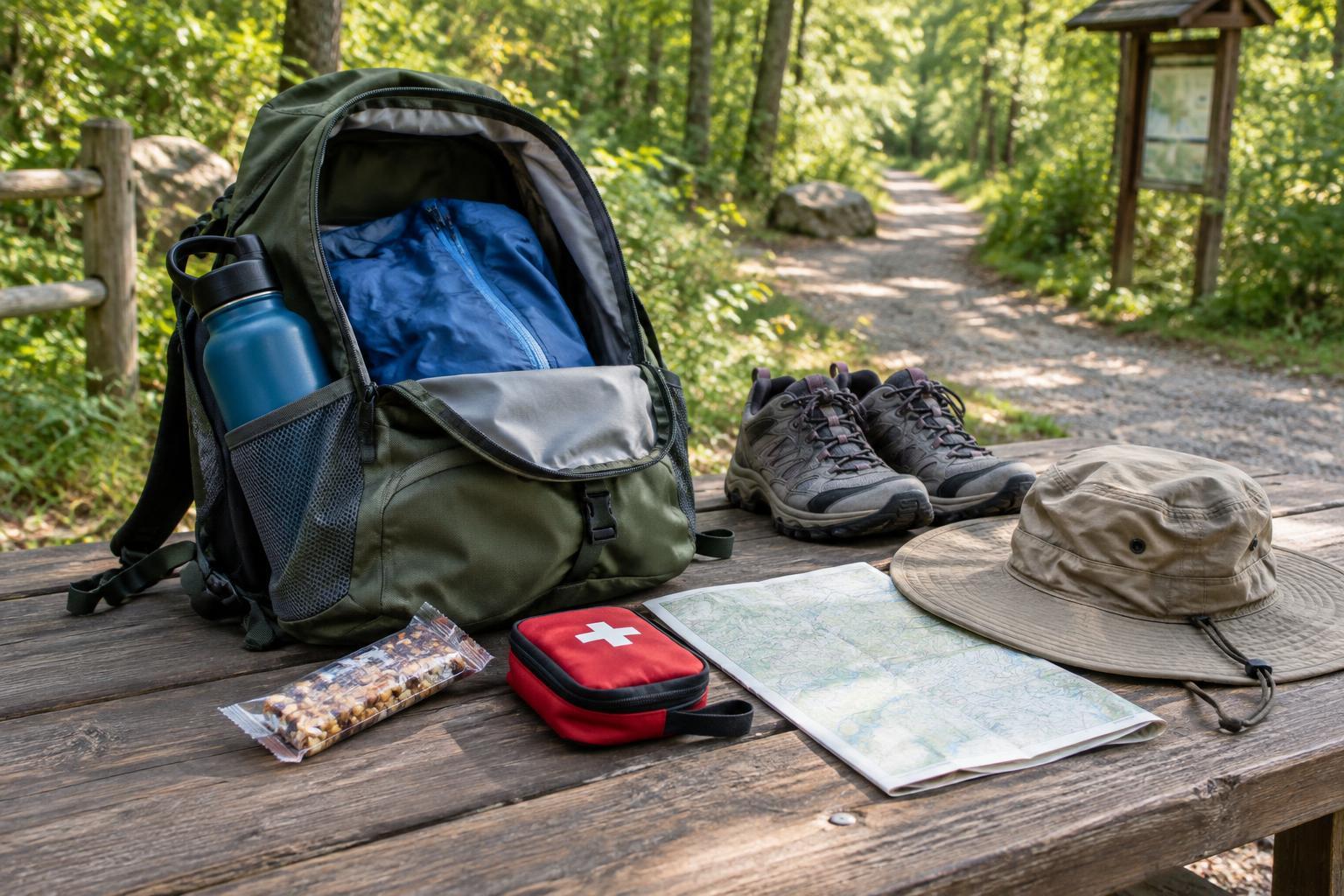
Lay out your supplies and ask three questions: Can I drink and eat if this takes longer? Can I stay reasonably comfortable if conditions change? Can I find my way back? This quick check helps you spot omissions without turning a short hike into a major expedition. Adjust for the group: a person carrying supplies for a child, for example, may need more room than someone walking alone.
Just before leaving, check the weather and trail information again, confirm that everyone has suitable footwear, and make sure your water is filled. At the trailhead, take a moment to read posted signs and note the route you intend to follow. With the basics covered, you can pay more attention to the place you came to explore.